


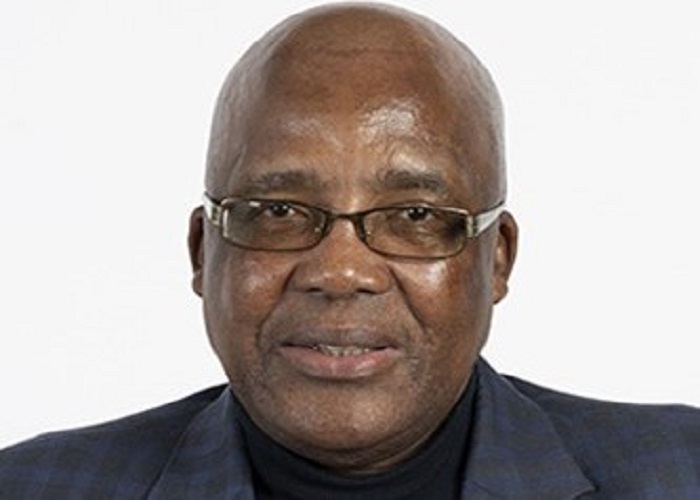
Health Minister Aaron Motsoaledi is confident that structural changes to health funding and procurement under the NHI will safeguard the scheme from state capture and corruption.
The Minister said the NHI scheme will not fall prey to the type of grand-scale theft and looting like that exposed at Tembisa Hospital. “Nobody accepts what happened in Tembisa Hospital. We are very angry. That is why between me and (the) SIU we have agreed that we must regain at least a minimum of 90% of the money that was lost,” he told the Daily Maverick.
And while he acknowledged the failures exposed at Tembisa, he added that the current healthcare system enables abuse because provinces act as both funders and providers.
“The system is not working because, as a province, I am a funder and a provider at the same time. It means I fund what I provide. Whether what I provide is nonsense or not, I still fund it,” he said.
The NHI would fundamentally change this arrangement by introducing a funder-provider split, he added.
“The provinces are going to be providers, the NHI will be funders.”
He said people can’t be denied NHI or universal health coverage “on the basis that we’ve got scoundrels who steal money, or corrupt people”.
In the latest Institute for Justice and Reconciliation Annual Barometer, 61% of South Africans either strongly approve of or approve of the NHI.
Motsoaledi said additional weaknesses in procurement processes at provincial level were that decisions are often taken far from the hospitals where services are delivered.
In the case of many hospitals, “the people who issued the tender are in the provincial government, away from the hospital, etc”.
In other cases, supply chain officials ordered equipment without consulting medical professionals or doctors who would be able to say whether or not the equipment was needed.
“That’s why they ordered jeans and all that,” he said in reference to investigations revealing that about R500 000 was spent on buying skinny jeans.
Procurement committees under the NHI would be restructured so that healthcare professionals were directly involved in purchasing decisions.
“Nobody will proceed without the people who are going to use the equipment, who are not necessarily part of the administration but part of the people using the equipment.”
Legal challenges
There have been several court challenges against the NHI, some of which test the constitutionality of the law itself.
Motsoaledi said: “We are in court already – I’ve got no option. It’s not about whether I’m prepared (to defend NHI) or not. So we are defending ourselves, but we are also prepared to talk to people and explain to them.”
In some cases, according to Motsoaledi, there’s a lack of understanding around the NHI and its implementation.
“For instance, I addressed doctors just last month in Cape Town… all of whom are in private practice, and one said, we understand under NHI we are no longer allowed to employ ourselves, we’re all going to be employed by the state.”
Motsoaledi said he told them: “Some of you believe we are going to abolish private hospitals. It’s not true – all we are saying is that we must put up a healthcare financing system that allows me and you and any other person who is not of my status to get healthcare when they need it, whether they get it in public or private, but in a reasonable way, that’s basically what we’re saying.”
Strong case
He believes the state has a strong case before the courts for advancing its goal to implement UHC, and slammed those using legal challenges to resist NHI.
At a Universal Health Coverage Day event in Pretoria last week, hosted by the WHO in collaboration with the World Bank and the Organisation for Economic Co-operation and Development (OECD), he said that despite the government’s spending billions on private healthcare, the money did not benefit the majority of South Africans.
In fact, he added, people on medical schemes turned to the public for help because medical schemes found reasons not to cover them, reports Business Day.
“In Gqeberha, there is a priest who has been paying for medical aid for 30 years, and now he has cancer and the treatment is going to be R1.4m. The medical aid is refusing to pay; they are looking for reasons why they must not pay,” he said.
“They resorted to the congregation. The last time I checked, the poor congregation had already contributed more than R800 000 towards that treatment for a man who, for the past 30 years, has been paying a premium to a medical aid. These types of things cannot be allowed.”
He was confident NHI could be implemented and run the way the state handled its HIV/Aids treatment programme. “We treated everyone, whether you were a billionaire or a domestic worker… we treated everyone.”
Business Day article – Aaron Motsoaledi defends NHI as critics challenge in court Restricted access)
See more from MedicalBrief archives:
ANC compromise on NHI not on the cards, says Motsoaledi
Motsoaledi slams NHI sceptics and scaremongers
Suppliers linked to Tembisa scandal still not blacklisted
Tembisa Hospital pays footballer and wife R500,000 for skinny jeans contract