


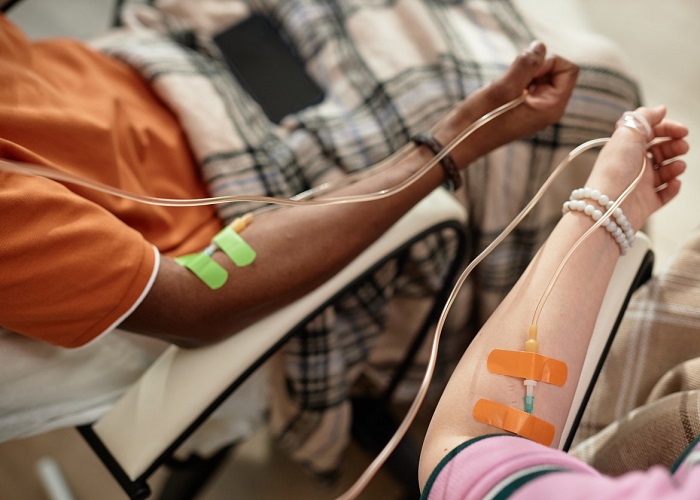
The second annual report from the US National Cancer Database (NCDB) shows a notable increase in the use of medication therapies like chemotherapy and immunotherapy to treat cancer before surgery, helping clinicians assess how patients respond to medication to guide the most effective treatment options.
The report from the NCDB of the American College of Surgeons (ACS), published in the Journal of the American College of Surgeons (JACS), shows the most notable increases in neoadjuvant systemic therapy – treatments that travel throughout the bloodstream and are given before surgery, for pancreatic, gynaecologic and abdominal lining cancers.
A comprehensive cancer database jointly run by the ACS and the American Cancer Society, the NCDB collects data on nearly 75% of cancer cases across the United States and includes metrics not often found in other cancer databases, such as tumour biology and length of hospital stay.
The report summarises data from more than 22m cases diagnosed at 1 250 ACS Commission on Cancer (CoC) hospitals from 2004 to 2022. It also describes in-depth data on oesophageal, melanoma and prostate cancers.
Big picture observations
Use of neoadjuvant systemic therapy increased notably for certain cancers from 2010 to 2022, gynaecologic cancers rising nearly fivefold, from 7% to 34%. Substantial increases were also seen for pancreatic cancer, which more than tripled (12% to 40%), and for rarer cancers (peritoneum, omentum, and mesentery) that affect the abdominal lining and tissue, which nearly doubled (23% to 47%).
“Historically, when we thought about treating solid tumours, the first expected treatment was to have surgery to remove the tumour. Now, we are seeing treatment more frequently with targeted medication before surgery,” said Judy Boughey, MD, FACS, senior author of the JACS study, chair of the ACS Cancer Research Programme and chair of the Division of Breast and Melanoma Surgical Oncology at Mayo Clinic in Rochester, Minnesota.
Boughey said the main advantage of neoadjuvant systemic therapy is twofold: first, it shrinks the tumour, ideally allowing for less invasive surgery; and second, it allows clinicians to better understand the tumour’s response to systemic treatment, which can help them determine the most effective treatment.
“If a tumour responds to systemic therapy, they generally will do well with treatment; if that doesn’t happen, it tells the clinical team they need to think about different therapy,” she said.
In-depth data on three cancers
The report also examined three cancers in depth: prostate cancer, a common (high-volume) cancer; oesophageal cancer, a less common (low-volume) cancer; and melanoma, selected as a special interest cancer.
Prostate cancer
Patients with prostate cancer, the most common cancer diagnosed in men, are increasingly being treated with non-surgical options, especially for stage 1 prostate cancer. In 2022, roughly 60% of patients were treated with methods other than surgery, a rise from 54%
in 2018. Of those who had surgery, removal of the prostate gland (prostatectomy) was the most common surgery, occurring in 85% of patients who had surgery.
Risk factors for dying from prostate cancer are also described in the report. Men who had a prostate-specific antigen (PSA) level over 20 at the time of diagnosis, as well as a higher cancer stage and grade of tumour, were more likely to die from the disease.
Oesophageal cancer
The number of patients with oesophageal cancer who received immunotherapy rose sharply, increasing from 8% to 30% between 2018 and 2022. While the use of immunotherapy to treat this is growing, the disease is often detected at an advanced stage. About half of patients already have stage 4 disease at the time of diagnosis.
In the JACS study, the authors call for an effective, widely used screening method to detect oesophageal cancer earlier in more patients.
Melanoma
Melanoma most often affected the torso (30%) or the upper limb and shoulder region (25%). Patients with scalp and neck melanomas had the lowest overall survival rates among all invasive melanomas. Ulceration, which occurs when the top layer of the skin involved by melanoma breaks down, was also associated with poorer survival, according to the report.
Future reports will focus on three other cancers to provide the public and researchers with unique data points not often included in other cancer reports, the authors added.
See more from MedicalBrief archives:
Ultrasound holds promise for surgery-free cancer therapy
Immunotherapy a safe alternative to surgery for early cancers – US trial
FDA approves first cell therapy for metastatic melanoma
Immunotherapy substantially improves survival in advanced melanoma patients
Immunotherapy before liver cancer surgery kills tumours – Mount Sinai clinical trial
Hysterectomy plus chemo improves metastatic uterine cancer survival