


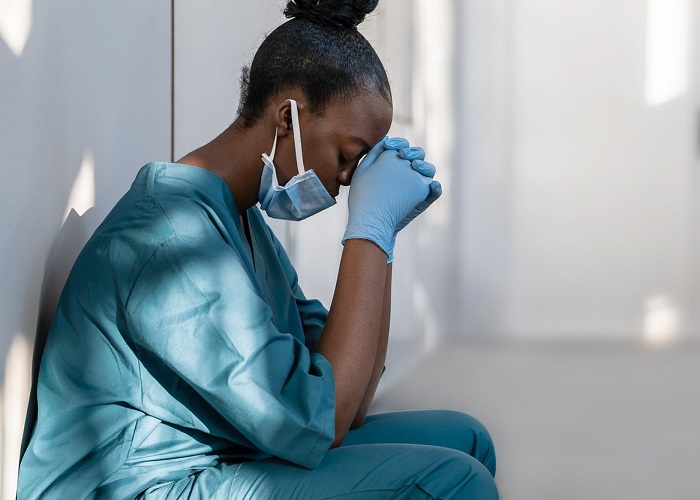
Doctors and nurses are standing up against the continuing deterioration of South Africa’s public healthcare system, warning that crumbling infrastructure, critical staff shortages and medical supply stockouts were putting lives at risk, and demanding urgent intervention, writes MedicalBrief.
In Gauteng, nursing union Denosa has threatened to strike unless the department addresses crucial issues within a month, while in Gqeberha, 38 doctors have signed an open letter revealing a shocking list of allegations about the OB/GYN unit at Dora Nginza Hospital – where a young mother recently died. And in Khayelitsha, staff and patients have reached the end of their tether over filthy, non-functioning ablution facilities.
While the various provincial departments continue to issue denials, one expert said resources in the public sector are being depleted through institutional inefficiencies, administrative mismanagement and corruption, the massive Tembisa looting scandal being a classic example.
Mutiny in Eastern Cape
Daily Maverick reports that the Eastern Cape Department of Health has objected to and disagreed with 38 doctors at Dora Nginza Hospital in Gqeberha, who in an open letter, warned that conditions in their obstetrics and gynaecology department posed an “unacceptable risk” to mothers and babies, detailing failing electrical infrastructure, broken resuscitation equipment, staff shortages and cancelled operations.
The letter also describes women booked for elective Caesareans waiting up to two weeks, pregnant women sleeping on chairs, and patients with gynaecological cancers having operations postponed because of no theatre staff.
The catalyst for the letter was the death, two weeks earlier, of a 28-year-old woman who had haemorrhaged after giving birth and went into cardiac arrest. She was resuscitated but died later that evening.
“Infrastructure failures contributed to circumstances during the resuscitation of the .. patient in which essential equipment could not be used because of the lack of functioning electrical outlets, and resulting in … death,” said the letter writers.
The doctors warned that such situations were an unacceptable risk to maternal and neonatal safety.
However, the department said its internal investigation had found no causal link between the death and a “power failure”.
Dora Nginza Hospital provides specialist services to the entire western region of the Eastern Cape. Last year the Public Protector found that because Nelson Mandela Bay has no district hospital, the hospital has to serve as a clinic, district hospital, regional hospital and a tertiary centre – particularly for obstetrics, gynaecology and paediatrics.
The letter, sent on 15 July to then head of the Eastern Cape Health Department Dr Rolene Wagner, was copied to the hospital’s chief executive, the deputy DG for hospital services, the chair of the legislature’s Health Portfolio Committee, Health MEC Ntandokazi Capa, Premier Oscar Mabuyane and the health ombud.
The answers from the Premier, the MEC and the Dora Nginza officials came back as a single consolidated response, from Capa’s spokesperson, Camagwini Mavovana.
The doctors said none of the recipients had replied to them.
But the Health Department disagrees, saying the MEC was only copied into the correspondence on 31 July, that she intervened once she had it, and that two virtual meetings were subsequently held. Neither meeting was with the doctors who wrote the letter, they said.
The letter paints a disturbing picture of conditions in the hospital’s obstetrics and gynaecology department.
“In several oncology cases, patients have returned with advanced, inoperable disease after repeated postponements because theatre staffing was unavailable,” the letter reads.
It described scheduled Caesarean sections and gynaecological operations repeatedly being cancelled, including oncology and urology procedures. They said electrical failures in the theatres and labour ward had made critical equipment unreliable or unusable, while shortages of nursing staff, essential theatre supplies and poor theatre support had compounded the problem.
Among the equipment affected, they said, were IV infusion pumps, CTG monitors (cardiotocographs), incubators, ventilators and resuscitation equipment.
They asked for four things: an independent assessment of the obstetrics and gynaecology service, a written action plan, named responsibilities with timelines, and regular progress reporting. They also asked for a reply within two weeks.
The death on 5 July
Clinical notes from that afternoon, contained in an internal case, record that the ambu bag, or manual resuscitator, from the labour ward was not working, and that an ambulance crew assisted with a defibrillator, an ambu bag and ECG stickers. The notes also record that a system failure meant un-crossmatched blood could not be issued, and that by late afternoon, there was no emergency blood at the blood bank.
The next morning, a clinician listed the state of the labour ward’s equipment. The plugs were not working. The defibrillator was not working. The ambu bag was falling apart. The oxygen cylinder was empty. There were fewer than three vials of adrenaline in the trolley, and the trolley had not been cleaned.
There were no ECG leads, no working monitors, no resuscitation board, no ventilator and no device to keep a patient warm.
Extension cord in the delivery room
For about six weeks, the doctors said, an extension cord ran from a plug in a common area into one of the delivery rooms. It was the only way to get power to resuscitate a newborn baby and keep the infant warm. It ended only when doctors arranged for an uninterruptible power supply unit to be moved from the labour ward theatre on to the ward.
The department says the electrical faults have been repaired: 122 normal plugs and 116 red plugs were replaced across the NICU, neonatal high care, premature unit and labour ward, and tested and confirmed operational. Medical gas repairs were completed on 27 July, while work on backup power units was expected to finish two weeks ago.
The doctors are not convinced. “You’re told it’s fixed and it’s not fixed,” one said. “We get told it’s done, and then we have a problem two weeks later.”
Recently, they say, the power failed and the generator did not start. Theatres were without power for a full day and a portable generator was hired that afternoon. Repair work was finished about a week and a half later.
The doctors say theatre lists are cancelled because there is nobody to staff them. Dora Nginza Hospital is configured for four theatres; nursing shortages mean three can be staffed, and on days when staff do not come in, two. The theatre matron retired at the end of November and the post was now held in an acting capacity, one doctor said.
One of the doctors said that recently, the hospital ran out of pethidine and was giving women morphine instead, and had no anti-inflammatories that could be given rectally to patients unable to swallow.
“We ran out of basic analgesics. That’s not expensive,” the doctor said.
The doctors also describe a theatre with only boiling water, “you can’t wash your hands”, and paint flaking from theatre ceilings. “You’re not supposed to have paint that chips off and falls on to the patient,” one said.
They say written approaches to hospital management go unanswered. When they do get an answer, they say, it is a request that they solve the problem themselves.
The hospital’s infrastructure post has been held in an acting capacity since the manager left, the doctors say. The department says an infrastructure manager, appointed on contract, starts on 1 October.
The department’s answer
The department said its response to Dora Nginza began before the letter arrived. The hospital “was already identified by the Department as a special intervention site, with a defined intervention plan and programme of action”, it said. A task team for the Nelson Mandela Bay district was established in June.
“The Department’s response to the pressures … is therefore neither new nor reactive,” it said.
The biggest part of the plan is the conversion of Empilweni Hospital into a district hospital – at R32m for the first phase, an estimated R210.36m in total – to take level-one patients away from Dora Nginza and Livingstone hospitals, while the department is also strengthening community health centres and referral routes so fewer patients reach Dora Nginza.
The department also lists appointments: six medical officers from 3 August, and from 1 September two more medical officers, 10 general professional nurses, six speciality nurses, two psychiatric speciality nurses, one theatre speciality nurse, one paediatric speciality nurse, two nursing assistants who are advanced midwives, two enrolled nurses and three enrolled nursing assistants. A clinical psychologist, two speciality operational managers and 23 general assistants are still being recruited.
The doctors say Empilweni cannot proceed as described because the hospital has not been gazetted as a district hospital, and until it is, the infrastructure changes needed cannot be made. The department confirms it is “progressing in the formal processes required for Empilweni to be gazetted”, but says work has already begun.
The department’s full response can be read here
Nurses draw the line
In Gauteng, the Democratic Nursing Organisation of South Africa has given the provincial Department of Health just one month to resolve a long list of critical failures, otherwise the union will “take to the streets”, it warned at a briefing on Sunday.
Daily Maverick reports that Denosa, fed up with the deteriorating public healthcare system in the province, is demanding a response to its concerns, with the union’s chairperson Bongani Banda highlighting nursing shortages, vacant funded posts, instability in hospital management, deteriorating infrastructure and continuous issues with medicines and medical supply availability.
Apart from staffing shortages adding pressure and compromising care quality, healthcare workers also face abuse, intimidation, threats and violence, including from patients and community members, he said. These conditions were contributing to stress, fatigue and declining morale, and the union is now demanding stronger security and management support.
Medicine shortages
Banda also raised concerns about shortages of medicines and medical supplies, resulting from a combination of procurement and supply-chain delays, inventory-management challenges and disruptions from suppliers.
Deteriorating infrastructure is a common issue, and he said the dilapidated facilities not only made for an unpleasant environment but also affected infection prevention and control, the functionality of facilities, patient privacy and dignity, and emergency preparedness.
He questioned whether the department had sufficient capacity to deal with its infrastructure maintenance needs.
Although the government has apparently allocated funding for infrastructure maintenance and upgrades, the union pointed to a gap between what is reported about improvements and what employees actually saw at facilities.
Denosa said it would escalate the matter if its concerns were not addressed, and was prepared to take action.
Corruption worsens maternal mortality
A TimesLIVE editorial says despite boasting one of the most sophisticated economies, advanced medical training facilities and a Constitution that guarantees the right to reproductive healthcare, the alarmingly high maternal mortality ratio in this country is huge cause for concern.
Dr Olivia Barigye, a foetal maternal medicine specialist, said South Africa does not suffer from a lack of resources, but from an acute crisis of resource equity and poor operational governance, with the underfunded, overstretched public sector bearing the weight of the nation’s maternal mortality statistics.
A report last week revealed that South Africa recorded a maternal mortality ratio of 111.7 deaths per 100 000 live births in 2023 – an increase from 109.6 deaths in 2022 and 98.8 in 2019, before the onset of the Covid-19 pandemic.
Barigye said South Africa needs to accelerate the decline in maternal deaths if it is to meet the UN sustainable development goal of reducing maternal mortality to less than 70 deaths per 100 000 live births by 2030. While South Africa outperforms the devastating Sub-Saharan regional average of more than 440 deaths, it remains a stark outlier compared with global peers with similar economic resources.
Resources in the public sector are depleted through institutional inefficiencies, administrative mismanagement and corruption – the grand-scale Tembisa Hospital looting being a case in point – she pointed out, suggesting South Africa shift from a model of reactive emergency care to one of clinical precision, and aggressively deal with delays that turn treatable complications into fatalities.
These include delays in seeking care, in reaching a facility, and in receiving quality intervention on arrival.
Investing in dedicated, strategically stationed obstetric emergency transport networks is a low-hanging fruit that the state possesses the financial capital to implement, but it should also focus on the primary drivers of mortality, like obstetric haemorrhage and hypertensive disorders such as pre-eclampsia. These are all highly preventable.
South Africa needs to maximise its existing workforce by fast-tracking the deployment of specialised advanced midwives and ensuring that every community health clinic is continuously stocked with basic, life-saving consumables, including BP monitoring equipment.
South Africa possesses the wealth, the intellect and the medical infrastructure required to be a global beacon of maternal health, but to save its mothers, it must stop measuring its success by the standards of its poorest neighbours and begin holding itself accountable, with the vast resources at its disposal.
The last straw
At the Site B Khayelitsha Community Health Centre in Cape Town, meanwhile, which serves between 25 000 and 28 000 patients a month, patients and staff have been battling with broken and inadequate toilets for more than a year, reports TimesLIVE.
The persistent issues have been blamed on ageing infrastructure, blocked drains, sewer line failures and repeated theft of copper piping, but patients say some of the toilets have been out of order for about a year, forcing them to walk to and queue for toilets at the trauma unit.
They also complained about filthy facilities, no toilet paper, and a lack of privacy because of missing stall doors.
Staff told TimesLIVE that they were also affected by the toilet problems.
“Ours are also broken and blocked, but our hands are tied. The department has been made aware of the situation, but we are the ones who have to take the blame,” one said.
Western Cape Health department spokesperson Abulele Dyasi acknowledged the issues, saying the centre served thousands of patients every month, “and 4 000 stable patients who visit the facility to collect medication”, and had a daily footprint of about 1 500 people on site each day.
Dyasi said the problems were not confined to the female public toilets, with facilities used by male patients and staff also affected. The female public toilets had been particularly affected by waste blockages, rubble in the drainage system, sewer failures and repeated copper pipe vandalism.
“Addressing these problems has required more extensive engineering intervention and specialised replacement parts. The building is old, and this has also contributed to the ongoing infrastructure challenges.”
Daily Maverick article – Denosa urges Gauteng health department (Open access)
See more from MedicalBrief archives:
Power outage adds to Dora Nginza Hospital woes
Dora Nginza Hospital infested by rats
Khayelitsha protestors burn down community clinic
Public Protector lays bare structural problems at Eastern Cape Health
Gauteng hospitals deteriorate further after damning PP report
Doctors urge crisis management as Eastern Cape Hospitals collapse
Patient deaths to be probed as Dora Nginza strike ends