


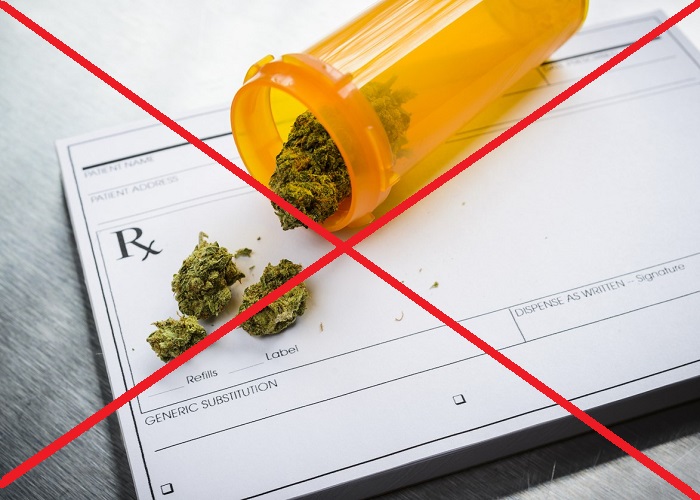
New medicine applications that were used to legally prescribe medical cannabis are no longer being approved by the South African Health Products Regulatory Authority – without any explanation accompanying the decision, reports News24.
SAHPRA has not given the green light to any new Section 21 applications for medical cannabis since mid-July.
Ricky Stone, an environmental attorney at Cullinan & Associates, told News24 the section has been part of South African law since 1965, and used responsibly for decades to provide patients with solutions to clinical needs that registered medicines couldn’t meet, e.g, cancer drugs and affordable generics not yet registered here, for patients who needed them.
But Stone said many people in the cannabis industry didn’t use the provision in the way it was intended.
The cannabis sector “did something else entirely with it”, he added.
“Section 21 became a de facto retail licence. Shops, ‘clinics’ and online script services used it as legal cover to sell flower over the counter, often completing the paperwork after the sale or not at all. None of this was hidden.
“It was obvious at least two years ago, and the scale of the abuse should have set off alarms with the regulator and the industry back then.”
Flower refers to the part of the cannabis plant that can have psychoactive effects.
Genuine patients
But while there was widespread abuse of the provision, Stone acknowledged that there are also “genuine patients and the licensed pharmacies who did things properly”.
Gabriel Theron, CEO of cannabis cultivation, extraction, and manufacturing company Cilo Cybin, said that SAHPRA previously considered Section 21 applications when a practitioner indicated the cannabis product would be used to treat a patient’s pain, cancer, multiple sclerosis, or seizures, among other conditions.
Anton Ofield-Kerr, co-founder of Akos Bio, a pharmacy that aims to increase access to plant-based medicines, said SAHPRA’s decision to stop approving Section 21 applications for medical cannabis had affected their patients.
At a webinar hosted by CannaBiz Africa, a cannabis-focused publication, on Monday, Ofield-Kerr said one of their patients is a three-year-old child with Dravet syndrome, a rare, severe, medication-resistant form of epilepsy. The child has 120 to 140 seizures a day, and the only thing that has reduced these symptoms has been a product with a high concentration of cannabidiol (CBD), the non-psychoactive chemical compound in the cannabis plant.
“Our records show that SAHPRA stopped approving applications on 18 July this year,” he added. “The approval for the three-year-old child is the only one I know of since then, and that was only after a lawyer’s letter threatened court action.”
While products with a low CBD concentration are freely sold, a prescription is needed for high concentrations.
Currently, the pharmacy has around 10 patients awaiting a Section 21 application to be approved, and several more who responded well to treatment but have not been able to obtain a reissue, except in one case where legal action was taken.
Theron said Section 21 applications were never the correct mechanism to prescribe cannabis for medical purposes in the country. In similar vein, he believes stopping the approval of applications without introducing a new mechanism is the wrong move.
“They (SAHPRA) are supposed to have patient safety at heart, right? So if you give a patient access to something and it works for their condition, and tomorrow you (are) no longer approving those things and the patient no longer has access to that medicine, that is the problem.”
Theron said it would be fine if SAHPRA acknowledged that it shouldn’t have been using Section 21 and then introduced a new mechanism.
News24 approached SAHPRA to confirm whether it halted Section 21 approvals, to understand why, and to request comment on the impact on patients. Despite being given weeks to respond, the entity has not yet been forthcoming. Several people on the CannaBiz webinar also complained that SAHPRA has not explained its decision.
Ofield-Kerr said that the sector has invested heavily in doing things properly. That includes GMP manufacturing with batch testing and certification, prescribing within clinical guidelines, and dispensing through licensed pharmacies.
“Akos Bio built its model on regulatory compliance,” he said. “Specialists and their staff put hours into every application, and we have invested years developing a regularity compliant model which SAHPRA themselves endorsed before its launch in September 2024. The sector wants to work with the regulator. We need clarity and a workable pathway now.”
Akos Bio’s Responsible Pharmacist, Courtney Yip, said: “As a pharmacist, my first concern is continuity of care. These patients have conditions like severe epilepsy, and their specialists have prescribed a GMP-certified medicine that is working. Interrupting treatment suddenly puts them at risk, and families are being left without answers.”
One example is Mathew Kendall (28), from Kommetjie in the Western Cape. He has refractory epilepsy and had been receiving treatment as an approved Section 21 patient. His reapplication was first rejected over an incorrect code. When his specialist corrected it and resubmitted, it was rejected again with no reason given.
“It drives me crazy when I look around and see how freely available illegal cannabis is for social use,” said his mother, Ursula Kendall. “But here I am, trying to go the legal, ethical path for my boy, whose quality of life has been made so much better. And it’s being disallowed. How is this right?”
Taariq Mohamed, founder of Curated, a health technology platform designed to connect prescribing, pharmacy dispensing and patient follow-up to build evidence on medical cannabis treatment, told CannaBiz Africa that the sector wants to work with SAHPRA on sustainable pathways, but the regulator is non-collaborative.
“One of the grey areas in medical cannabis is compounding,” said Mohamed. “We have engaged directly with SAHPRA, but questions about how existing rules apply to cannabinoid ingredients remain unresolved.
“We have built Curated to make care more traceable. SAHPRA should provide clear, practical guidance so patients are not left to carry the consequences of regulatory uncertainty.”
Legal limbo
While the home use and cultivation of cannabis was decriminalised in South Africa in 2018 after a Constitutional Court judgment, accompanying legal frameworks have been progressing at a snail’s pace.
The Cannabis for Private Purposes Act was passed in 2024, but the regulations to give effect to the law have not yet been finalised.
In any case, that Act says nothing about how cannabis should be traded, which is likely to be addressed in a separate piece of legislation.
The lack of a clear legal framework is why medical cannabis outlets have largely relied on Section 21 applications, while recreational outlets have used the so-called club model.
The club model initially traded on the premise that adults could pool their resources to collectively cultivate and share cannabis for private use. In other words, people were not paying for cannabis; they were paying a fee to be part of a private club.
The Western Cape High Court found that this model constituted unlawful dealing in the landmark Haze Club case.
Stone said that the solution to the legal uncertainty is to finally build a “workable registration pathway for cannabis-based medicines and a proper legal framework for commercial cannabis”.
“Without those, operators will keep reaching for whatever loophole is available,” he said.
Theron said that if the government wants to recognise certain cannabis products as medicine, there is already a pathway for registering medicines in the country which can be used.
See more from MedicalBrief archives:
Online cannabis clinics cut through the red tape
South Africa’s first legal medicinal cannabis pharmacy is open for business
Biodata: First SA approval of trial investigating medical cannabis in management of chronic pain
Medical cannabis – SA’s high hopes of a cash cow that blunts pain