

Focus

50th International Liver Conference, Vienna, Austria
 Some research highlights from the European Association for the Study of the Liver’s 50th International Liver Conference, including a potential cure for hepatitis B virus infections, with a promising new treatment proving 100% successful in pre-clinical models and new hepatitis C virus treatment guidelines.
Fat Blocker moves to silence fact checker
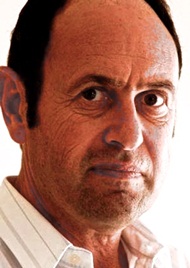 Dr Harris Steinman, a medical doctor and consumer activist who runs a South African website exposing misleading claims about health products, has been forced to move his site offshore after sports supplement company USN demanded his internet service provider (ISP) take down his CAMcheck site because it was ‘unlawful’. Steinman has long been a thorn in the flesh of complementary and alternative medicines (CAM) manufacturers because of his success in using the Advertising Standards Authority to remove or change misleading advertising.
IT specialist Kevin Charleston says that this is the latest tactic by CAM manufacturers to silence critics. Some also were using intimidatory and expensive suits (so called SLAPP suits) to intimidate.
Dr Harris Steinman, a medical doctor and consumer activist who runs a South African website exposing misleading claims about health products, has been forced to move his site offshore after sports supplement company USN demanded his internet service provider (ISP) take down his CAMcheck site because it was ‘unlawful’. Steinman has long been a thorn in the flesh of complementary and alternative medicines (CAM) manufacturers because of his success in using the Advertising Standards Authority to remove or change misleading advertising.
IT specialist Kevin Charleston says that this is the latest tactic by CAM manufacturers to silence critics. Some also were using intimidatory and expensive suits (so called SLAPP suits) to intimidate.Malpractice lawyers, HPCSA, hospital CEOs and private healthcare – all under fire

Health Minister Dr Aaron Motsoaledi has in short order sharply criticised medical malpractice lawyers, instituted an inquiry into the Health Professions Councils of SA (HPCSA), another into state hospital CEOs, and been highly critical of specialists and private hospital groups: * State hospital CEOs are in cahoots with malpractice lawyers, says Motsoaledi, ‘deliberately failing to apply norms and standards’, hoping something would go wrong. They then colluded with state attorneys to deliberately ‘mismanage ... so that we lose the case’. The SA Medical Association notes ‘several cases where nurses and admin clerks are being investigated for selling patient files to lawyers specialising in malpractice’. * Motsoaledi has appointed a six-person panel to investigate claims of poor governance and mismanagement at the HPCSA. * Motsoaledi has blamed ‘profit-maximising specialists and hospitals’ for the high cost of medical care in the DOH submission to the Competition Commission inquiry into private healtcare.
Summary report drawn from City Press, Polity, HPCSA, Politicsweb, Moneyweb and DOH material
The world’s men beat a path to Tygerberg’s door
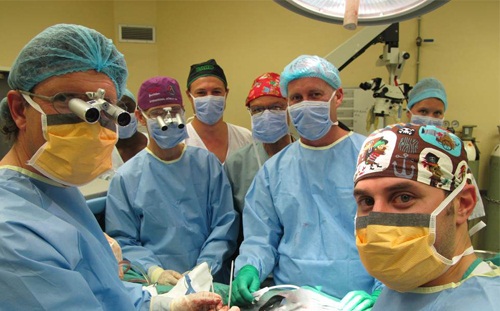 The doctors at Tygerbeg Hospital who carried out the first successful p enis transplant on a patient who had a botched traditional circumcision, have been inundated with requests from men around the world who want to have the operation. Stellenbosch University doctors said the procedure could eventually be extended to men who have lost the organ from p enile cancer.
In other p enile research at King's College London, researchers reviewed studies of p enis measurements for more than 15,000 men, the largest collection yet, to come up with a graph that can be shown to men who wonder, or obsess over, how theirs measure up.
The doctors at Tygerbeg Hospital who carried out the first successful p enis transplant on a patient who had a botched traditional circumcision, have been inundated with requests from men around the world who want to have the operation. Stellenbosch University doctors said the procedure could eventually be extended to men who have lost the organ from p enile cancer.
In other p enile research at King's College London, researchers reviewed studies of p enis measurements for more than 15,000 men, the largest collection yet, to come up with a graph that can be shown to men who wonder, or obsess over, how theirs measure up.‘National crisis’ in obs/gynae, neurosurgery, neonatology and orthopaedics
Summary drawn from Business Day, Citizen, IOL and Health ministry materials
Dr Aaron Motsoaledi has accused personal injury lawyers of creating a ‘national crisis’ similar to that which collapsed of the Australian health system 15 years ago, with doctors scared of certain specialist areas. The government faces contingent liabilities of R25bn for medical malpractice lawsuits, while private sector doctors are battling to keep up with steeply rising premiums for professional indemnity cover.
Some medical specialities are ‘continually, persistently, and mercilessly being targeted for litigation’, said Motsoaledi, noting that he would like to see some public hospitals CEOs arrested for being part of syndicates that were looting funds.From soil micro-organism to pharmaceutical gold
 A new antibiotic – the first in nearly 30 years – has been discovered by scientists who claim it appears to be as good, or better, than many existing drugs ,with the potential to work against a broad range of fatal infections such as pneumonia and tuberculosis. Successful in animal tests, the antibiotc is born from a new way to tap the powers of soil microorganisms,
Because resistance can evolve quickly, the high costs of drug development aren't seen as having long-term value, and fewer new antibiotics are reaching the market. However, he prototype drug, called teixobactin, works against harmful bacteria in a unique way that is highly unlikely to lead to drug-resistance.
Report drawn from The Independent, Smithsonian Mag, Nature, Business Day and The Guardian
A new antibiotic – the first in nearly 30 years – has been discovered by scientists who claim it appears to be as good, or better, than many existing drugs ,with the potential to work against a broad range of fatal infections such as pneumonia and tuberculosis. Successful in animal tests, the antibiotc is born from a new way to tap the powers of soil microorganisms,
Because resistance can evolve quickly, the high costs of drug development aren't seen as having long-term value, and fewer new antibiotics are reaching the market. However, he prototype drug, called teixobactin, works against harmful bacteria in a unique way that is highly unlikely to lead to drug-resistance.
Report drawn from The Independent, Smithsonian Mag, Nature, Business Day and The Guardian