


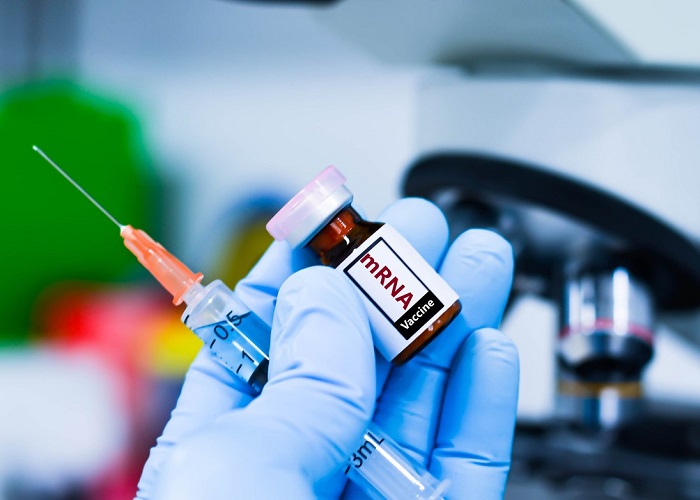
For years, scientists have been exploring the use of mRNA drugs to treat cancer, and now – for the first time – an experimental drug to deliver a vaccine customised to a patient’s tumours has passed a large phase 3 clinical trial, effectively clearing melanoma recurrence.
This opens the door for the Food and Drug Administration to potentially approve the first mRNA-based cancer treatment in what would be a landmark moment for the fast-emerging field, reports The Washington Post.
Some experts have warned, however, that while mRNA technology is entering a pivotal phase in its development, and scientific progress is accelerating, public understanding has not kept abreast, and publicly disseminated misinformation could jeopardise its potential.
Researchers have explored the use of mRNA drugs to treat cancer for years, but this is the first to clear a phase 3 trial, according to Moderna and Merck.
“It was an idea 10 years ago, it was a dream still three or four years ago, and now it feels very much like a reality,” said Moderna President Stephen Hoge.
The drug, intismeran autogene, treats melanoma, the deadliest form of skin cancer, of which the National Cancer Institute estimates there will be more than 100 000 new cases this year. It can often recur even after a tumour is surgically removed.
Both Moderna and Merck shares soared last week after the two companies said the personalised treatment hit its target of preventing skin cancer from recurring or spreading in the late-stage clinical trial.
The results come at a pivotal moment for Moderna and mRNA research, after Trump administration health officials cut federal funding for new vaccines and asserted mRNA technology poses more risks than rewards.
Axios reports that the customised therapy, which hopes to see a commercial launch next year, could also be adapted for other cancers of the kidney, bladder and pancreas.
The two companies said that people with melanoma who received intismeran, jointly developed by Moderna and Merck, and Merck’s pembrolizumab (Keytruda), lived longer without any recurrence of their cancer, as well as had fewer incidences of their cancer spreading, compared with those receiving Keytruda alone – the current standard treatment.
Combining the two therapies seems to lead to better outcomes in this later-stage trial, reports TIME Magazine.
Intismeran is not yet approved, while Keytruda was first approved to treat melanoma in 2014, and in 2019 to treat melanoma in people after tumours were removed. The current study included people in this latter group with stage 2 to stage 4 melanoma who were treated with either intismeran and Keytruda or Keytruda alone after surgeons removed the bulk of their tumours.
“What we’re trying to do here is to tell the immune system that it missed the signature of the tumour cell if you have cancer,” Moderna CEO Stephane Bancel told TIME of intismeran.
“This product basically allows us to teach the immune system about the mutation in your cancer that allows the cancer to grow.”
The study involved 1 137 people with stage 2 to stage 4 melanoma who received surgery and then were randomly assigned to receive either the combination of therapies or Keytruda for just more than a year.
Intismeran is the first of its kind autogene therapy that relies on studying a patient’s cancer mutations, making mRNA sequences of those mutations and giving them back to the patient in so their immune systems can recognise the tumour signals in the same way it would a virus – in what’s known as a therapeutic vaccine.
One of the advantages of the mRNA platform is its ability to generate such genetic sequences relatively quickly, in a matter of weeks, which is essential for scaling up more personalised cancer treatment approaches.
Keytruda works by unveiling the cancer cells, which can often hide from the immune system since they start out as normal cells before picking up mutations that make them grow out of control.
The companies did not provide specific details about the recurrence or survival rates, but earlier this year reported at ASCO, a major cancer conference, from an earlier stage study that showed that the combination lowered the risk of recurring melanoma by 49% and lowered the risk of distant spread of the cancer or death by 59%.
The latest results bring some good news to Moderna, which has seen its stock drop after reaching highs during the Covid pandemic after development of the first mRNA vaccine, against SARS-CoV-2.
In 2025, Bancel laid off 10% of the workforce – 500 to 800 employees worldwide – after a combination of sagging sales from the Covid shot and loss of important government contracts to develop pandemic flu vaccines based on mRNA technology.
In August, the FDA approved the first mRNA flu shot, developed by Moderna, but only after initially refusing to review the company’s submission.
Bancel says that Moderna is also exploring using intismeran alone, perhaps in earlier stage cancers.
For the current trial, because intismeran is still an experimental therapy under study, and because an approved therapy, Keytruda, does exist for melanoma patients, FDA regulators were more comfortable with combining the drugs so every patient received at least the standard of care and therefore would not be additionally harmed by joining the study.
“It would be unethical for us to tell people to come on a study of something that we don’t know if it works, when people are fighting for their lives,” Bancel says. “That’s why we did the study with Keytruda, which can improve outcomes, and we tried to show that the combination was better, and we did.”
Bancel’s teams are already studying intismeran in stage 1 lung cancer, to see if using it earlier, and priming the immune system, can lead to equally beneficial outcomes for those people.
In lung cancer, standard treatment involves surgery and careful monitoring for any signs of returning cancer, so doctors can ethically study how adding intismeran for some patients affects their cancer outcomes compared with those not receiving it.
While that study is still in early stages, Bancel is optimistic. “From a scientific standpoint there is no scientific sense that it would work in melanoma and not work in another tumour type,” he says of the mRNA-based approach.
“I think it will be transformational. Think about if you get a screening X-ray and find stage 1 lung cancer. Then you get intismeran, which is like a vaccine so you have no severe toxicity like with other immunotherapy. Think about getting this product on your way to work, or even [potentially] at your local pharmacy – that would be an incredible change in care. And it can help reduce the risk of metastasis, and have a profound impact on patients, as well as prevent people from getting very severe disease.”
Moderna is also studying intismeran in stage 3 lung cancer, and hoping to see similarly encouraging results as seen in melanoma patients. And its scientists are studying the compound in kidney, pancreas, and bladder cancers in nine ongoing studies, says Bancel.
Coming soon
Hoge said that thousands of patients who have undergone surgery to remove high-risk melanoma tumours could benefit as soon as next year if regulators approve the vaccine.
The companies did not provide detailed results, which they said they would share at an upcoming medical meeting, reports Reuters. They do not yet have results on overall survival, a secondary endpoint in the trial that measures whether patients who receive a treatment live longer than those who do not.
Merck said the companies are already in talks with regulators about the treatment.
Hoge said given the vaccine’s breakthrough therapy designation, it could be available as soon as next year. He called the result a landmark.
Karen Knudsen, CEO of the Parker Institute for Cancer Immunotherapy, said the Moderna results could signal a new era for treating solid-tumour cancers.
“The positive hit here leads us into truly this next phase in immunotherapy,” she told The Washington Post. “This is an auspicious start – where things begin. It’s representative of the next frontier of cancer immunotherapy.”
Knudsen added that longer follow-ups would be needed to determine if the protection against recurrence caused by the drug continues to hold up in patients over time.
The safety profile of intismeran and Keytruda “remains consistent” with its previous reports, which have noted that the numbers of serious reactions were comparable to patients who received only Keytruda, Merck and Moderna said.
The most commonly reported side effects related to intismeran were fatigue, pain at the site of injection, and chills, the drugmakers disclosed in December 2023.
“This is exciting,” said Antoni Ribas, a professor of medicine at the University of California-Los Angeles. “That hasn’t happened ever, with any cancer vaccine.”
MRNA injections can be faster to design and manufacture than conventional vaccines.
Misinformation threatens potential
However, Dannell Boatman of West Virginia University, a researcher in health communication who monitors cancer-related conversations online, warned that while these results could open the door to a wave of cancer vaccines, misinformation about mRNA technology – circulating since the pandemic – could undermine its momentum before it reaches patients.
Writing in The Conversation, she said progress toward vaccines for cancer has been building for years, and that since the early 2000s, there have been been more than 120 promising clinical trials testing mRNA vaccines to treat multiple cancer types, like melanoma, brain, breast, lung and prostate cancer.
But simultaneously, misinformation about so-called turbo cancer began spreading widely on social media, with mainstream media outlets first reporting on it in late 2022.
Turbo cancer refers to the false claim that Covid-19 mRNA vaccines cause unusually aggressive cancers – a false narrative that could undermine public confidence in an important tool that may help prevent or treat the disease in the future.
Scientists have been studying mRNA technology for decades, she wrote. These vaccines work by delivering instructions to prompt the body’s cells to make specific proteins – teaching the immune system how to recognise and attack those proteins.
In cancer research, scientists can design highly targeted vaccines that train the immune system to find tumour cells and more effectively kill them without harming healthy cells.
One example comes from studies on the aggressive brain tumour glioblastoma. Researchers found that a personalised mRNA vaccine can rapidly activate the immune systems against this type of brain cancer and improve survival.
Although the body of evidence that mRNA vaccines can transform how researchers harness the immune system to treat cancer is growing, even the most promising medical advances can only improve health if people are willing to use them.
Rise of the ‘turbo cancer’ narrative
Vaccine misinformation accelerated during the pandemic, causing what researchers call an infodemic: the rapid spread of both accurate and false health information during a public health crisis.
The Covid-19 infodemic made it harder for people to find trustworthy guidance and shaped public attitudes toward vaccines.
“Turbo cancer” reflects many of the same patterns and narratives as the Covid-19 infodemic.
In a social listening study, which involved systematically monitoring online conversations about different topics, Boatman and her team observed countless posts about turbo cancer, beginning in July 2023 and continuing into 2026.
Many posts rely on emotionally compelling anecdotes, misinterpretations of animal studies, misuse of adverse events reporting and recycled myths that vaccines alter human DNA. Some posts also link rising cancer rates in younger adults to the Covid-19 vaccine.
But large population studies have found no increased cancer risk after vaccination.
None of these turbo cancer claims is supported by credible evidence. Yet on social media, repetition, personal stories and scientific-sounding language can make misinformation appear legitimate and help it spread quickly.
Misinformation harms health
At first glance, fringe claims like turbo cancer may seem easy to dismiss. But research shows they can have real-world consequences, and cancer-related misinformation can be particularly consequential.
Clinicians are already seeing the effects in routine care. Oncologists report having to address myths or misleading information that patients have encountered, though researchers do not yet know how common these conversations are across cancer care.
Repeated exposure to misleading claims can erode trust in mRNA technology over time, increasing the likelihood that some patients will decline these therapies in the future.
If misleading narratives likes turbo cancer continue to spread, they could complicate the future rollout of mRNA vaccines and limit their lifesaving benefits.
Once misinformation takes hold of public understanding, changing its course can be difficult. Research has consistently shown that proactive, transparent and persuasive communication can counter misinformation. It also shows that trust, once lost, is difficult to rebuild.
Medical innovations can save lives only if communication keeps up. This means monitoring emerging misinformation trends on social media, addressing concerns early on, equipping clinicians to have effective patient conversations and designing public health messaging that builds public understanding of new medical technologies before they are widely introduced in the clinic.
Scientific innovation alone is not enough to improve health. Ensuring the public can evaluate medical innovations like mRNA cancer vaccines based on evidence, rather than viral misinformation, is part of the scientific challenge.
The future of cancer care depends not just on scientific discovery, but on public understanding and trust.
AXIOS article– Moderna and Merck shares soar on mRNA cancer vaccine (Open access)
See more from MedicalBrief archives:
mRNA jab for melanoma slashes risk of cancer return – US study
FDA grants breakthrough tag for Moderna’s melanoma drug
Moderna-Merck personalised vaccine lowers skin cancer risk in trial
Promising signs for mRNA cancer vaccines
mRNA vaccine shows promise in pancreatic cancer trial