


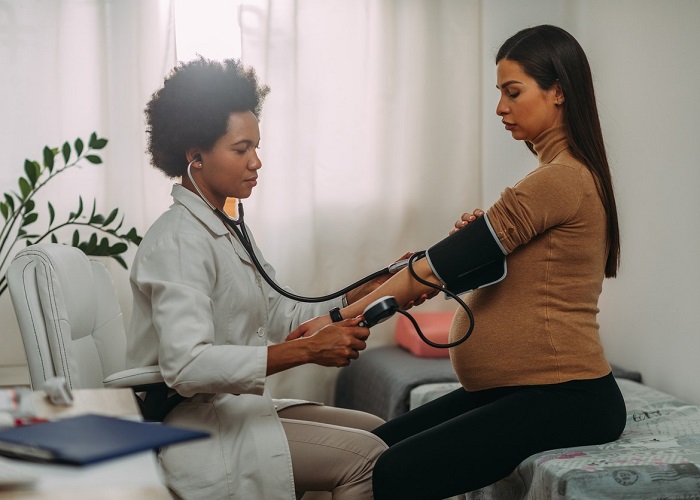
A new drug for a dangerous condition that affects pregnant women, threatening not just their health but their babies’ lives as well, could transform the treatment of pre-eclampsia, reports NPR.
Cathy Cluver, a Professor of Obstetrics and Gynaecology at the nearby Stellenbosch University, has been searching for a treatment for pre-eclampsia for a decade.
"We do about 9 000 deliveries at Tygerberg a year of only high-risk women,” she said, “including those with pre-eclampsia who do their best to delay delivery. It’s important for a baby to stay inside the womb as long as possible but this can jeopardise the health of the mother.”
Pre-eclampsia occurs when the placenta sends out a kind of molecular distress call that it’s not getting enough oxygen. “It’s saying, ‘I need more blood supply, so I’ll push up the blood pressure’,” said Cluver, who had pre-eclampsia herself when she was pregnant with her first child.
Conventional medications to treat high BP are risky because even though they might lower the pregnant woman’s blood pressure, they may also reduce blood flow to the baby – right when the placenta is demanding more oxygen.
It is one of the most serious complications of pregnancy, and one of the leading causes of maternal mortality worldwide, with at least 42 000 maternal deaths each year.
Cluver has been searching for a treatment that lowers blood pressure and heals the damaged blood vessels to help both mother and baby.
Then, about two years ago, she got an email from DiaMedica Therapeutics, a US-based pharmaceutical company. They were testing a drug for certain types of stroke called DM199 that functioned in a way they thought might also work for pre-eclampsia.
Cluver was sceptical at first, but on closer inspection, she and her colleagues thought maybe it was worth trying out. “It could potentially work because it’s ticking all the boxes of what we would want,” she said.
So they began a trial at the hospital for mothers with dangerously high blood pressure and who were scheduled to deliver their babies early.
“I was so nervous the first day we started the infusion,” Cluver recalled. “You never quite know what’s going to happen.”
The team enrolled small groups of women with each group receiving a slightly higher amount of the drug. Fifteen patients in, there was no sign that it was having any effect.
“I thought, ‘this drug is not real’,” said Jacqui Thake, a research nurse at Stellenbosch University who is overseeing the trial. “There was really no difference in the BP – maybe slightly here and there but nothing major.”
Lucky number 16
But when the 16th patient received the next highest dose, however, “we had literally just opened up this IV infusion and then her blood pressure stabilised”, Cluver said. “We suddenly saw these sky-high blood pressures coming down and couldn’t believe it.”
And the BP stayed down. The same was true for subsequent patients with the same or incrementally higher doses.
“The drug stabilises the lining of the blood vessels so it makes the blood vessels happier,” said Cluver.
Tests show the drug doesn’t appear to cross into the placenta or the breast milk either, which means it’s more than likely not reaching the baby.
Cluver and her colleagues are hopeful that this might be the first pharmaceutical treatment for pre-eclampsia.
“It would mean a healthy mum and a healthy baby,” said Thake, but added there is still more to learn about how the drug works and whether it can keep mothers pregnant for longer.
Corneila Graves, medical director of Tennessee Maternal Foetal Medicine, where up to 10% of pregnant women have pre-eclampsia, said: “This is a small study, and although it has great potential, we need a bigger data set on a broader population.”
“But what is really promising about this particular study is that it also increases placental blood flow.” That is, it drug lowers the mother's BP while also improving blood flow to the womb at a time when the baby appears to need it.
See more from MedicalBrief archives:
Pre-eclampsia risk flagged among African women
BP should be used to screen for pre-eclampsia