


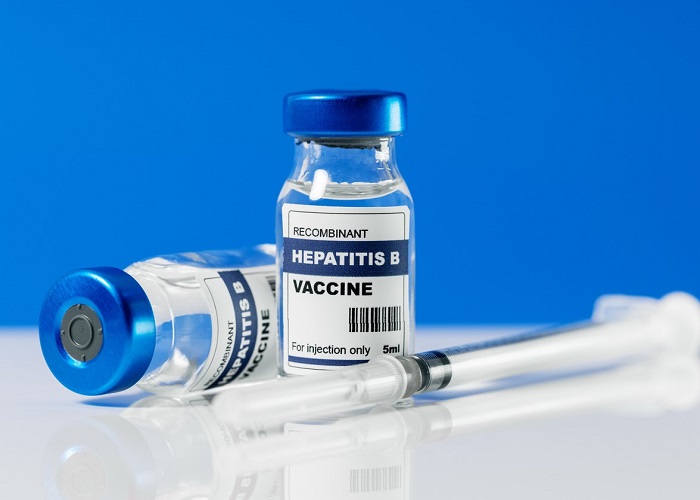
For years, concerned health experts have been calling for South African children to be universally vaccinated against hepatitis B at birth: now, echoing that plea in The Lancet, Mariet Benade and Allison Portnoy urge policy-makers to accelerate the implementation, saying it would be a crucial, and economically viable step towards the ultimate goal of eliminating the disease.
Benade and Portnoy write:
In 2016, the WHO outlined targets to eliminate viral hepatitis, aiming for a 90% reduction in incident cases and 65% reduction in mortality by 2030. Sub-Saharan Africa accounts for 60% of the global burden of viral hepatitis.
Vaccination has been a key strategy in achieving the set targets, with the WHO recommending administration of a hepatitis B birth dose (HepB-BD) to all newborns within 24 hours of birth to prevent mother-to-child transmission, given that mother-to-child transmission is the predominant route of infection in settings with sustained transmission.
South Africa is the only country in sub-Saharan Africa to implement a selective (rather than universal) HepB-BD vaccination approach, offering vaccination at birth only to infants born to HBsAg-positive mothers, along with the implementation of peripartum antiviral prophylaxis in 2023.
However, concerns remain that the selective vaccination strategy is insufficient to reduce hepatitis B to levels required to meet global targets.
A 2025 analysis using data from the National Health Laboratory Service in South Africa has further highlighted the persistent contribution of vertical transmission to new infections in children younger than 12 months.
To evaluate a potential switch to universal HepB-BD, Chris Seaman and colleagues conducted an economic evaluation of competing HepB-BD policies in South Africa.
They used a previously developed and validated mathematical model of hepatitis B transmission, disease progression, and mortality to compare the cost-effectiveness of four scenarios: no HepB-BD coverage; provision of HepB-BD and prophylaxis only to mothers who are HBsAg positive; universal HepB-BD vaccination without prophylaxis; and universal HepB-BD vaccination with selective prophylaxis to HBsAg-positive mothers.
The authors found that among the analysed strategies, universal HepB-BD vaccination with selective prophylaxis averted the greatest disease burden and was the optimal strategy at a willingness-to-pay threshold below 0.5 times the per-capita gross domestic product in South Africa.
This finding was robust, regardless of vaccination among infants born to HBsAg-negative mothers. However, this strategy would only reduce incident hepatitis B in children under five by 29% by 2030, missing the elimination target of 90%.
This study by Seaman and colleagues directly compares policy-relevant HepB-BD scenarios in South Africa, providing comparative evidence for policy makers. But this cost-effectiveness analysis can identify the optimal policy only among the strategies included in the analysis.
The optimal policy for HepB-BD vaccination in practice might not be one of the scenarios included.
Some important considerations should be taken into account when interpreting these results. First, the analysis did not account for differences in regions, level of care facility, HIV prevalence, or urban versus rural settings. The authors did not consider a model that offered universal HepB-BD vaccination in some sub-national settings – eg, high-burden settings or settings with low screening efficiency – and selective HepB-BD vaccination in other settings.
Second, although 96% of births occur in healthcare facilities, restricting the analysis to babies born only in these facilities might have excluded the population at highest risk, yielding a lower number needed to vaccinate (NNV) for strategies not identified as optimum.
Third, the analysis did not account for HIV co-infection, which is estimated to be 27.5% among antenatal care users in South Africa. First-line HIV therapy includes tenofovir, which is effective against both HIV and hepatitis B; therefore, the incremental benefit of selective prophylaxis might be over-estimated in this analysis.
Finally, the analysis assumed that selective prophylaxis would be administered to all mothers diagnosed as HBsAg positive, but adherence to this guideline might differ in practice.
Policy-makers should consider how these findings might differ if the recommended policy is to be adopted as national guidelines, wherein differences in coverage, disease prevalence, and health-system constraints might influence effectiveness.
Achieving the cost-effectiveness outcomes modelled by Seaman and colleagues will require implementation adherence, which might be easier to achieve with a universal HepB-BD vaccination policy than with a selective policy.
Although the model did not assume such benefits, introducing a universal HepB-BD vaccination policy might reduce staff time and, therefore, costs compared with a selective policy, which currently requires reviewing the patient record to individualise the suite of vaccines offered at birth.
An added benefit of a universal policy is not only the simplification in care but also the potential improvement in adherence to guidelines.
Seaman and colleagues offer compelling evidence that South Africa's selective HepB-BD policy might need to be reconsidered. In addition to the presented cost-effectiveness analysis, policy-makers might need a budget impact analysis to confirm fiscal feasibility and modelling of HIV and hepatitis B co-infection dynamics to confirm the robustness of selective prophylaxis.
Although universal HepB-BD on its own is not enough to eliminate hepatitis B in South Africa, it is a crucial step towards that goal.
Mariet Benade a,b; Allison Portnoy b,c
a Health Economics and Epidemiology Research Office, Faculty of Health Sciences, University of the Witwatersrand
b Department of Global Health, Boston University School of Public Health, Boston, USA
c Centre for Health Decision Science, Harvard TH Chan School of Public Health, Boston, USA
See more from MedicalBrief archives:
Experts call for hepatitis B birth-dose vaccine
SA children should be vaccinated against Hepatitis B at birth
World Hepatitis Summit urges elimination of viral hepatitis as paediatric cases rise