


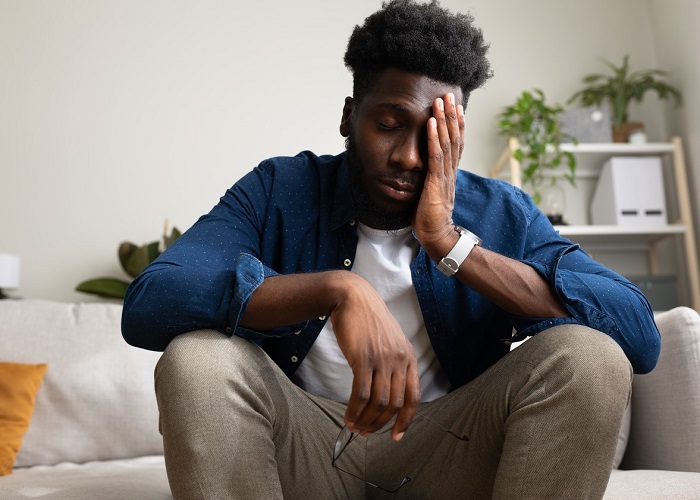
An exhausted formal employment sector could be losing more than R408bn per year due to employees’ sleep deprivation, according to a global sleep expert, who says the losses are linked to absenteeism, workplace mistakes and safety incidents.
The warning comes from Dr Michael Breus, known as “The Sleep Doctor”, a renowned clinical psychologist, sleep specialist and best-selling author from California, who – drawing on international research – says that that the average loss from insufficient sleep is about $2 300 per employee per year in the US.
He was speaking to Business Day after this year’s Singularity South Africa Summit.
With 10.55m employees in South Africa’s formal sector, according to Stats SA’s latest Quarterly Employment Survey, the local economy could be bleeding more than R400bn annually due to fatigue-related productivity losses.
“When you’re well-slept, you’re more accurate,” Breus said. “If your job has to do with finances and numbers, then you’re not making those numerical mistakes. But let’s say you’ve got a warehouse and you’ve got a forklift driver, and they fall asleep while they’re on the forklift … that’s very problematic. So sleep is actually very big inside business.”
And nowhere was the risk more critical than in healthcare. “When you’re sleep-deprived in healthcare, people die. You’re a surgeon; you make a mistake because you’re sleep-deprived, and, God forbid, somebody dies on your table.”
Disease burden
Global research supports these concerns. Three international studies reviewed by Business Day show sleep deprivation costs national economies billions each year. In Australia, the total cost of inadequate sleep in 2016/17 was estimated at $45.21bn, with $17.88bn in direct financial costs and $27.33bn in non-financial costs linked to reduced well-being. This accounted for 1.55% of GDP and 4.6% of the national disease burden.
In Canada, the cost of insufficient sleep in 2020 was pegged at $502m, linked to both direct and indirect costs.
The two most expensive chronic conditions related to poor sleep were depression, at $219m, and type 2 diabetes, at $92m.
Breus said a primary driver was stress. “Seventy-five percent of sleep problems are stress-induced – 75% – so you almost can’t get away from it,” he said. “That’s cross-cultural. I have yet to come across a culture where stress doesn’t affect sleep at all.”
Crime and stress
In South Africa, however, this stress has a specific and deeply entrenched form. The crime levels are causing environmental stress, he said.
“That’s very similar to what I see when I work with combat veterans. It’s called hypervigilance. That pops in your head every night when the light goes off. You get concerned, and that’s for survival.”
He likens the experience of many South Africans living in high-crime areas to those of patients with post-traumatic stress disorder (PTSD), particularly military veterans. “They have nightmares, they can’t sleep well, they’re constantly worried or anxious.”
Millions of South Africans are exposed to persistent, unmanaged stress – a reality that filters directly into their ability to sleep and, by extension, to work.
“If you’re living in a constantly stressful environment, the quality of your sleep is always going to be terrible. So we have to remove the stress from the environment. Now, that may or may not mean physically moving, but trying to figure that out… then you getting more comfortable with the environment that you’re in becomes important,” he said.
Business Day article – Sleepless in SA: The R408bn cost of a tired workforce (Restricted access)
See more from MedicalBrief archives:
Battling insomnia? Stop trying so hard, says sleep expert
Impaired sleep linked to accumulation of Alzheimer’s marker
Nurses plead for their mental health, wellness support
A junior doctor’s battle to keep death at bay for state patients
SA's silence over high stress and burnout among medical professionals