


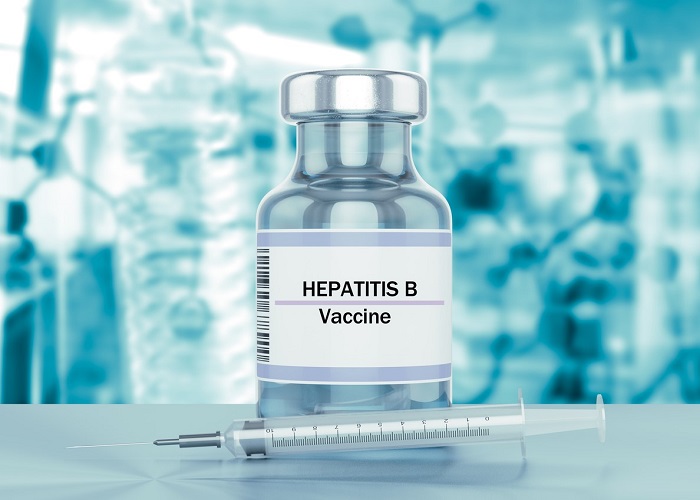
This week saw the start of a $1.6m trial in Guinea-Bissau, funded by the United States Government, on the timing of hepatitis B vaccinations, which will delay vaccination for up to 7 000 newborns in Guinea-Bissau; a move criticised by experts.
Health Policy Watch reports that the region is currently overwhelmed by the virus, with nearly 20% of the population infected, but the US Centres for Disease Control and Prevention (CDC) has awarded a controversial Danish research group a five-year grant to study the “optimal timing and delivery of monovalent hepatitis B vaccinations on newborns”, according to the US Health and Human Services’ (HHS) federal register.
The trial aims to enrol 14 000 babies in a “randomised controlled trial to assess the effects of neonatal hepatitis B vaccination on early-life mortality, morbidity, and long-term developmental outcomes”, according to the register.
Half of the babies will get vaccinated at birth, while the other half will get vaccinated six weeks later.
The World Health Organisation (WHO) has recommended hepatitis B vaccinations since 1992, and universal birth vaccinations from 2009. It is usually given as a series of three or four injections, and several clinical trials have already established the best intervals for the vaccines.
“(Robert F Kennedy Jr), the Secretary of Health and Human Services, will soon conduct his own Tuskegee experiment,” US paediatrician Dr Paul Offit, co-inventor of a rotavirus vaccine, wrote this week on his Substack platform.
“He has chosen the resource-poor nation of Guinea-Bissau, West Africa, to do it, where about 18% of the population is infected. The WHO strongly recommends that all children worldwide receive a birth dose of the vaccine to prevent mother-to-child transmission,” added Offit, director of the Vaccine Education Centre and an attending physician at Children’s Hospital of Philadelphia and a Professor of both Paediatrics and Vaccinology at the University of Pennsylvania.
Tuskegee refers to a 40-year US study that withheld syphilis treatment from 399 African Americans between 1932 and 1972 to observe the effects of the disease when untreated.
Danish researchers
The CDC grant has been awarded to the Bandim Health Project at the University of Southern Denmark, led by controversial couple Dr Christine Stabell Benn and her husband Dr Peter Aaby.
Benn is an adviser to the US Advisory Committee on Immunisation Practices (ACIP), which recently resolved to stop recommending hepatitis B vaccines to US newborns.
Her and Aaby’s research has focused on the “non-specific effects” (NSE) of vaccines. They have conducted trials involving thousands of children in Guinea-Bissau and Denmark, and assert that all vaccines should also be tested for NSEs.
However, the journal Vaccine recently published a comprehensive review of 13 trials conducted by their research group, Bandim, which showed that their trials have been unable to show non-specific effects for measles, TB, diphtheria, tetanus and whooping cough vaccines.
“We were surprised to find several instances of questionable research practices, such as unpublished primary outcomes, outcome switching, reinterpretation of trials based on statistically fragile subgroup analyses, and frequent promotion of cherry-picked secondary findings as causal, even when primary outcomes yielded null results,” according to the review, which was headed by Dr Henrik Støvring of the Department of Biomedicine, at Aarhus University in Denmark.
Enrolment before new policy rollout
Currently, babies in Guinea-Bissau only receive the hepatitis B vaccination from six-weeks-old. But about 11% of children in the country are already infected with hepatitis B by the age of 18 months, so the government has resolved to introduce vaccination at birth from 2027, as recommended by the WHO.
The vaccine is delivered in a series of three or four injections. When given within 24 hours of birth, the vaccine is up to 90% effective in preventing mother-to-child infection.
Bandim says its trial will stop enrolling participants when the government roll-out of the hepatitis B vaccine to newborns starts. They will follow their cohort for five years, primarily to compare “overall mortality and hospitalisations”, and “secondary outcomes”, looking at “atopic dermatitis and neurodevelopment”, according to a Bandim press release.
“The hepatitis B vaccine at birth has never been tested on a large scale for its overall health effects, so it is unknown whether the vaccine has non-specific health effects,” added Bandim.
But Professor Gavin Yamey, director of the Centre for Policy Impact in Global Health at Duke University, argued that “it is unethical to do a randomised controlled trial in which you withhold a proven, life-saving vaccine from newborn babies”.
Offit contends that RFK Jr has “manipulated the study to support his unsupportable, science-resistant beliefs about harms caused by the hepatitis B vaccine”.
He also notes that the study is single-blinded, meaning researchers will know which children received a birth dose of the vaccine.
“This allows for investigator bias, where the investigator might find vague neurodevelopmental problems in the birth-dose group but not the six-week group,” he added.
See more from MedicalBrief archives:
African countries pledge to end ‘silent disease’
US to end recommendations for newborns’ hepatitis B jabs