


Scientists have identified two simple body measurements that together are linked to nearly double the risk of death, and while body mass index (BMI) is how many clinicians assess healthy weight, this latest evidence has now called into question how reliably this one factor can predict the relative risk of death.
In China, researchers led by a team from the First Affiliated Hospital of Chengdu Medical College in Sichuan, have identified another unique combo, measuring both body size and strength, that was linked to nearly double the risk of death.
Their study tracked the health of 5 674 adults in the United States over the course of nearly seven years, during which time, 373 deaths occurred.
Participants with both excess abdominal fat and relatively weak grip strength were especially at risk of death during the study.
They had a 97% increased risk of mortality than those without excess abdominal weight or low relative grip strength.
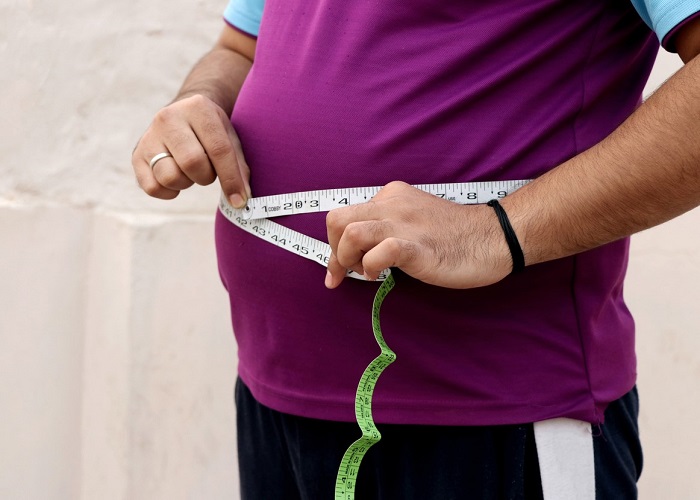
In this particular study, abdominal fat wasn’t measured directly. It was gauged based on the diameter of a participant’s abdomen.
On its own, this measurement was not significantly associated with mortality. But low relative grip strength was.
Previous studies have examined the association between absolute grip strength and mortality risk, but the current study considered participants’ grip strength relative to their body size.
Those with the weakest grips relative to their body size showed a significantly elevated mortality risk of nearly 60%.
Combined, excess abdominal fat and low relative grip strength were associated with a nearly two-fold increased risk of all-cause mortality.
This was independent of age, socio-economic status, lifestyle factors, and comorbidities.
The team, therefore, argues that abdominal diameter “may better reflect visceral adiposity”, whereas relative grip strength “may better identify weakness in individuals with greater body mass”.
Both of these simple measurements could be conducted safely and easily in clinical settings, although calculating relative grip strength also requires BMI.
While it’s hard to compare these results with previous research, the mortality association is “somewhat stronger than the pooled estimate from studies using BMI, waist circumference, or absolute grip strength”, according to the authors.
But more evidence is needed before either test becomes a staple at the doctor’s office.
As much as we might like it to, no single number can definitively predict a person’s future health. What some body measurements can do, however, is keep doctors and patients aware of certain risk factors.
The best picture of overall health may come from combining together numerous measurements.
When excess body fat and low grip strength co-occur, they are known together as dynapenic obesity.
A previous meta-analysis found a 73% higher mortality risk for dynapenic obesity, defined using waist circumference: other studies have used BMI, alongside mostly absolute measures of grip strength.
Emerging evidence suggests that measures of body fat may be more predictive of health issues than BMI alone.
“BMI can still be useful, but it should be interpreted alongside waist circumference, changes in weight, strength, physical function, and overall health,” said University of Rhode Island kinesiologist Bryan Blissmer.
In recent research, Blissmer and his colleagues found that an overweight BMI score was actually associated with lower mortality in both sexes.
“For older adults,” Blissmer explained in a recent interview, “maintaining muscle, mobility, and good nutrition deserves attention alongside body weight, and unexplained weight loss should not automatically be viewed as a positive.”
Study details
Association of dynapenic obesity defined by sagittal abdominal diameter and relative grip strength with all-cause mortality: a prospective cohort study
Xiaoyan Wang, Xuecui Zhang, Yanru Li et al.
Published in The Archives of Gerontology and Geriatrics in November 2026
Highlights
Dynapenic obesity was associated with nearly twice the mortality hazard.
SAD and relative grip strength jointly defined dynapenic obesity.
Dynapenic obesity with high SII or HbA1c had the highest mortality hazards.
Abstract
Background
Dynapenic obesity is associated with increased mortality, but definitions based on BMI, waist circumference, or absolute grip strength may misclassify adiposity and muscle weakness. We examined whether sagittal abdominal diameter (SAD) combined with relative grip strength identifies a high-risk phenotype and explored potential explanatory pathways.
Methods
This prospective cohort included 5674 US adults followed for a median of 6.75 years. Participants were classified as Normal, Abdominal Obesity, Dynapenia, or Dynapenic Obesity based on SAD and relative grip strength. Survey-weighted Cox models using age as the time scale estimated hazard ratios (HRs) for all-cause mortality. Exploratory mediation analyses estimated the proportions of the observed association statistically explained by systemic immune-inflammation index (SII) and HbA1c. Joint analyses cross-classified phenotypes by biomarker levels.
Results
During follow-up, 373 deaths occurred. Dynapenic Obesity was associated with the highest mortality risk (HR 1.97; 95% CI 1.41–2.75), followed by Dynapenia (HR 1.60; 95% CI 1.11–2.30), whereas Abdominal Obesity was not significantly associated with mortality. SII and HbA1c statistically explained 5.8% (P = 0.041) and 13.7% (P = 0.006), respectively, of the observed dynapenic obesity–mortality association. Participants with Dynapenic Obesity and elevated biomarkers had higher mortality risks (HR 3.11 for high SII; HR 2.53 for high HbA1c). Findings were robust across sensitivity analyses.
Conclusions
Dynapenic obesity, defined using SAD and relative grip strength, was associated with nearly twice the risk of all-cause mortality. SII and HbA1c may help characterise mortality risk in individuals with dynapenic obesity.
See more from MedicalBrief archives:
Moving away from BMI as a health risk indicator
BMI a weak indicator of fatty tissue content, large analysis finds