


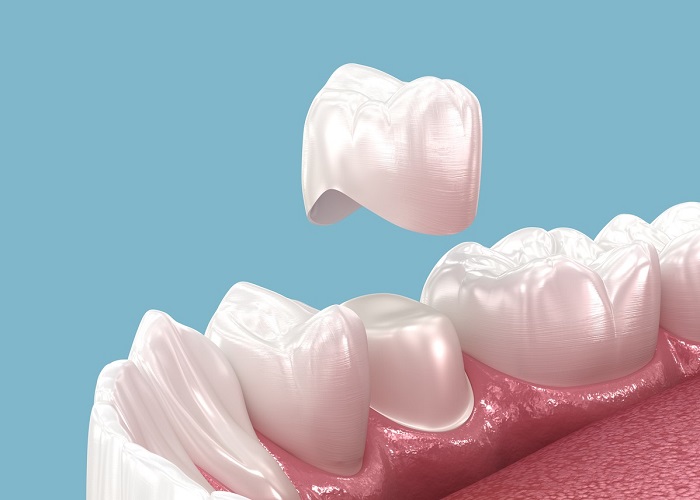
Researchers have found a way to slash the processing time for 3D-printed zirconia crowns from as much as 100 hours to under 30 minutes. The advance could eventually let dentists print strong, customised permanent crowns for patients within a single appointment, said the team from the University of Texas-Dallas.
Zirconia is considered the gold-standard material for permanent dental work because of its strength and durability, and with support from the National Science Foundation (NSF), the scientists are now planning to commercialise the technology for use in crowns, bridges, veneers and other dental restorations.
Dr Majid Minary, professor of mechanical engineering in the Erik Jonsson School of Engineering and Computer Science, said that because the crowns can be custom-printed for each patient on the same day, this approach offers greater personalisation, faster treatment and the convenience of receiving a permanent restoration in a single visit.
Why zirconia crowns are difficult to 3d print quickly
Dental crowns are protective caps placed over teeth that have been damaged or affected by decay, but can also be used to support a dental bridge replacing a missing tooth.
The 3D-printed dental restorations have become an increasingly attractive option because they can be customised more precisely and matched to a patient’s tooth colour.
The manufacturing process can also be more efficient, potentially reducing both costs and material waste. However, same-day 3D-printed crowns currently available are generally made from ceramic resins, which do not have the strength of zirconia.
Same-day zirconia crowns are already offered in some dental practices, but they are typically produced by milling rather than 3D printing. Milling requires carving the restoration from a solid block of zirconia. That approach can restrict the complexity of possible designs and carries a risk of micro-cracking during milling or sintering.
UT Dallas researchers and their collaborators have now addressed one of the biggest obstacles to producing zirconia restorations with 3D printing. Their method dramatically shortens the processing required after a restoration comes out of the printer.
Describing the technique in the journal Ceramics International, they said that before it could become commercially available, the method would still need clinical validation and regulatory approval.
Slashing the process to minutes
Once a zirconia crown has been 3D-printed, it must pass through two important stages called debinding and sintering.
During debinding, the crown is slowly heated to remove the resin that holds the zirconia particles together during printing. Traditionally, that step can require anywhere from 20 to 100 hours.
After the resin has been eliminated, the crown is sintered. This high-temperature firing process works somewhat like baking clay in a kiln, causing the zirconia particles to fuse together and form a dense, hardened material.
“Debinding has been the bottleneck in the process,” said Minary, corresponding author of the article. “It must be done very slowly. If you speed it up, the polymer being burned off turns into gas, and if that gas cannot escape, the crown may crack or fracture. But a debinding time of 20 to 100 hours is not practical for same-day dental service.”
The new technology cuts the debinding stage to under 30 minutes. The system combines improved heat transfer with porous graphite felt that can reach temperatures above 2 550 degrees Fahrenheit. The felt surrounds the 3D-printed restoration and gives gases released by the resin a way to escape.
At the same time, a vacuum system removes those gases from the surrounding area.
“The combination of all of these features is what makes it work,” Minary said. The team is now working with Pan-AM Dental Laboratory to move the technology toward commercialisation.
Study details
Single-step thermal debinding for ceramics vat photo-polymerisation in less than 30 minutes
Mahdi Mosadegh, Moein Khakzad, Zahra Sepasi et al.
Published in Ceramics International Volume 51
Abstract
Vat photopolymerisation (VPP) 3D printing of ceramics is known for producing high-resolution, high-quality ceramic parts, particularly in the dental industry. However, the thermal debinding (TD) process in ceramic VPP is time- and energy-intensive due to the large binder content (40–60 vol%), limiting its widespread adoption. The TD step often takes 20–100 h, significantly increasing manufacturing costs and preventing the use of VPP for processes requiring fast turnaround times. Here, we demonstrate an ultrafast thermal debinding (UFTD) process for zirconia parts fabricated by VPP, achieving complete binder removal in under 30 min. By utilizing the unique advantages of vacuum debinding and rapid heating with porous graphite felts, we accelerate binder removal while maintaining the structural integrity of the ceramic parts. Our results show a 40-200-fold reduction in processing time and a 3500-fold decrease in energy consumption compared to conventional thermal debinding, with the UFTD-processed samples exhibiting properties comparable to conventionally processed 3D-printed zirconia. This approach provides a promising method for faster, energy-efficient production of zirconia parts, while the findings also offer valuable insights into the mechanisms of UFTD, paving the way for its application in other ceramic-based additive manufacturing processes.
See more from MedicalBrief archives:
Now scientists are regrowing human teeth