


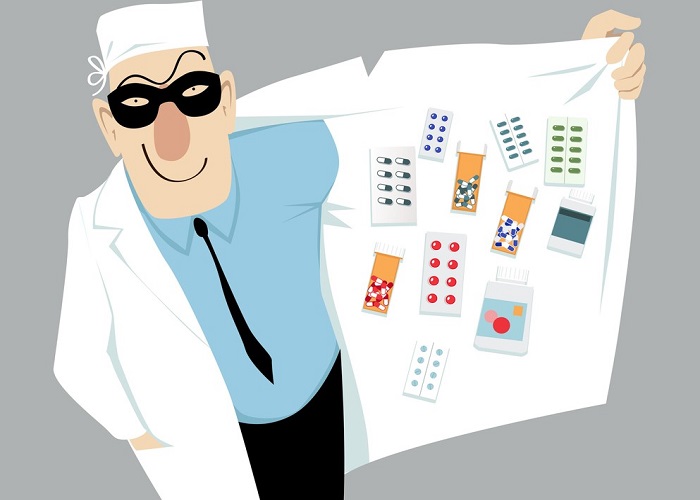
The booming trade in black market weight loss drugs in South Africa is spiralling, with authorities seemingly unable to plug the sources or prevent desperate consumers from buying potentially harmful or fake products, reports Business Day.
The transactions, in most cases, are simple. An exchange of WhatsApp messages – with no discussions about lifestyle choices, eating less and exercising more – just a payment to someone whose details were circulating among her friends, and a package of weight loss injections was delivered to Beth Amato’s front door.
The knock-off of Novo Nordisk’s Ozempic arrived without instructions, in a box containing white powder and vials of clear liquid that she had to combine herself. She bought needles from a pharmacy, and injected the “Izempic” into her abdomen.
It worked: her appetite diminished, the side effects were manageable, and weekly, the kilograms fell away. But while it was easy, she said she started to get concerned, also by the fact that no one was giving her dosing advice.
She subsequently obtained a prescription and switched to a legitimately marketed product.
However, the ease with which she acquired an unregistered version of the popular GLP-1 weight loss injections illustrates the inability of authorities to stamp out the country’s booming black market. At best the jabs are smuggled versions of the real thing, at worst, they may contain dangerously high doses, undisclosed ingredients and harmful contaminants.
There are no reliable estimates of the size of the illicit trade, but the brazen promotion of unregistered products on websites, Facebook pages, WhatsApp groups, and face to face at gyms and beauty salons, has authorities, pharmaceutical companies and healthcare professionals deeply worried.
“I’ve never seen anything like it,” said Dr Wayne May, an endocrinologist and obesity specialist. Companies are offering an array of unregistered products, untested combinations of medicines, and drugs that are still being researched in clinical trials, including Eli Lilly’s retatrutide. “We don’t really know what’s in these things,” she added.
The South African Health Products Regulatory Authority (SAHPRA) has approved only three injectable medicines containing GLP1s: Novo Nordisk’s liraglutide and its predecessor semaglutide, and Eli Lilly’s tirzepatide. The medicines are marketed under different brands for diabetes and weight loss.
Novo Nordisk’s Ozempic (for diabetes) and Wegovy (for weight loss) contain only GLP-1, while Eli Lilly’s Mounjaro (for diabetes) and Zepbound (for weight loss) contain a second peptide that mimics the gut-hormone glucose-dependent insulinotropic polypeptide (GIP).
Semaglutide and tirzepatide are still under patent, meaning any company that imports the peptides or makes copies is breaking the law, says Stavros Nicolaou, Head of Strategic Trade at Aspen Pharmacare, which has a licensing deal with Eli Lilly to market Mounjaro in South Africa.
The country is an enticing market for companies selling weight loss medicines, as it has the highest prevalence of obesity in Sub-Saharan Africa.
The proportion of South African women who were obese stood at 41% in 2016, and is projected to reach almost 47% by end-2025, according to the World Obesity Federation. The numbers for men are smaller, but rising rapidly – from 16% to more than 23% over the same period.
Despite growing recognition of obesity as a chronic disease and increasing evidence that GLP-1s offer additional benefits such as improved heart health and reduced risk of renal failure, their price tag puts them out of reach for most South Africans.
The shots are not available in the state sector, and private sector purchases can easily run to R10 000 a month, said Wits Ezintsha director Francois Venter, an HIV clinician who turned his attention to metabolic disorders when he saw his patients struggling with rapid weight gain after starting antiretroviral treatment.
While people who are battling with their weight are usually advised to eat less and be more active, many obese patients find that doesn’t work.
For those people, weekly GLP-1 injections are transformative, he said. “But medical aids would be bankrupt tomorrow if they started to offer them,” he said.
While some medical schemes cover GLP-1 shots for diabetes, none covers their use for weight loss, forcing patients to cough up from their own pockets.
“GLP-1 agonists are prohibitively expensive. For broader access to these, significant price reductions will be required,” said Noluthando Nematswerani, chief clinical officer of Discovery Health.
The price of GLP-1s would need to fall to below R1 000 a month to deliver a cost-effective benefit for high-risk patients with morbid obesity and multiple chronic conditions, according to Discovery’s modelling.
For lower risk members, the price would need to be considerably lower, she said.
Ozempic was approved by the US Food and Drug Administration (FDA) as a treatment for type 2 diabetes in 2017, and quickly garnered attention for its unanticipated and striking effect on weight.
The resulting surge in off-label prescribing for weight loss meant Novo Nordisk could not keep pace with demand. The high price of its blockbuster and intermittent shortages then prompted the FDA to grant permission for pharmacies to compound generic semaglutide to ensure diabetics had continued access to life-saving supplies, a move that inadvertently fuelled a black market boom.
Sales of legitimately and illicitly compounded GLP-1s skyrocketed worldwide.
The FDA recently declared the US semaglutide shortage over, closing the door on compounded sales except for patients who require doses that are not commercially available.
The Australian Therapeutic Goods Authority has gone a step further, banning compounded GLP-1.
Despite its repeated warning to the public about the dangers of weight loss medications sourced from unregulated sources, SAHPRA has yet to dent the trade in compounded GLP-1s, or slash sales of fake and falsified products.
It has run into stiff industry opposition to its plans to declare compounded GLP-1s an undesirable practice, and, with just 12 inspectors on its staff, lacks the resources to scrutinise all businesses advertising these products, said CEO Boitumelo Semete-Makokotlela.
Medicines made by compounding pharmacies don’t undergo the same scrutiny as those made in SAHPRA-approved factories, and pose multiple risks to patients, including dosing errors and contamination, she said.
“We don’t know where the compounders are getting their product from,” she added, noting that while the regulator has given the green light to the finished products made by Novo Nordisk and Eli Lilly, it has not approved any sources for the active pharmaceutical ingredients that go into them.
Recent seizures by port authorities suggest shipments of unauthorised semaglutide and tirzepatide are being smuggled in from China, hidden in shipments of innocuous products like cat food and calcium, said Nicolaou.
Given SAHPRA’s limited capacity, pharmaceutical manufacturers are trying to raise awareness of the problem with other authorities, including the South African Revenue Service (SARS), Customs, the border management authority, SAPS and the Hawks, he said.
Since semaglutide is still under patent in South Africa and Novo Nordisk has not issued licences for other companies to import the peptide or make generic copies of it, all compounded GLP-1s containing this API are illegal, said Novo Nordisk South Africa’s Head of legal ethics, compliance and quality, Jonas Lind Hansen.
The Medicines Act’s provisions for compounding were designed to cater for individual patients with specific needs, not intended to allow companies to produce compounded medicines on an industrial scale, he pointed out.
“It is being misused by what we believe are criminal organisations … they don’t even know the patients. Even for specific patients, it’s undesirable, because the quality of what we’re seeing is so low that we think it’s dangerous,” he added.
Novo Nordisk’s attempt to interdict compounding pharmacy Idexis Pharmaceuticals from using semaglutide has yet to be resolved by the courts.
But it is also pushing back with a campaign of its own, partnering with men’s health service Androlab to promote GPL-1s on social media and prescribe its products.
People are often too embarrassed to seek guidance from healthcare professionals, and don’t realise the risks of using injectable weight loss drugs without medical supervision, said AndroLab CEO Alistair McAlpine. Even when used correctly, GLP-1s can cause serious side-effects such as bowel obstruction and pancreatitis.
The risks are far greater with unauthorised products, he added, describing a consultation with a patient who developed large patches of red and inflamed skin after using compounded injectables. “That immediately tells me it’s a contaminated product,” he said.
While McAlpine has reported cases like these to SAHPRA, he says the paperwork puts many doctors off, and the limited number of adverse events recorded by the regulator is almost certainly the tip of the iceberg.
“Ultimately, you have an ethical responsibility to make sure that patients aren’t hurt [and] you need to report these things,” he said.
SAHPRA is particularly alarmed by sales of compounded injectables that contain multiple ingredients which have not been tested or approved in combination, said Semete-Makotlotela.
Doctors like Tommie Smook, of the weight loss practice Dr Smook & Partners managed by RxMe, don’t share the regulator’s concern. His practice prescribes compounded medicines containing a “proprietary blend” of amino acids, semaglutide and tirzepatide, which he says are tailored to an individual’s needs.
He expresses confidence in combining the two peptides, despite the lack of clinical research demonstrating the safety of using them together.
“There’s no reason why we can’t do what we’re doing,” he said, arguing that doctors frequently prescribe medicines that been proven safe and effective on their own but not tested together. For example, doctors will readily prescribe an antibiotic with cortisone and an anti-inflammatory, he said.
Smook declines to disclose the sources of the semaglutide and tirzepatide contained in the compounded medicines he prescribes, saying only that they come from “reputable pharmaceutical companies all over the world”, and are compounded in a “SAHPRA-approved” facility.
“We’ve treated thousands of patients… more than 15 of them lost more than 100kg. My biggest loser … lost 170kg. He had a prescription the whole time, and we knew exactly what was in the product,” said Smook, declining to provide the price of the medicines he prescribes.
Market forces may ultimately undermine South Africa’s black market for injectable GLP-1s.
The patent on semaglutide expires in many countries next year, opening the way for new generic entrants that are likely to drive down prices.
Pharmaceutical companies are also racing to develop GLP-1 pills, which are expected to be easier and cheaper to manufacture than shots, widening access to millions more patients.
See more from MedicalBrief archives:
SAHPRA and drug companies flag risks of compounded weight-loss drugs
FDA issues dosage warning for semaglutide compound
Fake Ozempic sends users to hospitals