


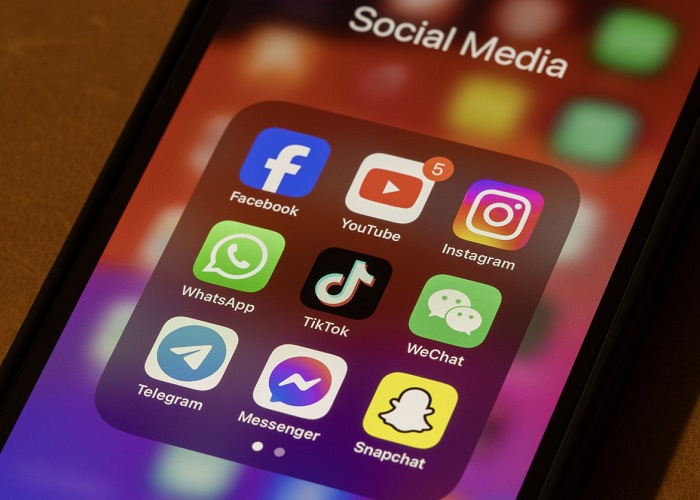
Social media influencers are a growing source of medical advice but can be misleading – their reliability often undermined by lack of expertise, industry influence, entrepreneurial interests and personal beliefs.
Such biased or misleading advice, amplified by parasocial bonds and direct engagement, can cause physical, psychological, financial and systemic harm, write Raffael Heiss and collegues in The BMJ, who say co-ordinated action by governments and platforms is essential to protect users and to strengthen users’ ability to evaluate medical advice from these people.
Influencers’ backgrounds range from qualified health professionals to people with no medical training, and their reach spans from a few thousand followers to millions.
Astonishingly, more than 70% of young adults in the US follow influencers, and more than 40% have purchased products based on their recommendations.
In Austria, 83% of 15-25-year-olds report seeing health related influencer content, and 31% have purchased dietary supplements, 13% medications and 11% medical self-tests as a result.
The reliability of influencer advice varies widely. For instance, a recent study found that influencer and corporate posts about popular medical tests with uncertain evidence and risks of overuse were mostly promotional, citing benefits in 87% of cases but mentioning harms in only 15%.
Another study of German influencers’ promotion of dietary supplements found that about two-thirds of the recommended doses exceeded national safety recommendations and 7% surpassed the European Food Safety Authority’s upper safe limits.
Such advice can cause psychological, physical, financial, and systemic harm – from inaccurate self-diagnosis and inappropriate treatments to unnecessary spending and higher healthcare costs.
Information provided by influencers can be subject to four sources of bias: lack of medical expertise or relevant knowledge, industry influence, entrepreneurial interests, and personal biases. The effect of these biases is magnified by influencers’ ability to form real or one sided (often referred to as “parasocial”) bonds with followers, making them highly persuasive communicators.
Oversight is therefore important, but effective monitoring and regulation are difficult because user experiences are personalised, shaped by opaque algorithms, and often cross national borders beyond the reach of regulation.
Sources of bias in influencers’ medical advice
The first source of bias is a lack of expertise or relevant knowledge. Unlike healthcare providers or trained medical journalists, many influencers have no formal education in the topics they cover, increasing the risk of promoting inappropriate tests or treatments.
A prominent example is celebrity Kim Kardashian, who encouraged her 360m Instagram followers to have full body screening with magnetic resonance imaging – a test which is without proved benefits and linked to over-diagnosis, unnecessary interventions, and costs.
However, even influencers with medical qualifications can provide misleading advice, particularly when speaking outside their area of expertise or offering generalised recommendations without knowledge of individual health histories.
During the Covid-19 pandemic, for instance, medically trained influencers with large followings promoted insufficiently tested treatments, including high dose vitamin D supplements and Ivermectin.
A second source of bias is industry influence. Companies may provide free products, pay for promotional posts on social media or blogs, use affiliate marketing (commission for sales through unique links), or engage influencers in long term collaborations as brand ambassadors.
As a result, many influencers are paid to promote direct-to-consumer tests, skincare products, or even prescription drugs. This is especially problematic when the influencers are physicians and profit from promoting medical products or treatments.
In many countries, rules require influencers to clearly disclose any “material connection” to a brand – such as payment or gifts – but enforcement is inconsistent and penalties for violations are rare or minimal.
Third, many influencers pursue their own entrepreneurial interests and often use threat-inducing content that drives engagement.
Such strategies can help influencers expand their audience while promoting their own products, including dietary supplements, which are weakly regulated, easy to produce, and often untested.
Some create and amplify concerns about low testosterone or vitamin deficiencies to boost sales, despite the risks of overdose, drug interactions, or contamination with harmful substances. Certain supplements may also act as gateway products, for example, the use of muscle-building supplements has been associated with subsequent use of anabolic steroids among young men.
Finally, influencers – including patients and trained physicians – may be shaped by personal biases. These include lifestyle choices or ideological beliefs that are not supported by reliable evidence, such as in homeopathy or anti-vaccine misinformation.
Some lifestyle influencers share anti-vaccine content rooted in personal experience and mistrust of mainstream health authorities.
While many people hold such beliefs, these biases are typically moderated in professional contexts through institutional norms (as in journalism or medicine) and organisational safeguards, such as editorial oversight or clinical guidelines.
Influencers are usually not subject to such standards and operate without professional or editorial accountability.
Given these sources of bias, why do people still trust influencers? One reason is that many are unaware of these biases or overlook them, sometimes not even recognising when messaging is actually marketing.
Another is that influencers often act as role models, and their communities may trust them even in promotional settings. Their authority rests on three interrelated facets: they have the ability to create intimate bonds through sharing personal experiences and interacting directly with users; they are often perceived as authentic because they express personal opinions and experiences without institutional constraints; and they signal expertise in the field they comment on, positioning themselves as opinion leaders.
Together, these dynamics can draw attention away from potential biases in their advice.
Can influencers also help the public?
Some influencers do provide useful health advice. This includes doctors and others who help to debunk common misconceptions, for example, myths about oral contraceptives, toxins in vegetables, or unsupported vaccine side effects.
Influencers sometimes work with medical professionals to amplify evidence based messages, using plain, relatable language and reaching audiences that traditional health communication often misses, including young people and marginalised groups.
They can also use their bonds with followers to motivate lifestyle changes and encourage healthy behaviours.
Influencers who are patients themselves may provide valuable peer support, especially for stigmatised conditions, by creating safe spaces and sharing personal experiences. Many patients also see themselves as experts in their own condition, and their lived experience can offer important insights that differ from professional knowledge.
However, their specific expertise does not automatically translate into broader medical authority. Lived experience should therefore be complemented by reliable evidence, and should not be used irresponsibly, for instance, to promote medicines.
Action to reduce harm
Maximising the benefits and minimising the harms of influencers’ medical advice will require collaboration between multiple stakeholders, particularly governments and social media platforms
Governments can act by reducing systemic risks, including those arising from legal but harmful medical advice. The EU’s Digital Services Act (DSA) requires large online platforms to assess systemic health risks and report how they mitigate them.
For example, platforms must evaluate whether their algorithms amplify anti-vaccine content and describe measures to limit its spread. These processes are subject to independent audits, with substantial fines for non-compliance.
Another approach is to increase influencer accountability by assigning them editorial responsibility, treating them similarly to traditional media.
In Italy, high reach influencers must register with the national media authority and comply with a formal code of conduct, which includes avoiding misleading or harmful health content.
In France, legislation prohibits influencers from promoting cosmetic surgery, nicotine products, certain medical devices, and from encouraging therapeutic abstention (eg, discouraging chemotherapy).
Violations by influencers targeting a French audience (e.g, using French language) can incur fines of up to €300 000 or prison terms of up to two years.
Platforms also bear responsibility as hosts and amplifiers of influencer content. They can strengthen fact-checking mechanisms, partner with medical fact checkers, and avoid shifting responsibility to users.
Transparency could be improved by granting independent researchers access to platform data, algorithms, and moderation processes. Although the EU Digital Services Act mandates such access, it still relies on the co-operation of platforms, and platforms could extend access to other regions.
Broader access would enhance understanding of the risks of misleading medical advice from influencers and its cross border spread.
Platforms can also establish professional standards for influencers, implement mandatory training, and enforce sanctions, including restricting their ability to earn money on the platform or removing them, when standards are breached.
Other societal actors can also contribute. Some influencers may participate in training, share evidence based information, and engage in public health campaigns.
Users can help by correcting misleading advice in comment sections or reporting problematic posts through in-platform tools or to national regulators such as the UK’s Advertising Standards Authority.
Yet awareness of these mechanisms is low and users need scepticism, digital literacy, and motivation to respond. Traditional media and fact-checking organisations can debunk harmful advice, while healthcare professionals can counter misinformation in consultations.
Health institutions can partner with influencers to deliver evidence based messages, and patient organisations can mobilise communities to critically discuss circulating advice.
Most of these measures, however, are reactive and depend on sustained funding and government support.
No single solution
All of these measures face obstacles, and regulating platforms and influencers is not straightforward. Platforms are powerful commercial organisations with substantial lobbying resources, while influencers are profitable content creators.
To resist regulation, platforms invoke freedom of speech, even for misleading content. Similar tactics have long been seen in other public health disputes, including those involving tobacco, alcohol, and food industries, which framed regulation as an attack on individual choice and portrayed the state as a political leviathan.
Governments should not be deterred by such efforts. Effective regulation requires political will, particularly in the face of industry resistance. The EU’s Digital Services Act is an attempt to make platforms more accountable.
If platform co-operation is ensured and enforcement proves effective, the act could serve as a model for other legislation. Regulators will also need better ways to hold influencers accountable. Existing breaches of advertising rules often result in little more than warning letters or content removal, which has limited deterrent effect.
Stricter regulations in Italy and France attempt to increase sanctions, but it remains uncertain whether compliance with the regulations can be effectively monitored or if they will truly enhance accountability, particularly across borders.
Other measures face similar constraints. Fact-checking often fails to reach its intended audience, and evidence is limited that influencer training changes behaviour at scale.
Public education to help users critically assess unqualified medical advice is urgently needed, but such efforts will take time to show results. Engaging influencers to share evidence based advice, particularly with hard-to-reach groups, is therefore also important.
Yet public funding for these initiatives will not compete with the far greater financial resources of industry collaborations.
There is no one-size-fits-all solution, but combined efforts across multiple fronts can make a meaningful difference. Required strategies include effective regulation, stronger platform and influencer accountability, and user empowerment through targeted education and access to reliable, fact checked information.
Combined, these strategies can help create a safer information environment in which influencers are constructive rather than harmful sources of health advice.
Raffael Heiss, professor12,
Steven Woloshin, professor23,
Sneha Dave, executive director24,
Elena Engel, PhD candidate125,
Sascha Gell, PhD candidate125,
Erin Willis, associate professor26
1. Centre for Social and Health Innovation, MCI Management Center Innsbruck, Austria
2. Lisa Schwartz Foundation for Truth in Medicine, Norwich, USA
3. Dartmouth Institute for Health Policy and Clinical Practice, Dartmouth College, Lebanon, USA
4. Public representative, Generation Patient, Indianapolis, IN, USA
5. Department of Communication, University of Vienna, Austria
6. Department of Advertising, Public Relations and Design, University of Colorado Boulder, USA
See more from MedicalBrief archives:
TikTok main source of health info for Gen Z, finds survey
Medical influencers come with serious side effects
Gynaecologists should tune into TikTok for patient insight
Social media fuels birth control backlash
New York health advisory lists social media an environmental toxin
Latest TikTok trend alarms health experts
TikTok bans videos promoting sunburn after backlash about cancer