


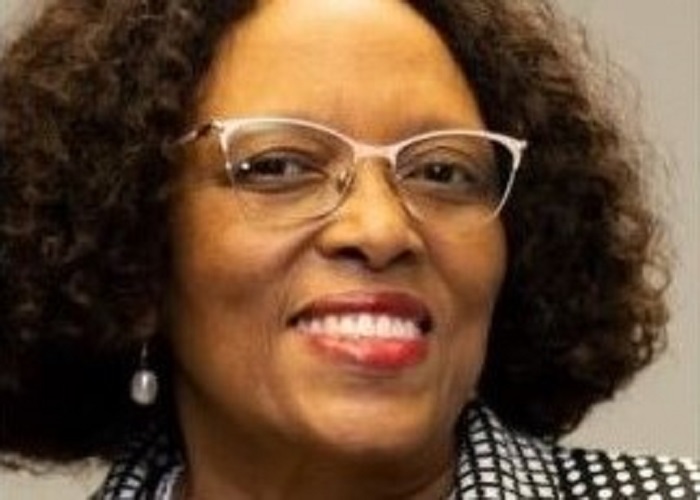
South Africa’s Precious Matsoso, from the Wits Health Consortium at the University of the Witwatersrand, has been acknowledged as part of Nature’s 10, the journal’s list of outstanding people who shaped science in 2025.
In 2025, it has often felt as if the world was tearing itself apart. Then, on 16 April, at around 2am local time in Geneva, Switzerland, came a glimpse of unity.
The 190-odd nations belonging to the World Health Organisation (WHO) had reached a consensus on the draft text of the first global pandemic treaty.
The fruit of more than three years of gruelling negotiations, the document lays out guiding principles for how the world should pull together to prevent, prepare for and respond to the next pandemic. “I’m overwhelmed, overjoyed,” said Matsoso, who co-chaired the WHO group that steered the negotiation, that morning.
A large source of friction during talks was how to make a plan that would be more equitable than the response to the Covid-19 pandemic had been. The open sharing of samples and data on the spread and evolution of the SARS-CoV-2 virus enabled the development of life-saving treatments and vaccines.
But those benefits were not shared equally between nations. Low-income countries were forced to wait for life-saving drugs, and high-income nations were accused of hoarding them.
Matsoso, an experienced figure in global health, was well placed to navigate the sometimes fractious negotiations. At several points in her career, she had helped to expand access to HIV medications, including as director-general of South Africa’s Health Department from 2010 to 2019.
Based in Pretoria, and with the Wits Health Consortium, she has held various leadership roles at the WHO over the past two decades.
Steering the pandemic-treaty negotiation was punishing, said Roland Driece, a director at the Dutch Health Ministry in The Hague, who co-chaired the first two and a half years of talks with Matsoso. “Everybody is unhappy with you because you never do what they want you to do,” he said.
“You always try to find a middle ground.”
Matsoso used a variety of tactics to encourage compromise. At times, she had to be firm in the face of acrimonious debate. “I don’t want to hear anybody’s red line here,” she recalls saying. “I think you need to tell me: how are we going to solve this problem?”
But she also brought a warmth and originality to the process that Driece admires. On at least one occasion she sang to delegates: All you need is love by The Beatles carried the message of co-operation. “I had to use every trick in the book to get them to get the work done,” she said.
Lawrence Gostin, a legal scholar at Georgetown University in Washington DC who advised the WHO on the treaty, said her efforts were instrumental. “If it were not for her, we might not have a pandemic agreement.”
The text was formally adopted by national governments in May, but several challenges remain before it can come into force. Details in the contentious section about pathogen access and benefit sharing are still being hashed out by a dedicated working group and are due to be finished in May 2026.
Then, for it to be fully binding, 60 countries must ratify the treaty, which could take months or even years.
Some have argued that the deal is not generous enough to low-income countries. The treaty says companies that make vaccines and other medications during a pandemic must provide at least 20% of those products to the WHO.
“While 20% is better than nothing, it does not equate to a truly equitable and just approach,” noted a Lancet editorial in May.
Matsoso argued that this criticism ignores other hard-won agreements, such as the promise to transfer technological know-how to low-income countries so that they can produce diagnostics and medications themselves.
This is the first agreement of its kind that will enable local production, she said. “We have those provisions now.”
The negotiations felt “like running a marathon, but while sprinting”, she added. There was an arduous list of tasks to get through, and they all had to be done quickly.
And, although nobody wants another pandemic, when the time comes to act, Matsoso is optimistic that the world will be better prepared than before. “I’m hoping that a few decades from now, when people look back, they’ll say, ‘You know, it was worth the effort’.”
Nature article – The first global pandemic treaty — and the woman who made it happen (Open access)
See more from MedicalBrief archives:
Global pandemic accord to be adopted
IP clause sows division over WHO's draft pandemic accord
Pandemic treaty talks extended for a year