


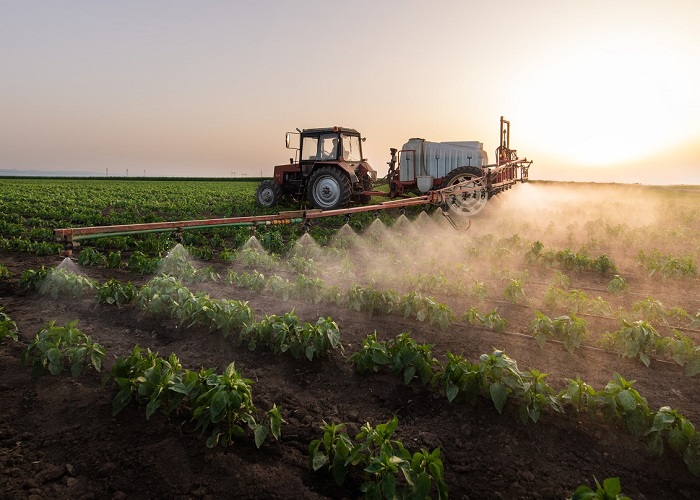
Revised case definitions for three notifiable medical conditions (NMC) related to environmental exposures: poisoning by agricultural or stock remedies (pesticides), lead and mercury, have been introduced in SA.
In the SA Medical Journal, leading health experts outline the revised case definitions and processes for the reporting of these, outlining the benefits and challenges of processing and using NMC data, and urging more widespread and effective participation in the process, as well as increased training and education to increase awareness of the system.
The process
In SA, 56 NMCs for human health are legislated through the National Health Act, and categorised according to the reporting time requirements: category 1 requires reporting within 24 hours; category 2 and 3 within seven days, while category 4 conditions must be reported within one month of diagnosis.
In 2018, the NMC system was revitalised with an electronic, real-time reporting application (web-based and mobile) for rapid reporting and public health action.
Since then, notifications occur predominantly through electronic mechanisms, like mobile or web-based electronic applications, requiring prior registration and authorisation. The relatively small proportion of healthcare providers using paper-based notification systems do so via email, facsimile or WhatsApp.
The results are captured manually at the NICD, potentially incurring delays. Data captured electronically by an authorised healthcare provider are transferred directly to the NMC system’s data mart. Currently, the NMC system receives daily direct feed of laboratory-confirmed notifications within the public sector.
Data transferred to the NMC system’s data mart from clinicians or laboratories are immediately accessible at health establishments at sub-district, district, provincial and national levels, for rapid public health response.
Taiwanese studies have linked electronic NMC reporting systems with improved timeliness, greater accuracy and increased convenience. Similarly, in Indiana (USA) and Nigeria, electronic case reporting was equally effective in improving notifiable disease reporting rates, as well as the completeness of the information submitted.[
Environmental notifiable medical conditions
There are three environmental NMCs in South Africa: agricultural or stock remedy (pesticide) poisoning, lead poisoning and mercury poisoning. Pesticide poisoning has recently been upgraded from a category 2 to a category 1 condition, requiring notification within 24 hours of clinical or laboratory diagnosis by private or public healthcare providers or laboratories.
Lead poisoning and mercury poisoning are classified as category 2, and must be notified within seven days. Healthcare providers have to provide clinical and demographic details of the case(s) notified. These details support case investigations performed by environmental health practitioners (EHPs) in line with prescribed guidelines to facilitate remediation and the prevention of further cases.
The new case definitions for agricultural or stock remedy (pesticide) poisoning, lead poisoning and mercury poisoning provide definitions for suspected, probable and confirmed cases.
Weaknesses of the system
Numerous evaluations of the SA NMC surveillance system point to incompleteness of the data set due to low levels of knowledge of the reporting requirements among health personnel, incorrect or incomplete reporting of data, and discrepancies between data in the NMC system and lab reports.
These compromise the utility of the NMC system, especially for environmental NMCs, which continue to constitute important public health concerns, especially in settings of poverty, and we urge increased awareness and stricter adherence to the NMC process by stakeholders
Pesticides may cause life-threatening symptoms or death, particularly highly hazardous pesticides like organophosphates (insecticide), aluminium phosphide (rodenticide) or paraquat (herbicide). Symptoms vary widely according to the type of pesticide and exposure, and include vomiting, abdominal pain, burning of the skin, respiratory difficulty, nervous system instability, cardiovascular collapse and bleeding tendencies.
In SA, acute pesticide poisoning is a persistent and prevalent health issue, leading to considerable morbidity and mortality
Poisoning by stock remedies (pesticide), lead and mercury
Pesticides may cause life-threatening symptoms or death, particularly highly hazardous pesticides like organophosphates (insecticide), aluminium phosphide (rodenticide) or paraquat (herbicide). Symptoms vary widely to the type of pesticide and exposure, and include vomiting, abdominal pain, burning of the skin, respiratory difficulty, nervous system instability, cardiovascular collapse and bleeding tendencies.
In SA, acute pesticide poisoning is a persistent and prevalent health issue, leading to considerable morbidity and mortality, and frequently observed in agricultural communities.
Additionally, individuals iiving in poorer urban socioeconomic conditions, where pest infestations are widespread, also experience pesticide poisoning.
Unregistered pesticides are informally distributed in these communities, often possessing significant toxicity and being unintended for domestic us.
The NMC case definitions for agricultural or stock remedy poisoning include all symptomatic patients with a plausible history of, and appropriate clinical findings associated with, pesticide exposure, and refer mainly to acute exposures.
CASE STUDY ONE
Pesticide poisoning
In 2023, a Cape Town family with a new baby also had rats in the home, so the child’s father bought a rodenticide, which he placed in all rooms of the house. The next morning, five of the family arrived at the local emergency department with diarrhoea, vomiting and abdominal pain. They were treated and began to improve, but the clinical condition of the month-old baby suddenly deteriorated, as she developed severe difficulty breathing and heart failure.
Despite extensive supportive treatment, including artificial ventilation, she died a few hours later. The remaining family recovered, with only a transient reduction in white blood cell counts.
Case notifications were submitted through the NICD NMCs app, and an investigation by local EHPs identified the rodenticide QuickPhos (aluminium phosphide), an extremely toxic pesticide reserved only for registered pest control agents, as the cause of the poisoning.
Lead poisoning
Even at very low concentrations in blood, lead is a potent neurotoxin, and causes harm to virtually all organ systems. In a systematic review of the blood lead concentrations of children in developing countries published in 2021, it was estimated that 7.8m SA children up to the age of 14 had blood lead concentrations of >5 μg/dL (the new threshold concentration for reporting a case of lead poisoning through the NMC system in SA), while 4.7m children had blood lead concentrations >10 μg/dL.
These estimates are poorly reflected in the SA NMC system, where only three cases were reported between 2018 and 2022; by contrast, the national Poisons Information Helpline (PIH) fielded 22 calls related to lead poisoning, and epidemiological investigations conducted over the same period revealed at least 737 cases with blood lead concentrations >5 μg/dL.
CASE STUDY TWO
Lead poisoning
An epidemiological study undertaken among boys incarcerated for both violent and non-violent crimes in Gauteng juvenile detention centres found blood lead concentrations ranging from 1.7 to 48.1 μg/dL, with the mean (standard deviation) concentration 5.5 (6.4) μg/dL. Of the total sample of 192 children, 34% had blood lead concentrations >5 μg/dL.
Children convicted of violent offences had significantly elevated blood lead concentrations than those those convicted of non-violent crimes. Case histories showed the highest blood lead concentrations were in boys with a history of working on decommissioned mining land to extract residual gold.
Non-specific symptoms like headaches, gastrointestinal pain and muscle weakness, often associated with lead poisoning, were reported by those with elevated blood lead concentrations.
None of the children had received a blood lead test, despite their history of involvement in artisanal mining.
Around 8.9% of sub-Saharan gross domestic product is lost annually due to lost intelligence quotient (IQ) points and to mortality from cardiovascular disease associated with lead exposure.
Settings and activities associated with elevated lead exposure in SA include subsistence fishing, the use of firearms and ammunition, traditional medicines, aluminium cooking pots crafted from waste products, low-cost alcohol, mining operations (including artisanal mining), worker and para-occupational exposure (pollutants transferred from workplace to home) in lead-related industries, and old lead-based paint applied to toys, furniture and older housing.
Mercury poisoning
Mercury is a naturally occurring element, with a wide range of anthropogenic applications, including in medical equipment, electrical switches, fluorescent light bulbs, coal-fired power plants, cement production, batteries, biocides and pesticides, skin lightening creams and dental amalgam filling.
It's also widespread in the informal sector, including in artisanal gold mining and in the production of traditional medicine.
Elevated mercury concentrations have been measured in environmental samples around SA landfill sites, in polluted river systems, and in communities with high levels of fish consumption.
Mercury is a neurotoxin associated with various neurological effects: poisoning symptoms include headaches, numbness and tingling of the hands and feet (peripheral neuropathy), visual difficulties, loss of hearing, tremors, unsteady gait, skin rash and emotional and cognitive difficulties.
CASE STUDY THREE
Mercury poisoning
In 2023, a toddler was admitted to a Western Cape hospital when his mother became concerned about his overall well-being. For three months, he had stopped playful activities, lost weight, was lethargic, constipated and had intermittent fevers.
On admission, he was drooling and preferred to lie down. Physical examination revealed age-appropriate growth but global weakness, pronounced head lag and an unsafe swallow.
A red, desquamating rash on the hands and feet was noted. After tests and imaging studies and consultations with surgical, neurological and dermatological specialists, mercury poisoning was substantiated by a urine test showing a markedly elevated mercury concentration of 261 μg/L (notifiable at ≥10 μg/L).
The child was eligible for chelation therapy, and after a protracted section 21 process, dimercaptopropane sulfonate was procured, and administered daily over five days.
He responded well: within a few months he was running and playing, and the drooling had resolved. The case was notified through the NMC system as mercury poisoning, and home visits were conducted by EHPs and healthcare workers.
These identified potential sources of both mercury and lead exposure, including the heating of elemental mercury to clean jewellery, electronic appliance repair using lead solder, and the manufacture of ‘tik’ (methamphetamine) pipes from broken fluorescent tubes.
Discussion
Agricultural or stock remedy (pesticide), lead and mercury poisoning continue to constitute important public health risks from both intentional and unintentional exposures.
A well-designed and operated NMC system offers an invaluable tool for tracking, analysis and response to cases or patterns of key diseases, and specific environmental poisonings. The NMC system represents a relatively low-cost public health tool for the rapid identification of cases or outbreaks, and swift intervention.
Despite 2023 data indicating a slight uptick in reports to the NMC system, regrettably, levels of adherence among key stakeholders to the NMC processes continue to be low,
Key concerns include inadequate awareness and understanding among healthcare workers, and especially medical practitioners, of the NMC system and the obligatory processes to be followed.
A lack of timeous public health responses to the data reported may also contribute.
The revitalisation of the NMC system, and the finalisation of case definitions and thresholds for the environmental NMCs presents an opportunity to issue a call for increased attention and observance of the NMC system.
There is a need for boosted education and training campaigns to increase awareness and knowledge of the system, and the concomitant legal obligations of healthcare practitioners.
It is hoped adherence levels will be boosted by the introduction of electronic mechanisms for reporting (including by smartphone and the internet), and the capacity for real-time data analysis.
Regarding the environmental NMCs (agricultural or stock remedy (pesticides), lead and mercury poisoning), the NMC system constitutes a powerful platform for the identification of high-risk locations, settings and groups.
When coupled with the recent publication of guidelines for EHPs to investigate the sources, pathways of exposure and socio-behavioural risk factors associated with agricultural or stock remedy (pesticide), lead and mercury poisoning, the NMC system presents an important opportunity for deeper understanding of the role and nature of environmental exposures in public health outcomes.
High levels of health practitioner adherence to NMC reporting are essential, and can be encouraged by energetic, timely and thorough responses from EHPs.
A Mathee,1 PhD, MSc; C Stephen,2MB ChB, DCH (SA); S A Nzenze,3MB ChB, PhD; L Chandu,3 MPH, MSc (Med)
1Environment and Health Research Unit, South African Medical Research Council, and Environmental Health Department, Faculty of Health Sciences, University of Johannesburg;
2Poisons Information Centre, Red Cross War Memorial Children’s Hospital, and Department of Paediatrics and Child Health, Faculty of Health Sciences, University of Cape Town;
3Division of Public Health Surveillance and Response, National Institute for Communicable Diseases, National Health Laboratory Service, Johannesburg
See more from MedicalBrief archives:
Lead poisoning still a serious threat but no plans to address problem in SA
Open access database documents toxic agents
SA dragging its heels on pesticide ban, experts warn
SA study finds lead in kitchenware