


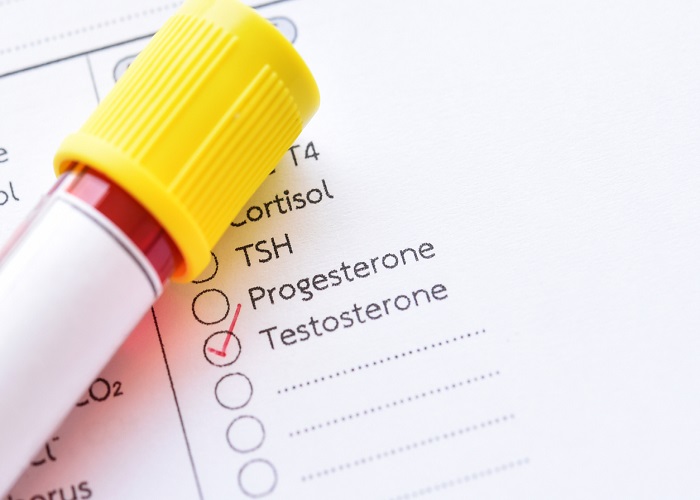
Despite screening for low testosterone being medically unwarranted in most young men, this category is being aggressively targeted online by “influencers” and wellness companies promoting hormone tests and treatments as essential to being a “real man”, a study published in Social Science and Medicine has found.
One influencer on TikTok, with more than 100 000 followers, warns his viewers that if they’re not waking up with erections in the morning, “there’s a large possibility that you have low testosterone levels”, a claim that has been slammed by experts in the field.
Researchers who analysed 46 high-impact posts about low testosterone and testing made by TikTok and Instagram accounts – with a combined following of more than 6.8m – to examine how masculinity and men’s health are being depicted and monetised online, said influencers promoting routine testosterone screening often framed normal variations in energy, mood, libido or ageing “as signs of pathology”.
“This means men may come to perceive themselves as inherently deficient or in need of medical intervention,” lead author of the study, Emma Grundtvig Gram, a public health researcher at the University of Copenhagen, told The Guardian.
“This creates a sense of urgency for solutions, which in turn fuels lucrative markets for pharmaceuticals, supplements and medical devices, even in the absence of clear clinical benefit. More broadly, this contributes to the medicalisation of masculinity itself. It reinforces a narrow, idealised model of masculinity, while marginalising non-traditional or diverse expressions of gender,” she added.
Testosterone naturally declines with age but it is not inevitable for all men, and lower levels may also be linked to factors including type 2 diabetes, obesity, metabolic syndrome and the use of certain medications.
Gram and her colleagues found the posts often targeted younger, fit men and contained messaging aligned with the “manosphere” – online communities that circulate ideas about male superiority.
“Within this narrative, so-called ‘alpha men’ are promoted as dominant, sexually successful and physically powerful, and our study found testosterone was positioned as the key to achieving this status,” Gram said.
“This connection is important because it shows that testosterone marketing is not just about health, but is embedded in wider cultural and ideological narratives about gender and power, and the manosphere is not simply an ideology, but also an industry.”
Professor Ada Cheung, an endocrinologist in the University of Melbourne’s department of medicine who was not involved in the study, said routine screening for low testosterone in asymptomatic men, including younger men, was not supported by Australian guidelines.
Generally, testing is recommended only when there are symptoms like delayed puberty or reduced libido, or in specific clinical circumstances, such as after testicular surgery or chemotherapy.
Symptoms commonly attributed to low testosterone were often non-specific and overlapped with fatigue, stress, anxiety, depression and relationship difficulties, Cheung said.
“This often leads to discussions about the normal range of testosterone, the limited evidence for benefit in otherwise healthy men, and the potential risks of unnecessary treatment.
“It’s not hard to get testosterone on the black market or on the internet or in gyms, so many who want to try it may not seek out medical advice necessarily. Risks of unwarranted testosterone testing or treatment include masking of underlying conditions, and unnecessary exposure to side-effects.”
These can include infertility, cardiovascular risk and thickened blood.
Gram’s study found 72% of social media posts analysed also had financial interests, such as selling testosterone tests, treatments or supplements, or were sponsored by industry. Two-thirds of posts included direct links or promo codes to purchase products.
“We found that conflicts of interest were often not readily visible to users,” Gram said.
Professor Oliver Jones, a chemist and analytical scientist at RMIT University also not involved in the study, said he found it troubling how easy it was for people with no or few health qualifications to “go online, claim to know what they are talking about and then make up any old rubbish, usually to sell something, with no consequences whatsoever”.
“A single testosterone test, assuming it was accurate, could at best, only tell you the concentration of testosterone in your blood at the time you took the test.
“You can’t diagnose a medical condition based on one data point,” he said.
“The concentration of testosterone in your blood varies between individuals, at different times of the day, and can even be influenced by other health conditions. It is just a number; it requires context to make sense out of such data, which I think you can only really get from an appropriately trained medical professional.”
Study details
Selling Masculinity – A Qualitative Analysis of Gender Representations in Social Media Content about “Low T”
Emma Grundtvig Gram, Barbara Mintzes, Ray Moynihan et al.
Published in Social Science & Medicine on 26 December 2025
ABSTRACT
Testosterone has long been advertised through gendered messages that link masculinity with strength, sexual performance and vitality. In recent years, this marketing has moved on to social media, where platforms offer new ways to target audiences and shape ideas about men’s health. This study examines how gender and masculinity are portrayed in social media content about testosterone testing and treatment on Instagram and TikTok. Using qualitative content analysis informed by performativity theories, we constructed four themes: (1) low testosterone as a crisis of masculinity and male sexual performance; (2) the rebranding of low testosterone from an “old man’s problem” to an issue affecting younger men and their fitness; (3) self-optimisation tied to stereotypical masculine ideals; and (4) the construction of a binary opposition between being a “real man” and being feminine. These portrayals align with wider online communities, often referred to as the “manosphere”, which circulate narrow and exclusionary ideas of masculinity and regressive ideas and attitudes towards femininities. The analysed social media posts prey on men’s insecurities about relationships and sexual performance and co-opt advocates' emancipatory language to sell testosterone products. Such portrayals of masculinity have medicalising implications for how men perceive themselves and their mental health, but also promote capitalistic practices like consumption of testosterone products for improving the masculine self without supporting evidence.
See more from MedicalBrief archives:
About 25% of men with testosterone issues delay treatment – UK study
‘T-boosters’ not effective in improving testosterone levels