


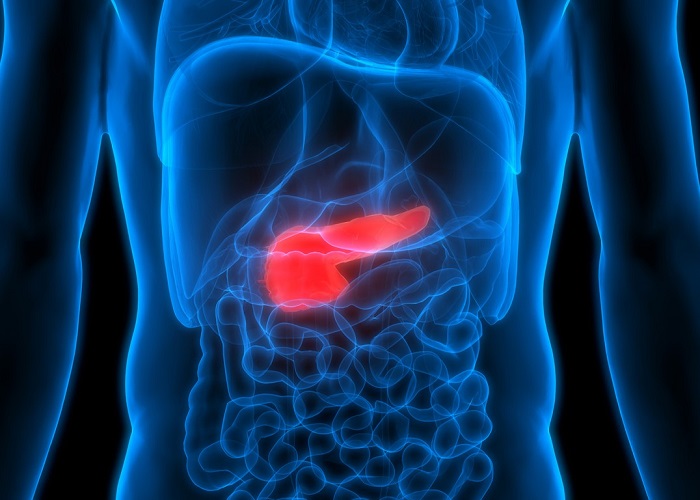
Pancreatic cystic lesions have become a significant burden on health systems, according to a paper in the Spanish Journal of Gastroenterology, because physicians have difficulty distinguishing benign lesions from those with malignant potential.
They are also being detected more often, thanks to advances in imaging techniques, reports Medscape.
According to the World Gastroenterology Association, most pancreatic cysts are asymptomatic and are discovered incidentally on diagnostic imaging performed for unrelated symptoms. In a minority of cases, the initial presentation may be a symptomatic cyst manifesting as acute pancreatitis, bleeding, jaundice, or a palpable mass.
“Between 25% and 30% of imaging tests detect a cystic lesion,” Eva Vaquero Raya, Department of Gastroenterology, Hospital Clínic de Barcelona, Barcelona, told Univadis Spain, part of the Medscape’s Professional network.
Benign or malignant?
Pancreatic cystic lesions can be grouped into two broad categories: benign lesions, such as serous cystadenomas and pseudocysts, and potentially malignant lesions, like mucinous cystic neoplasms and intraductal papillary mucinous neoplasms (IPMNs).
“IPMNs is called that because its cells produce mucus because they often form papillary structures and because they arise in the epithelium of the pancreatic ducts,” said Raya.
“They are the most common type and have malignant potential, so they require surveillance. As for pancreatic mucinous cystic neoplasms, they are less common, fairly characteristic lesions, usually located in the tail of the pancreas and primarily affecting women; they also have malignant potential, and depending on size and on analysis of the cyst fluid, surgery may or may not be recommended.”
When to operate?
The specialist added that all pancreatic surgeries are very complex. “We operate only when we are sure the lesion carries a high-risk and will progress to cancer. Most of these mucinous neoplasms are monitored.”
What determines whether to continue surveillance or to intervene? Size, growth, the presence of nodules and when the pancreatic duct diameter exceeds 10mm, surgery is generally offered because the risk of malignancy is high.
Guidelines
The guideline from the American Gastroenterological Association on the diagnosis and management of asymptomatic neoplastic pancreatic cysts recommends surveillance with MRI for those smaller than 3cm with no solid component and no dilated pancreatic duct.
If the cyst’s size or characteristics do not change, surveillance should consist of an imaging exam during the first year and then every two years, for five years.
The guideline advises against continued surveillance if no significant changes have been observed after five years of follow-up or if the patient is no longer a candidate for surgery.
Follow-up and monitoring
Once the initial diagnosis is made, the patient should be informed about the follow-up plan.
“The first time, we tell the patient that we will do an MRI in six months and perform some lab tests. If everything is fine and the cyst measures less than 2cm, the interval is extended to one year and then to 18 months. If it measures more than 2cm, imaging is performed annually,” Raya said.
The psychological impact of living with a pancreatic cyst, combined with uncertainty about its malignant potential, should also be considered.
“Once the patient accepts the diagnosis and follow-up, they prefer to be monitored. In fact, many patients resist when they reach 80 years old and are told that they will no longer be monitored,” she added.
Study details
Cystic pancreatic lesions: when to watch and when to act?
Yessica Domínguez Novoa, J. Enrique Domínguez-Muñoz, José Lariño Noia, Julio Iglesias-García et al.
Published in Spanish Journal of Gastroenterology Volume 118 No 12
ABSTRACT
Cystic pancreatic lesions (CPL) represent a growing challenge in gastroenterology, as their detection becomes more prevalent, and their management is increasingly complex. While many CPLs are benign and require only observation, others carry a significant risk of malignant transformation. The key to effective management relies in an accurate risk stratification, which can guide decisions regarding surveillance and treatment. As we move towards more personalised, patient-centered approaches, it is crucial to balance the benefits of early detection and intervention with the risks of overtreatment and the psychological burden on patients. Advances in molecular diagnostics and imaging, combined with improved patient education and shared decision-making, will be essential in shaping the future of CPLs management. The goal is not only to improve patient outcomes but also to ensure that care is compassionate, cost-effective, and aligned with individual patient needs.
SJG article – Cystic pancreatic lesions: when to watch and when to act? (Open access)
Medscape article – When to Operate on a Pancreatic Cyst (Open access)
See more from MedicalBrief archives:
Device successful in diagnosing early pancreatic cancer
mRNA vaccine shows promise in pancreatic cancer trial