


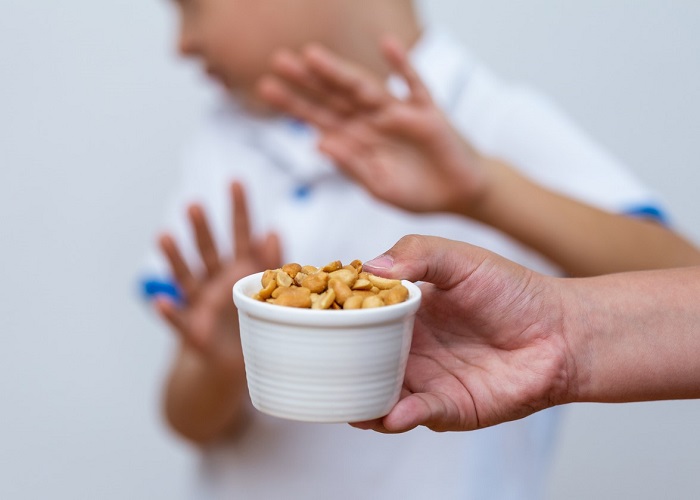
A recent Australian study has suggested that many children who were diagnosed with a peanut allergy should be tested later on – and are likely not to have an allergy after all, reports The Washington Post.
Peanuts, and peanut butter in particular, are some of the most ubiquitous elements of a child’s diet, and so when they are allergic to them, it can be a unique vexation for parents. It means no peanut butter sandwiches for lunch – but also an endless list of logistics, from having to check in with the parents any time their youngster goes over to a friend’s house to communicating with school officials.
But it turns out that for many children thought to have peanut allergies, much of that vigilance may not be necessary.
A new peer-reviewed study, published in the Journal of Allergy & Clinical Immunology: In Practice, suggests that fewer young children than previously thought have long-lasting peanut allergies. The findings could change how we make early-childhood allergy diagnoses and how to think about treating allergies moving forward.
The research included nearly 800 Australian infants, all around the age of 13 months and all of whom had previously been diagnosed as allergic to peanuts, based on a reaction they had at home and then either a skin or blood test, usually between the ages of seven to 10 months.
Historically, that combination meant that the child would be considered allergic to peanuts, and that their parents would try to ensure they never encountered peanuts again.
However, in this study, all 778 of the babies got something of a second chance at adapting to peanuts. And for many of them, that second chance worked.
They all underwent an “oral food challenge” – essentially, they were given increasing doses of peanut butter in 15 minute intervals. It starts at 1/64th of a teaspoon and then keeps doubling until the last dose, a full teaspoon 90 minutes later. That was enough evidence to determine that those infants that had no reaction – 271 of them, or about 35% – were, in fact, no longer allergic to peanuts.
The researchers were surprised by that rate. “We thought some would pass the food challenges and not react, but we didn’t expect this many children to get through,” said Tim Brettig, a paediatric allergist and immunologist, and a senior research clinician at the Murdoch Children’s Research Institute in Melbourne, Australia.
Brettig said that means many parents who think their children have lifelong allergies to peanut butter might want to re-examine the matter carefully. “If you’ve had a clear reaction, I would be less inclined to accept a peanut allergy diagnosis,” said Brettig, one of the lead researchers on the new study. “I’d want to continue that work-up. I think food challenges should play a greater role in the allergy assessment of children. Give them a chance to prove that they’re not allergic.”
The key is a controlled environment, such as a doctor’s office, for checking again, Brettig said. About 12% pof the babies given the oral food challenge did experience anaphylaxis, the whole-body and sometimes life-threatening reaction that is the most severe response to an allergen. But because they were in an environment with medical professionals to administer care, no long-term harm came to any of the children.
“It’s not necessarily something that I’d be doing in a community setting,” said Brettig. “You’d want it to be done with specialists who are skilled in performing these food challenges.”
Previous research suggested that 10% to 20% of children who are born allergic to peanuts would recover by around the age of four or five. Many experts today agree that those who do become able to eat peanut products are able to because of some sort of exposure in their early years that enables their immune systems to stop treating peanuts as dangerous.
“Our advice for these families who pass a food challenge is go home, keep having peanuts in the diet,” said Brettig. “We’re not prescriptive about how much. We’re just trying to normalise that back into the diet to say, ‘Look, this is food’.”
Maria Garcia-Lloret, a paediatric allergy and immunology professor at the University of California-Los Angeles and the co-founder of the university’s food allergy programme, argued that the study suggests the benefits of retesting for peanut butter allergies outweighs the risks. She was not involved in the study.
“All of the children are alive,” said Garcia-Lloret, “and many were de-labelled” – that is, recognised as no longer allergic to peanuts – “and … the benefits outweigh the risks.”
Scientists have been revising their views on the best approach to peanut butter allergies for the past decade. In 2015, a major study was published in The New England Journal of Medicine that flipped conventional wisdom on its head: previously, the assumption was that exposing an infant to peanut butter too early was a sure path to a lifelong allergy.
The new data suggested the opposite. By 2017, the US National Institutes of Health changed its recommendations for parents of young children, saying that the best path forward was to try out peanut butter on their babies.
“Up until about a decade ago, paediatricians would tell the mothers, ‘Don’t give them peanuts until they’re three’,” said Garcia-Lloret. “Today, paediatricians are convincing parents, ‘You need to introduce peanuts early.’”
The results have been staggering. By 2025, there was a 43% decrease in peanut allergy incidences in the country, according to a peer-reviewed study published in the journal Paediatrics.
This most recent study suggests there are other opportunities to bring those numbers down further, saving money for parents, schools and the healthcare system – and saving children from the challenge and frustration of having to deal with an allergy to a ubiquitous childhood ingredient.
That, said Brettig, is one of his next steps. “We’re investigating whether the up-front cost of doing these food challenges … could actually save us money down the track, because they won’t need to be seen again in clinic and followed up every few years as they get older with their peanut allergy,” he said.
Brettig is working in the Australian healthcare system, but Garcia-Lloret noted that implementing the food challenge approach for infants who might – or might not – be allergic to peanuts could be a financial boon to the US system, too.
“It would, in the long run, save money for the system because then the ones that you de-label, they don’t have to buy EpiPens, or whatever else the medical aid doesn’t have to pay for,” said Garcia-Lloret. “They won’t clog the doctors’ offices.”
And for the children, the earlier the better.
“Whether it’s in behaviour or in immunology or in speech, or teaching them piano, those first 1 000 days of life are important,” said Garcia-Lloret. “And this is what the study is showing you here.”
See more from MedicalBrief archives:
Australia starts first peanut allergy programme for babies
Peanut allergy controlled in UK trial – with daily peanuts
Oral immunotherapy to induce peanut allergy remission in young children – IMPACT trial