


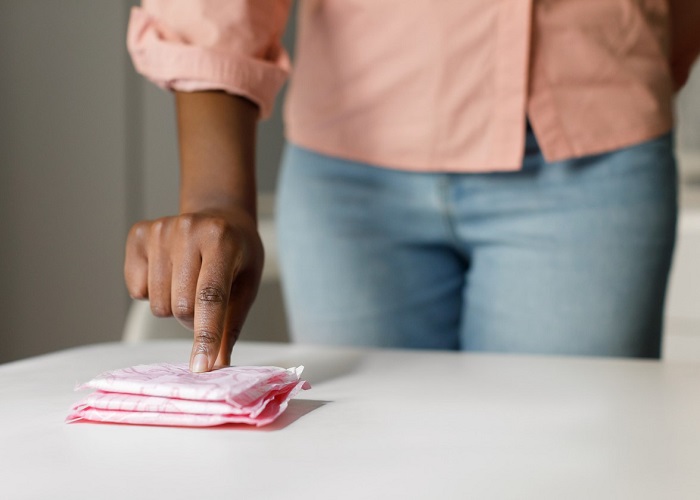
Menstrual products used by millions of South Africans may contain hormone-disrupting chemicals – even when marketed as “free from harmful chemicals” – suggests research from the University of the Free State (UFS), the first such study done on feminine products in this country.
Published in Science of the Total Environment, the research found that every sanitary pad and pantyliner tested contained at least two endocrine-disrupting chemicals (EDCs), raising concerns about consumer safety, transparency, and long-term exposure.
“Our study highlights a concerning reality regarding the safety of menstrual products,” said Professor Deon Visser, head of the Department of Chemistry at the UFS. “Many sanitary pads and liners contain hormone-disrupting chemicals, even when they are marketed as being ‘free from harmful chemicals’.”
The team analysed 16 brands of sanitary pads and eight types of pantyliners popular in South African retail stores, focusing on three groups of endocrine-disrupting chemicals (EDCs): phthalates, bisphenols (including BPA) and parabens.
The findings showed widespread contamination across all products tested. Every single pad and liner contained at least two of the target chemicals.
Bisphenols were detected in 100% of the pads and 75% of the pantyliners, while parabens were found in more than 81% of pads and 75% of liners. Phthalates were present in all pantyliners tested and in 50% of sanitary pads.
The researchers note that these substances are not always added intentionally, but may migrate into products from plastics, adhesives and manufacturing processes.
“The heat-pressing process can cause these chemicals to move into the top layer that touches your skin,” Visser said.
Why long-term exposure matters
Although the levels detected in a single product may appear small, the researchers emphasise that the concern lies in repeated exposure over time.
Menstrual products come into contact with mucosal tissue, which absorbs chemicals more quickly and directly than normal skin. Most women use these products for several days each month over several decades.
This repeated contact may contribute to cumulative exposure, which has been linked to hormonal imbalances, fertility problems, endometriosis, and even certain types of cancer.
Limited regulation
The study also highlights gaps in chemical regulation in South Africa. “SABS does have the SANS 1043 test, but it only tests for microbiology, absorbency, etc. According to our knowledge, there are no standards regarding the chemicals we observed,” Visser said.
Manufacturers are also generally not required to disclose the full chemical composition of menstrual products, he added. “We believe manufacturers should disclose all chemicals in their products, even if they fall below daily limits..
Practical steps, future solutions
Visser advised consumers to look for products certified under the OEKO-TEX Standard 100, or to consider reusable alternatives.
This research forms part of a broader UFS initiative addressing menstrual health and access.
The interdisciplinary team is now working on new innovations. “We are in the process of developing a reusable sanitary pad with superpowers – antimicrobial properties,” he added.
The team says the findings underscore the need for clearer labelling, stronger chemical standards, and continued monitoring of everyday menstrual products.
Study details
The presence of endocrine disrupting chemicals in sanitary pads: A study done in South Africa
Janine Blignaut, Gabre Kemp, Elizabeth Erasmus, Hendrik Visser, Marietjie Schutte-Smith.
Published in Science of The Total Environment on 25 February 2026
Abstract
Background
Endocrine-disrupting chemicals (EDCs) such as phthalates, bisphenols, and parabens are widely used in consumer products and have been associated with reproductive toxicity, hormonal imbalance, and cancer. Menstrual products represent a potential but under-recognised source of exposure. In South Africa, several brands advertise as being free from harmful chemicals, yet limited research has verified these as potential EDC sources.
Objective
This study aimed to evaluate the occurrence and profiles of phthalates, parabens, and bisphenols in sanitary pads and panty liners sold in South Africa. To estimate dermal exposure to these EDCs through menstrual product use and determine the significance of sanitary pads as a potential source of EDC exposure.
Methods
A total of 20 EDCs, including nine phthalates, five parabens, and six bisphenols, were analysed in 16 commercially available sanitary pads and seven panty liners in South Africa. The selected compounds were detected and quantified using chromatographic analysis and estimated daily exposure doses were subsequently calculated to evaluate potential health risks.
Results
EDCs were detected and quantified in all tested samples, with each pad and liner containing at least two of the target EDCs. The detection frequencies (DFs) of phthalates, bisphenols, and parabens in liners were 100%, 75%, and 75%, respectively, and 50%, 100%, and 85% in pads. Phthalates were more prevalent in liners, compared to bisphenols in pads.
Conclusion
This study revealed the presence of EDCs in sanitary pads and liners in South Africa, identifying menstrual products as a significant but overlooked source of toxic exposure. Although daily doses may seem low, the long-term, repeated contact with sensitive tissues poses cumulative health risks, including reproductive toxicity and cancer.
Significance
This study provides the first comprehensive data on EDC contamination in sanitary pads and panty liners sold in South Africa, addressing a gap in regional exposure research.
See more from MedicalBrief archives:
FDA launches probe into lead, arsenic detected in tampons
Toxic metals, including lead, found in tampons – US study