


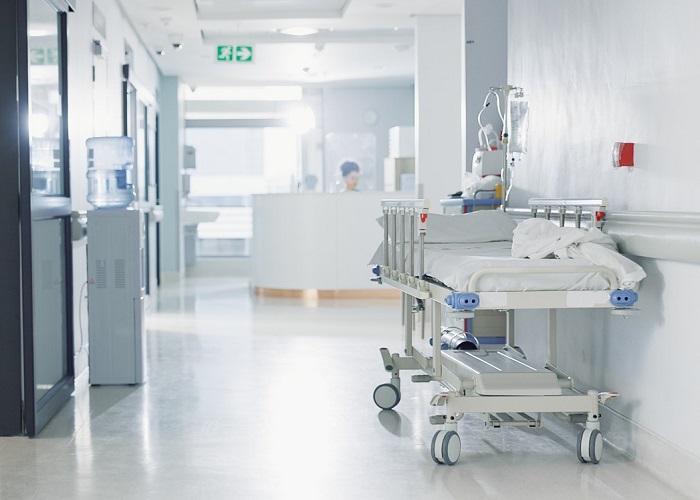
Clean, controlled airflow is critical in medical facilities, where infection and bacteria are a constant threat and where contamination can be the difference between life and death, but in a recent study of Covid outbreaks at a Sydney hospital, researchers found viral particles lingering in nearly 40% of air samples, even in areas with robust ventilation systems, reports Medscape.
Alarmingly, these particles were detected in areas like the emergency department and ICU, as well as in waiting rooms, wards and staff spaces – including break rooms, where masks come off, and corridors outside ICU rooms, where airflow may be weaker.
Their said their findings highlight how easily aerosols can spread, and expose a disconnect between what clinicians are told – that ventilation reduces risk – and how it performs in real-world conditions.
The goal sounds simple: move contaminated air out. In practise, airflow is uneven, and particles don’t always go where they’re supposed to.
The researchers, from the University of New South Wales and the University of Wisconsin-Madison, cited research that found up to 24% of patients got infected with SARS-CoV-2 while spending time in the hospital. But they said the implications may extend beyond Covid to other airborne threats, including influenza.
“Other studies show even MRSA (methicillin-resistant Staphylococcus aureus) and gastro pathogens like norovirus can be found in the air,” said study author Raina MacIntyre, PhD.
So where does that gap come from? The answer lies in how hospital air is designed, how it moves, and the hidden factors that shape both.
Lifecycle of a respiratory particle
“Unwanted particles can be suspended in the air for hours, which is why ventilation is so important,” said Connie Chang, PhD, an associate Professor of Biomedical Engineering at the Mayo Clinic in Minnesota.
Those particles are generated constantly. With every breath, people exhale mostly gases, but talking, coughing, and sneezing also release respiratory particles made of liquid and solid material.
They originate in surprisingly ordinary ways: from the opening and closing of small airways in the lungs, said Linsey Marr, PhD, a Professor at Virginia Tech, as well as from everyday actions such as vocal cords coming together or the tongue touching the teeth or lips.
“If you’re infected, those particles can carry the virus,” she said.
Once released, respiratory particles follow three main paths, depending on their size: They can fall on to surfaces, linger in the air, or be cleared through ventilation. Even in spaces that feel still, they can remain suspended and continue moving.
How hospitals engineer airflow
At its core, experts say, ventilation comes down to a few key variables: where air goes, how often it’s replaced, and how well it’s cleaned along the way.
“Current research uses computational airflow modelling to understand how air moves through spaces and to figure out the best ways to reduce transmission of infectious aerosols,” said Chang.
To do that, engineers often turn to computational fluid dynamics – software that simulates how air flows through a room. It can reveal invisible patterns: where fresh air sweeps through, where it stalls, and where particles may quietly accumulate.
It sounds easy, but it requires careful choreography. In hospitals, airflow is tightly managed through the placement of vents, fans and ducts, along with pressure systems that either keep air contained or keep it out. Some rooms are designed so air flows in but not out; others do the opposite.
In the US, for instance, standards from the American Society of Heating, Refrigerating and Air-Conditioning Engineers lay out how these systems should perform, including how many times the air in a room should be fully replaced each hour.
“That helps greatly with dilution,” said Sarah Peters, who manages healthcare projects at engineering firm Introba. “Higher-risk areas – like emergency rooms, triage, bronchoscopy suites, and operating rooms – require higher air change rates.”
In many hospital spaces, the air you breathe isn’t entirely new: it’s recirculated, passed through high-efficiency filters such as high-efficiency particulate air or high-rated minimum efficiency reporting value systems that capture infectious particles before sending it back into the room.
Lower-risk areas may reuse a large share of air, whereas high-risk spaces, such as isolation rooms, typically avoid recirculation altogether.
Even then, performance depends on execution. Air must move as intended and actually reach the people in the room.
In an operating room, for example, the entire volume of air may be replaced up to 20 times per hour, constantly pulling in outdoor air, pushing indoor air out, and repeating the cycle.
Why ‘controlled air’ hard to control
Humidity and temperature can shape how respiratory particles move through a space and how long they stick around.
“Many particulates thrive in either low or high humidity, so maintaining a range between 40% and 60% can help reduce their impact,” said Peters. Marr said that range aligns with what researchers have observed with Covid.
But those conditions aren’t easy to fine-tune. “You can only adjust your thermostat a few degrees and for good reason – temperature and humidity play a critical role in creating healthy spaces,” Peters said, noting it’s a common source of complaints.
Then there’s human behaviour, which can throw carefully designed systems off balance.
“I’ve seen ceiling diffusers taped off by staff who felt cold or carts placed in front of return vents in operating rooms and cath labs,” Peters said. “That affects pressurisation and airflow patterns.”
Even the human body plays a role. Because we’re warm, we heat the air around us, causing it to rise – a phenomenon known as a thermal plume. That upward flow can carry particles toward the ceiling and help circulate them through a room.
In other words, airflow isn’t just engineered, it’s constantly being reshaped by the environment and the people inside it.
Limits of ‘good air’ in practice
Without ventilation, the risk is straightforward: infectious particles build up and linger.
“If you’re trapped in a room with someone who’s infectious and they’re emitting a lot of virus into the air and there’s no ventilation, those amounts of virus are going to build up over time and you’ll be breathing in more and more of that,” said Marr.
But even well-ventilated spaces aren’t risk-free.
Distance still matters but has limits. In relatively “clean” environments, the closer you are to someone infectious, the higher your exposure, Marr said. And in poorly ventilated spaces, even being 2m or 3m away may not be enough: viral particles can accumulate throughout the room, raising risk well beyond the immediate area.
Some of the highest-risk spaces aren’t always the most obvious. In the study, researchers detected particles in staff break rooms – where masks come off – and in emergency department waiting rooms, where multiple potentially infectious people may spend prolonged periods sharing the same air.
Risk also depends on how a room’s ventilation system is designed, how quickly air is filtered and replaced, how long someone spends in the space, and whether systems are properly maintained.
In other words, “good” air helps, but it doesn’t eliminate risk.
See more from MedicalBrief archives:
CO2 monitors could protect healthcare staff from TB – SA study
Surgical crisis at Grey’s Hospital as aircon upgrade drags on
Hospital air frequently contaminated with Covid-19 but of low viability