


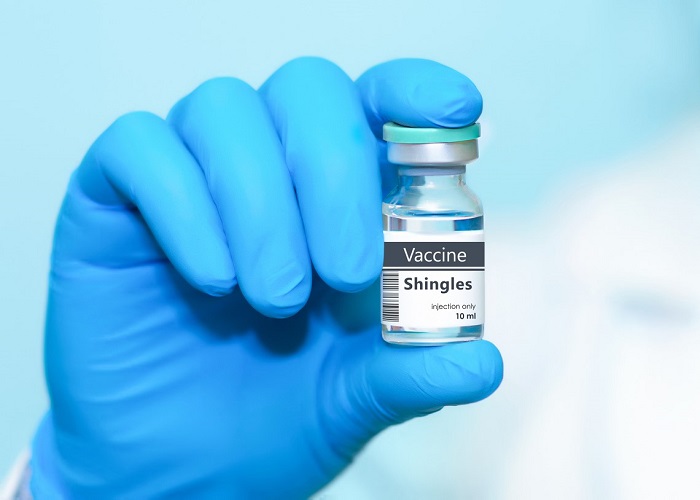
While there’s already convincing evidence that an older shingles vaccine (Zostavax), can protect against dementia, a new and improved shot – Shingrix – has shown even more promise, suggest scientists from Brown University in the United States.
Science Alert reports that for their study, the researchers analysed patient data for 509 926 people admitted to nursing facilities between January 2017 and December 2022.
Picking this group of people meant having a natural health “checkpoint” that can be used for reference, among those already at a higher risk of both dementia and shingles.
The data showed that over a four-year follow-up period, 18.8% of study participants who got a Shingrix vaccine shot within 12 months of admission developed dementia, compared with 24.6% of those who didn’t get the vaccine.
That amounts to a 24% reduction, which is pretty remarkable, the team said of their findings, published in Annals of Internal Medicine.
“This study looks at the newest vaccine only in an older, vulnerable adult population who were not up to date with shingles vaccination and are at a very clear clinical point in care: entering a skilled nursing facility,” said pharmaco-epidemiologist Kaley Hayes from Brown University.
“It fits into this large puzzle that’s just starting to come together that the vaccines are effective at preventing shingles and also appear to have neuroprotective benefits as well.”
Shingrix has now replaced Zostavax for shingles vaccination in many parts of the world: it’s more effective, and it lasts longer.
We’re also now seeing that it can reduce dementia risk – this new work not being the first study to make the connection.
The advantages of the latest study are the relatively large sample size, the real-world setting, and the targeting of people particularly vulnerable to shingles and dementia due to their age and need for nursing care.
Uptake for the Shingrix vaccine was relatively low during the study period – just 8 843 out of the 509 926 participants got a vaccine shot – and the researchers hope the 24% risk reduction could convince more people to get the protection.
“This translates to about one in 17 dementia cases potentially being prevented,” said Hayes.
There are some limitations to the study. As it’s an observational analysis, we can’t say for sure that there’s direct cause and effect here, and there may be some “vaccine bias” at play (meaning healthier people at lower risk for dementia anyway may be more likely to get a vaccine).
It’s also not yet clear why this association exists, but that’s something that future studies can explore further.
“We don’t know with certainty why the risk of dementia is lower with shingles vaccination, but we have a lot of ideas,” Hayes told MedPage Today.
“The most obvious factor is through the reduction of shingles infections, which cause neuroinflammation and increase the risk of stroke.
“There are also emerging hypotheses that vaccination in general, particularly those that have really robust immune activation, might be the protective mechanism here.”
It’s also worth noting that the study was funded by GlaxoSmithKline, which manufactures Shingrix. The researchers state that GSK had no control over the study design, the data analysis, or the decision to publish the results.
Given the matches with previous studies, and the historical links between shingles vaccines and dementia risk, there’s good reason to believe that Shingrix is carrying on the good work of Zostavax in this regard.
The US Centres for Disease Control and Prevention (CDC) recommends shingles vaccinations for all adults over 50 in the US.
Study details
Dementia Risk After Recombinant Herpes Zoster Vaccination in Older Adults With a Recent Skilled-Nursing Facility Stay: A Target Trial Emulation
Kaleen Hayes, Daniel Harris, Kevin McConeghy et al.
Published in Annals of Internal Medicine on 16 June 2026
Abstract
Background
Observational studies report a protective association between herpes zoster (HZ) vaccination and dementia, but they have methodological limitations or examined a live attenuated vaccine no longer available in the United States.
Objective
Among older adults recently admitted to a skilled-nursing facility for postacute or long-term care, to estimate the association between dementia and receipt of the recombinant HZ vaccine (RZV) within 12 months of entering the facility or after discharge.
Design
The researchers conducted a cohort study using target trial emulation and the clone–censor–weight approach. Participants were followed for up to four years until the outcome of dementia, Medicare disenrolment, or death. Inverse probability of clone-censoring weights was applied to pooled logistic regression models to estimate effects.
Setting
Medicare claims linked to nursing home electronic health record (EHR) data.
Participants
Medicare fee-for-service beneficiaries aged 66 and older who were admitted to a skilled-nursing facility between 1 January 2017 and 31 December 2022, had linked EHR data, had no diagnosed dementia, and were eligible for RZV.
Intervention
Receipt of at least 1 RZV in the facility or, if discharged, by 12 months after admission versus no receipt of RZV.
Measurements
Validated dementia diagnosis and 57 baseline and time-varying covariates.
Results
The study cohort included 509 926 participants (mean age, 79); 8843 (1.73%) received at least 1 RZV dose within 12 months after admission, and of these, 87.0% received RZV after discharge. Receipt of RZV was associated with risk for dementia being 5.8 percentage points lower (95% CI, 3.9 to 7.5 percentage points lower; risk ratio, 0.76 [CI, 0.69 to 0.84]; 4-year risk, 18.8% with ≥1 RZV vs. 24.6% with no RZV). Associations were attenuated in men and those with prior live HZ vaccination.
Limitation
Negative control analyses suggest some residual confounding.
Conclusion
Receipt of RZV during admission to a skilled-nursing facility or within 12 months was associated with lower dementia risk.
See more from MedicalBrief archives:
Shingles vaccine may slow biological ageing – US study
Shingles jab slashes CVD events, dementia – US study
Shingles and statins findings a ‘significant’ boost in dementia fight