


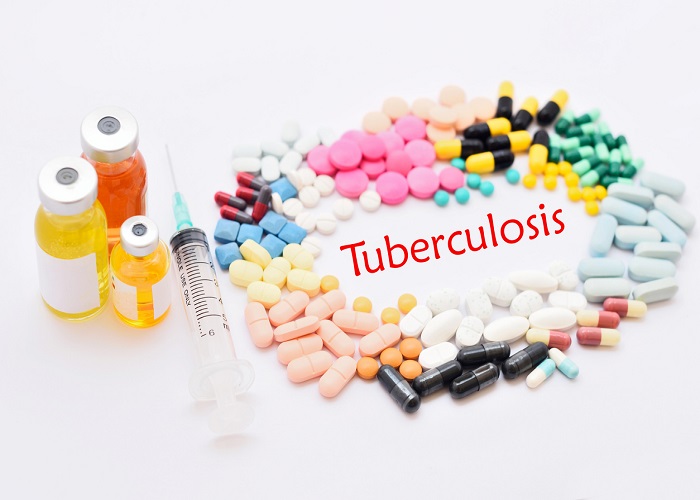
South African and American researchers have published the results of a practice-changing clinical trial in The New England Journal of Medicine, showing the effectiveness of a shorter, six-month regimen for treating drug-resistant TB – the benefits of which are likely to make a global impact, writes Nathan Geffen for GroundUp.
Since the 1940s, the disease has been treatable with antibiotics. But scientists are in a constant battle with the bacterium, as it evolves resistance to the best current medicines. About 50 000 people die of TB in South Africa annually.
Also, TB treatment is long. Most people need six months of treatment, using four drugs. But people infected with drug-resistant strains typically need to be treated for nine months, or longer.
The longer the treatment, the more side effects you are likely to have – and the greater the chance of you not completing your treatment. That increases the risk of you becoming resistant to the medicines.
A key aim of TB research is to find new, shorter treatment regimens. The more options, the better, because different patients are resistant to different drugs.
A main drug for the illness since the 1970s has been rifampicin, but many patients have TB strains that are resistant to it.
With the BEAT TB trial, published last week, Francesca Conradie of Wits and her team have proved the effectiveness of the new six-month regimen for treating rifampicin-resistant patients.
More than 400 volunteers were randomly assigned to either receive what was the nine-month standard of care regimen at the time the trial was fully enrolled (October 2023), or the researchers’ new six-month regimen containing bedaquiline, linezolid, delamanid, and either levofloxacin or clofazimine. (Bedaquiline and delamanid are relatively new drugs, approved for drug-resistant TB since 2012.)
Both groups did nearly identically well, with 86% having a successful TB-free outcome. Ten people died in each group (often TB patients are very ill at enrolment).
This was a pragmatic trial, meaning it took place in routine health facility settings, not in the idealised environment of most clinical trials.
Conradie told GroundUp: “What was unusual about this study is it was pragmatic and enrolled a similar population to those who are diagnosed and treated in South Africa. Half were people with HIV. More than half were underweight, and very few of the usual exclusionary criteria were in place, like homelessness and substance abuse.”
Since the trial was enrolled, the standard of care has been changed to an effective and similar six-month regimen: bedaquiline, linezolid, pretomanid, and levofloxacin (i.e, pretomanid instead of delamanid and, for some patients, levofloxacin instead of clofazimine). But pretomanid is not recommended for children under 14 or pregnant or breastfeeding women. Also, some patients are resistant to levofloxacin.
In contrast, the researchers’ new regimen has been proven to be safe for children under 14 and pregnant or breastfeeding women.
Conradie said this was the first time children and breastfeeding women had been enrolled in a rifampicin-resistant TB trial. “These populations are, maybe, at even greater risk than the general population for TB disease and now we have data on them too,” she said.
Francois Venter, an HIV clinician at Wits but not an author of the study, told GroundUp: “This is remarkable work: South African researchers transforming TB care, making it steadily safer and simpler, through world-class research. The absolute tragedy is that the international funding agency (USAID) behind this is extinct, thanks to the Trump cuts. Our own government has not plugged a fraction of that gap.”
USAID has been gutted by the Trump regime and might be closed down later this year.
Study details:
A Pragmatic Trial of a 6-Month Strategy for Rifampicin-Resistant Tuberculosis
Francesca Conradie, Tasnim Badat, Asanda Poswa, Shakira Rajaram, Shaneen Kooverjee, Gary Maartens, Graeme Meintjes, Jennifer Hughes, Simon Schaaf, Pauline Howell, Norbert Ndjeka, and Patrick Phillips.
Published in The New England Journal of Medicine on 24 June 2026
Abstract
Background
Safer, more effective treatment regimens for rifampicin-resistant tuberculosis are needed.
Methods
We conducted a phase 3, open-label, pragmatic, randomised, controlled noninferiority trial in South Africa to assess a 6-month treatment strategy for pulmonary rifampicin-resistant tuberculosis. Participants with pulmonary rifampicin-resistant tuberculosis who were six years or older were randomly assigned to a regimen consisting of bedaquiline, linezolid, delamanid, and levofloxacin or clofazimine or both for 6 months (trial-strategy group) or the 9-month standard-of-care treatment regimen that was current in South Africa (control group). Pregnant or breastfeeding women and those who had fluoroquinolone-resistant TB were included in the trial population. Treatment in both groups was adjusted on the basis of results of second-line drug susceptibility testing. The primary efficacy end point was a successful outcome (cure or completion of treatment) at the end of treatment and at 76 weeks after randomisation. The noninferiority margin was 10 percentage points. The primary safety end point was an adverse event of grade 3 or higher.
Results
Among the 432 persons who were screened, 403 underwent randomisation; 203 were assigned to the trial-strategy group, and 200 to the control group. A successful outcome was observed in 174 of 202 participants (86.1%) in the trial-strategy group and in 172 of 200 (86.0%) in the control group. The adjusted risk difference was −0.2 percentage points (95% confidence interval [CI], −6.9 to 6.5; P=0.001 for noninferiority). Adverse events of grade 3 or higher occurred during treatment in 63 of 202 participants (31.2%) in the trial-strategy group and in 74 of 200 (37.0%) in the control group; 10 participants in each group died.
Conclusions
Among participants in South Africa with rifampicin-resistant tuberculosis, the 6-month trial strategy was noninferior to the standard-of-care strategy with respect to a successful outcome. The safety profiles of the two strategies were similar. (Funded by the U.S. Agency for International Development and others; BEAT Tuberculosis ClinicalTrials.gov number, NCT04062201.)
NEJM article – A Pragmatic Trial of a 6-Month Strategy for Rifampicin-Resistant Tuberculosis
GroundUp article – Important advance in TB treatment (Creative Commons Licence)
See more from MedicalBrief archives:
MSF trial finds better, shorter, more effective treatment for MDR-TB
SA included in MSF's trial of new MDR-TB treatments
Case for more effective, less toxic and shorter MDR-TB treatments