


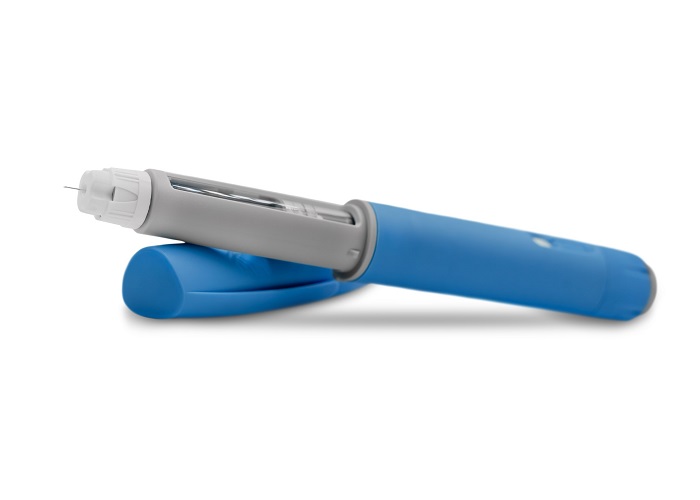
The US Food & Drug Administration’s approval of Mounjaro (tirzepatide) at the end of August to help reduce cardiovascular risk in type 2 diabetics at high risk of cardiovascular events has been welcomed by experts, reports Healthline.
The green light of Eli Lilly’s drug is for the reduction of major adverse cardiovascular events (MACE), which include non-fatal heart attack, non-fatal stroke and cardiovascular death.
“For people with type 2 diabetes, heart disease is the leading cause of death, and Mounjaro … now gives them a proven way to lower that risk, adding to the strong foundation it has already built in A1C and weight,” said Kenneth Custer, PhD, executive vice-president and president, Lilly Cardiometabolic Health, said.
The approval was based on results from SURPASS-CVOT, the first cardiovascular outcomes trial to compare two GLP-1 medications head-to-head rather than against a placebo.
SURPASS-CVOT was also the largest and longest tirzepatide study to date. It included more than 13 000 participants across 30 countries over a median follow-up of four years.
Mounjaro was found to be non-inferior to Trulicity (dulaglutide), a GLP-1 medication with an established cardiovascular benefit.
Major cardiovascular events occurred in 12.2% of participants taking Mounjaro compared with 13.1% of those taking Trulicity.
This represented an 8% lower relative risk of major cardiovascular events with Mounjaro compared with Trulicity.
“My first reaction is that this is encouraging news because it suggests Mounjaro may offer important health benefits beyond its established role in managing type 2 diabetes and supporting weight loss,” Mir Ali, MD, medical director of MemorialCare Surgical Weight Loss Centre at Orange Coast Medical Centre in California – who was not involved in the trial – told Healthline.
“As we learn more about these medications, we are seeing that their effects may extend beyond blood sugar control and weight management,” he added.
Mounjaro may help support heart health for several reasons: it helps regulate blood sugar and reduce blood pressure; it promotes weight loss; improves cholesterol, and reduces inflammation.
Randy Gould, DO, cardiologist with Manhattan Cardiology, who was also involved in the trial either, also welcomed the news.
“Mounjaro, a dual glucose-dependent insulinotropic polypeptide (GIP) and glucagon-like peptide-1 (GLP-1) receptor agonist, lowers blood sugar by increasing metabolic processing and reducing fat accumulation in the liver,” he said.
“The medication prevents high blood sugar spikes by signalling the pancreas to release insulin after eating, as well as slowing digestion to keep food in the stomach longer, leading to prolonged fullness and more consistent glucose absorption.”
These dual hormonal actions reduce systemic inflammation and endothelial dysfunction, which helps stabilise arterial plaques, he noted, but more research was needed to better understand whether Mounjaro had benefits that are independent of weight loss and improved diabetes control.
“Still, expanding our understanding of its potential effects could give healthcare providers additional tools to personalise treatment and optimise care for patients with diabetes and other related health risks,” he said.
What the approval mean for type 2 diabetes
Rigved Tadwalkar, MD, consultative cardiologist and director of Digital Transformation at Pacific Heart Institute in Santa Monica, who wasn’t involved in the trial, said that this gives clinicians another treatment option that can address several important problems at the same time for people with type 2 diabetes and elevated cardiovascular risk.
“We are increasingly choosing diabetes therapies with an eye toward long-term outcomes, including heart attack, stroke, kidney disease, and heart failure, rather than focusing only on blood sugar,” he said.
Tadwalkar added that clinicians have known that tirzepatide can improve blood sugar, promote substantial weight loss, and favourably affect several cardiometabolic risk factors.
However, the FDA approval now recognises cardiovascular event reduction as part of the drug’s clinical benefit. Yet while this is an encouraging step in the treatment of type 2 diabetes and cardiovascular disease, Tadwalkar told Healthline that he would emphasise that “the population studied was very high risk”.
“These were people with type 2 diabetes and established cardiovascular disease, so we should be careful about extending the same conclusions to every person taking tirzepatide,” he said.
Study details
Cardiovascular outcomes with tirzepatide versus dulaglutide in type 2 diabetes
Stephen Nicholls, Imre Pavo, Deepak Bhatt et al.
Published in The New England Journal of Medicine on 17 December 2026
Abstract
Background
Tirzepatide, a dual incretin agonist of the glucagon-like peptide-1 and glucose-dependent insulinotropic polypeptide receptors, has favourable effects on glycaemic control and body weight. The effects on cardiovascular outcomes are uncertain.
Methods
We conducted an active-comparator–controlled, double-blind, non-inferiority trial in which patients with type 2 diabetes and atherosclerotic cardiovascular disease were randomly assigned in a 1:1 ratio to receive a weekly subcutaneous injection of tirzepatide (up to 15 mg) or dulaglutide (1.5 mg), an agent that has been shown to reduce the incidence of cardiovascular events. The primary end point was a composite of death from cardiovascular causes, myocardial infarction, or stroke and was tested for non-inferiority of tirzepatide to dulaglutide with a margin of 1.05 for the upper limit of the 95.3% confidence interval for the hazard ratio. An upper limit of less than 1.00 was considered to indicate superiority of tirzepatide to dulaglutide.
Results
A total of 13,299 patients underwent randomisation; 134 were subsequently excluded because they did not meet inclusion criteria. The modified intention-to-treat population thus included 6586 patients in the tirzepatide group and 6579 in the dulaglutide group. The mean (±SD) age of the patients was 64.1±8.8 years, 29.0% were women, the mean body-mass index (the weight in kilograms divided by the square of the height in meters) was 32.6±5.5, the mean glycated haemoglobin level was 8.4±0.9%, and the mean duration of diabetes was 14.7±8.8 years. A primary end-point event occurred in 801 patients (12.2%) in the tirzepatide group and 862 (13.1%) in the dulaglutide group (hazard ratio, 0.92; 95.3% confidence interval, 0.83 to 1.01; P=0.003 for non-inferiority; P=0.09 for superiority). The incidence of adverse events appeared to be similar in the two groups, although more gastrointestinal adverse events were observed in the tirzepatide group.
Conclusions
Among patients with type 2 diabetes and atherosclerotic cardiovascular disease, tirzepatide was non-inferior to dulaglutide with respect to a composite of death from cardiovascular causes, myocardial infarction, or stroke. (Funded by Eli Lilly; SURPASS-CVOT ClinicalTrials.gov number, NCT04255433.)
See more from MedicalBrief archives:
Tirzepatide beats semaglutide in glucose control, weight loss
Weight loss drug approved for heart disease prevention