


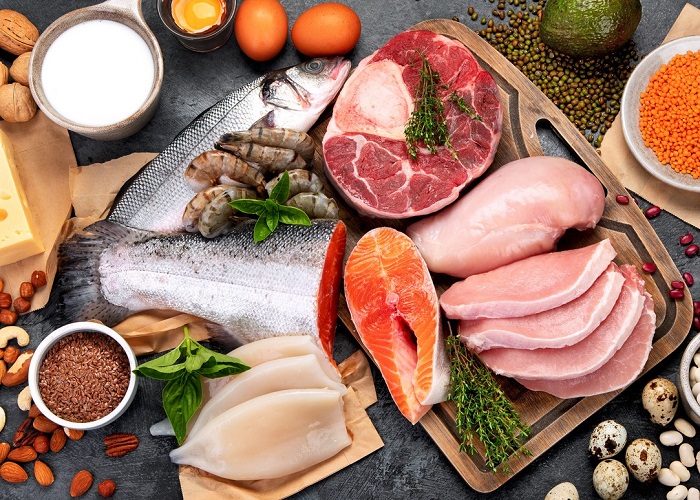
A sweeping review of more than 350 studies by American researchers suggests that eating less protein appears to improve metabolism, reduce inflammation and cellular damage, and activate pathways linked to healthier ageing and longer life.
Although protein-enriched products now fill grocery store shelves, appearing in everything from cereal and coffee to water, this review suggests that many people may gain more from eating less protein, and that lower intake could sometimes contribute to a longer life.
Published in the journal Cell Press Blue, the review examines how reducing protein may influence ageing. The researchers conclude that protein restriction can improve metabolism, alter the way cells react to nutrients, limit cellular damage, and help cells maintain normal function.
“It’s absolutely crystal clear that there are benefits of protein to muscle growth and exercise response of active individuals,” said Dudley Lamming, the paper’s corresponding author, of the University of Wisconsin-Madison.
“But because most people are relatively sedentary, they are probably consuming more protein than they actually need, which could have negative health consequences.”
Alternative to calorie restriction
Scientists have long known that reducing calorie intake can lengthen lifespan in many organisms and lower the risk of age-related illnesses like cancer.
In practise, however, following a calorie-restricted diet over the long term is extremely difficult for most people.
Protein restriction may offer another route. Earlier studies found that flies and rodents lived longer when they consumed less protein, even when their overall calorie intake did not decline.
Recent human clinical trials have also produced promising results. People who lowered their protein intake lost weight and body fat and showed improvements in fasting blood sugar, despite often consuming more total calories.
Why more protein can still be beneficial
The evidence is not one-sided. Other studies indicate that higher protein intake can support weight loss and help older adults preserve muscle, particularly when combined with exercise.
Those findings contributed to updated US dietary guidance this year. The new recommendations call for daily protein consumption of 1.2-1.6 grams per kilogram of body weight, nearly twice the previous amount.
Lamming and his colleague reviewed decades of evidence to better understand the relationship between protein, metabolism, and ageing.
Their analysis of more than 350 papers identified several recurring biological mechanisms that could explain why protein restriction may improve health and promote longevity.
Across the research, lower protein intake was linked to better metabolic function, altered nutrient signalling, reduced cellular damage, and improved maintenance of healthy cells.
Hormone linked to longevity
One important factor is fibroblast growth factor 21 (FGF21), a hormone that increases when protein intake falls. FGF21 can raise energy expenditure, improve blood sugar regulation, and reduce inflammation.
Mouse studies have shown that animals with elevated levels of FGF21 lived longer than typical mice. The effect was stronger in male mice than in female mice. Lower protein intake also increases FGF21 levels in humans.
Certain amino acids may drive ageing
The review also focuses on several amino acids, which are the individual building blocks of protein. Methionine, isoleucine, and valine appear to play especially important roles.
Research suggests that excessive intake of these amino acids may activate biological pathways that encourage growth.
When those pathways remain highly active, they may increase the risk of obesity, inflammation, and other conditions associated with ageing.
“These studies show that the amount of protein sedentary people eat today may have negative health consequences, at least at the population level,” Lamming said.
Protein needs vary from person to person. Some groups clearly require more protein. Pregnant women and certain older adults, for example, may have higher nutritional needs.
For many sedentary adults, however, protein-fortified foods may not offer the health advantages they expect.
Athletes often consume large quantities of protein without developing metabolic disease. Lamming suspects that regular physical activity may offer protection by directing protein toward the development and maintenance of strong, healthy muscle.
“Recent recommendations have encouraged people to eat more protein, but they’ve also encouraged people to exercise more,” Lamming said. “We probably need to personalise protein recommendations based not just on age, but also on how physically active people are.”
The findings suggest that protein guidance may be most effective when it takes both age and activity level into account, rather than applying the same recommendation to everyone.
Study details
The hallmarks of protein and amino acid restriction in ageing and longevity.
Bailey Knopf and Dudley Lamming
Published in Cell Press Blue on 31 July 2026
Summary
Despite widespread recommendations for higher protein intake during ageing, increasing evidence suggests that dietary protein restriction (PR) promotes metabolic health, healthspan, and lifespan across diverse organisms. Mechanistic studies further demonstrate that restriction of specific amino acids, particularly methionine, isoleucine, and valine, recapitulates many of the benefits of PR, highlighting the specific amino acid composition of the diet as a key determinant of ageing. Here, we define the hallmarks of PR through the lens of ageing, examining how PR and restriction of specific essential amino acids impact metabolic health, nutrient sensing, senescence, mitochondrial function, and the epigenome. We also discuss the known and unknown roles of non-essential amino acids in healthy ageing. Overall, this review provides a comprehensive overview of current knowledge regarding the benefits of PR and amino acid restriction for healthy ageing and highlights the therapeutic potential of interventions based on these diets to promote healthspan and longevity.
See more from MedicalBrief archives:
The Longevity Diet: How nutrition affects ageing and healthy lifespan – US analysis
Fasting may boost metabolic activity, slow ageing
Boosting protein intake may be key to healthier eating, weight loss – US study
Thirty-year study finds best diet to boost chances of ageing well