


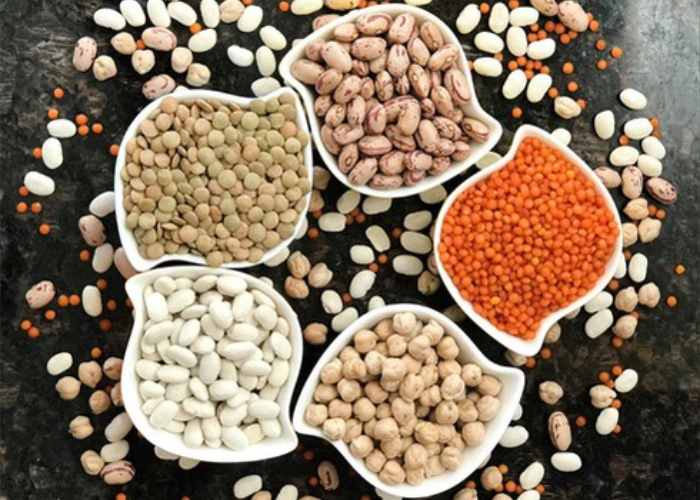
Eating a diet with plenty of lentils, chickpeas, beans and soy could dramatically reduce, by almost a third, the risk of developing hypertension, suggests a study in The BMJ Nutrition Prevention & Health led by University College London researchers.
Optimal daily intakes, they said, included 170g of beans, lentils and chickpeas, and 60g-80g of soy-based foods like tofu and edamame.
The Independent reports that the team had synthesised data from 12 existing studies, finding that people who consumed the highest amounts of legumes and soy experienced a 16% and 19% lower risk of high blood pressure than those with the lowest intake.
Overall, the analysis calculated a 30% risk reduction for legumes at the 170g daily level, and a 28%-29% reduction for soy at 60g-80g per day.
The researchers said 100g of legumes was equivalent to a serving size of one cup or five to six tablespoons of cooked beans, peas, chickpeas, lentils, soybeans or a “palm-size serving of tofu”.
Soy foods include tofu, soy milk, edamame, tempeh and miso.
“Several potential mechanisms and components within legumes and soy foods may explain or contribute to the observed benefits on hypertension (high blood pressure) risk, including their content of minerals, fibre and bioactive compounds,” they noted.
Both legumes and soy are high in potassium and magnesium, which have demonstrated blood pressure-lowering effects, while legumes and soy are also rich in dietary fibre, which is linked to lower rates of hypertension and overall cardiovascular disease risk.
Previous research has found a lower risk of heart disease with legumes and soy, but evidence relating to high blood pressure has been mixed, the study pointed out.
“Current legume consumption across Europe and the UK remains below dietary recommendations, with average intakes of only 8g-15g/day, far below the recommendations of 65g per day to 100g per day recommended for overall cardiovascular health.”
Their findings provide further evidence supporting dietary recommendations to prioritise and integrate legumes and soy foods as healthy protein sources in the diet.
Study details
Legume and soy consumption and the risk of hypertension: a systematic review and dose–response meta-analysis of prospective studies
Michael Metoud, Isabelle Sadler, Shireen Kassam, Dagfinn Aune.
Published in The BMJ on 7 May 2026
Abstract
Background
Several studies have suggested that high intakes of legumes and soy products are associated with a lower risk of hypertension; however, the results have been inconsistent. We conducted a systematic review and meta-analysis to clarify the association between legumes and soy consumption and the risk of hypertension.
Methods
PubMed and Embase databases were searched up to 14 June 2025. Random effects models were used to calculate summary relative risks (RRs) and 95% confidence intervals (95% CIs) for the association between legume or soy consumption and hypertension risk. Heterogeneity was evaluated using I2. The likelihood of causality was evaluated using World Cancer Research Fund (WCRF) criteria.
Results
12 prospective studies were included in the meta-analysis. The summary RR for high versus low intake of legumes was 0.84 (95% CI 0.77 to 0.93, I2=65%, pheterogeneity=0.003, n=10 studies, 86 098 cases, 309 853 participants) and for soy was 0.81 (95% CI 0.70 to 0.93, I2=82%, pheterogeneity<0.0001, n=7 studies, 93 934 cases, 278 200 participants). In the linear dose–response analyses, the summary RR per 100 g/day was 0.88 (95% CI 0.80 to 0.97, I2=69%, pheterogeneity=0.001, n=10) for legumes and 0.76 (95% CI 0.60 to 0.96, I2=89%, pheterogeneity<0.0001, n=6) for soy. The test for non-linearity was not significant for legumes (pnon-linearity=0.13), suggesting a linear reduction in risk up to ~170 g/day, while for soy there was indication of non-linearity (pnon-linearity=0.01), and most of the reduction in risk was observed up to an intake around 60–80 g/day. Although there was an indication of publication bias with Egger’s test (p=0.04) for legumes, this was explained by two outlying studies. Using WCRF criteria, the likelihood of causality was considered probable for both legumes and soy in relation to hypertension risk.
Conclusion
In this meta-analysis of 12 prospective cohort studies, legume and soy intakes were associated with lower risk of hypertension. These findings support dietary recommendations to increase the intake of legumes in the general population.
See more from MedicalBrief archives:
‘Planetary diet’ could avoid 40 000 daily deaths – global report
Plant protein diets linked to lower risk of death – International evidence review
Replacing red meat with plant proteins protects against CVD — first meta-analysis