


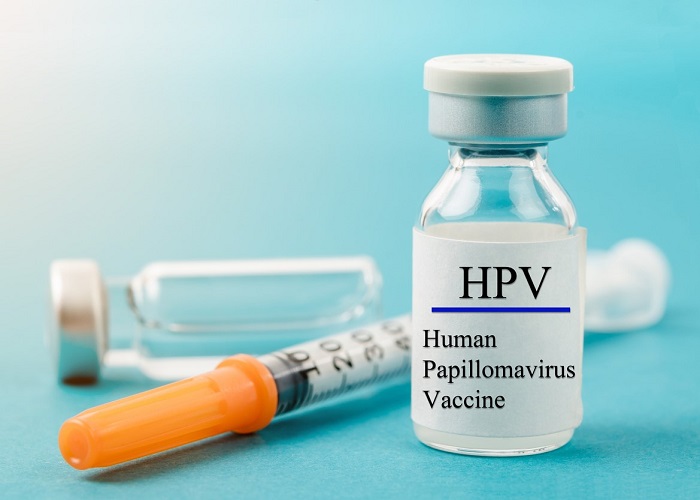
A national HPV vaccination programme can be extremely effective in a high HIV-prevalence setting, a Wits-led research published in The Lancet Global Health shows in the first population-level evidence globally.
South African HIV+ women face a disproportionately increased risk of cervical cancer, around six times higher than women without HIV, with the increased risk driven by persistent infection with high-risk strains of human papillomavirus (HPV).
However, the latest study shows how effective a national vaccination programme can be, particularly in a country like this with its large HIV population.
It was led by researchers from Wits RHI at the University of the Witwatersrand in partnership with the Kirby Institute (University of New South Wales).
The study evaluated South Africa’s free, school-based national HPV vaccination programme, introduced in 2014, which offers HPV vaccination to girls in Grade 4 (aged nine and older) attending public schools across the country.
Crucially, the research assessed vaccine impact among adolescent girls and young women both with HIV and without HIV, reflecting the realities of South Africa’s dual HIV and cervical cancer burden.
Until now, most evidence on HPV vaccine effectiveness in HIV+ people has come from studies where vaccination occurred after HIV infection, often after exposure to HPV, and in the presence of immune suppression.
This local study, led by Professor Sinead Delany-Moretlwe at Wits RHI, director of Research, is the first to demonstrate the real-world impact of vaccination delivered early, before most girls are exposed to HPV, within a national public-health programme in a high HIV-burden context.
The findings show that the HPV vaccine provides excellent protection, including among girls with HIV.
Researchers observed substantial reductions in vaccine-type HPV infections, demonstrating that high-coverage HPV vaccination programmes can deliver strong population-level benefits, even in settings with widespread HIV.
“For the first time, we can demonstrate at a population level that HPV vaccination delivered early, through a national public programme, provides excellent protection in a high HIV-prevalence setting. This is a major public health success for South Africa and sends a clear message globally: investing in early, school-based HPV vaccination can dramatically reduce future cervical cancer risk, including among girls with HIV,” said Delany-Moretlwe.
These results have major global implications. They reinforce the critical importance of early, school-based HPV vaccination and provide compelling evidence for countries, particularly those with high HIV prevalence, to implement and sustain national HPV vaccination programmes.
Such programmes have the potential to dramatically reduce cervical cancer risk, improve women’s health outcomes, and ultimately save lives worldwide.
Study details
Population impact of South Africa's human papillomavirus (HPV) vaccination programme on HPV prevalence in adolescent girls with and without HIV: a repeat cross-sectional study
Dorothy Machalek, Dorothy Nyemba, Danielle Travill, Kathy Petoumenos, Zizipho Mbulawa, Ishana Naidoo et al.
Published in The Lancet Global Health in April 2026
Summary
Background
A school-based human papillomavirus (HPV) vaccination programme providing protection against types 16 and 18 of HPV was introduced in South Africa in 2014 for Grade 4 girls (aged ≥9 years), achieving 87% coverage among learners with at least one of the two recommended doses. We evaluated the programme's impact on HPV prevalence among adolescent girls in a setting of high HIV prevalence.
Methods
In this repeat cross-sectional study, girls aged 17–18 years were invited from 15 primary health-care clinics in four provinces (Free State, Gauteng, Mpumalanga, and North West) of South Africa to provide a self-collected vaginal sample for HPV testing (AnyPlex II HPV28, Seegene, Seoul, South Korea). A survey done from June 19 to Dec 11, 2019, estimated baseline (pre-vaccine) HPV prevalence. A repeat survey done from Feb 16 to Dec 6, 2023, estimated HPV prevalence in a group eligible for the vaccination programme (post-vaccine). Vaccination status was assessed through district registers and self-reported data. The primary outcome was the impact of the HPV vaccination programme, measured as the relative reduction in HPV prevalence between the two birth cohorts using generalised linear regression (estimating adjusted prevalence ratios), overall and by HIV status.
Findings
Of 2470 participants enrolled, 819 girls were recruited for the pre-vaccine survey (248 living with HIV) and 1538 for the post-vaccine survey (295 living with HIV). Prevalence of HPV vaccine types HPV-16 and HPV-18 declined by 83%, from 21·6% (177 of 819 participants) in the pre-vaccine group to 3·2% (49 of 1538 participants) in the post-vaccine group (adjusted prevalence ratio 0·17, 95% CI 0·12–0·24; p<0·0001). A similar reduction was observed among those living with HIV, with prevalence decreasing from 29·4% (73 of 248 participants) in the pre-vaccine group to 4·4% (13 of 295 participants) in the post-vaccine group (adjusted prevalence ratio 0·18, 95% CI 0·10–0·32; p<0·0001). No significant reductions were noted for other HPV types, except HPV-31 and HPV-45, which is consistent with cross-protection.
Interpretation
In this large-scale evaluation of South Africa's two-dose HPV vaccination programme, we observed impacts similar to those seen with three-dose programmes in high-income settings, including equivalent impacts among adolescent girls living with HIV. These findings underscore the substantial population-level benefits of high-coverage routine HPV vaccination in a high-HIV-burden setting.
See more from MedicalBrief archives:
HPV vaccine winning the cervical cancer war, but …
SA makes strides with HPV vaccine campaign, but not fast enough
Wits RHI launch Africa's first HPV vaccine impact evaluation project