


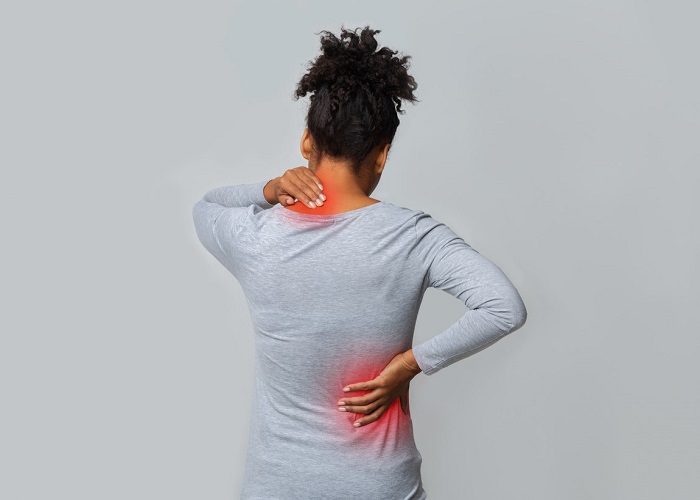
Women consistently experience more pain than men across 11 parts of the body, according to a global study spanning 118 countries, which also reported that across the sexes, the sharpest increases in self-reported pain were mostly before the age of 55, reports Medical News Today.
The findings, published in Nature Medicine, may inform a new approach towards chronic pain prevention and management throughout the lifespan, said the researchers.
The analysis of self-reported pain data involved 6 125 459 participants and indicate that women consistently report experiencing more pain in various parts of the anatomy: the head, face, neck and shoulder area, hand and wrist area, elbows, foot and ankle sites, the knees, the chest, the back, abdominal area and the hips.
The highest prevalence was for back pain, at 40%.
First author Matt Fillingim, PhD, a postdoctoral researcher at McGill University in Montreal, Canada, said that while the exact reasons why women experience more pain remain unclear, they are likely to be related to a combination of different factors.
“There likely isn’t one single explanation,” he said. “The difference probably reflects a combination of biological and social factors, including sex hormones, immune function, nervous-system pain processing, stress, reproductive burdens, occupational exposures, healthcare use, and differences in how symptoms are reported.”
He also cited studies in animal models that appear to suggest “genuine sex differences in pain mechanisms”.
Specifically, he referenced studies from McGill Professor Jeffrey Mogil, PhD, FCAHS, FRSC, “showing in animal models that males and females can recruit different immune pathways in pain hypersensitivity”.
“What stood out in our (recent) study is that the difference (of reported pain between sexes) was present across all 11 body sites, though the size of the gap varied considerably by pain type, which again suggests there is unlikely to be one universal mechanism.”
Shuchita Garg, MD, an associate professor of clinical medicine in the Department of Anaesthesia/Division of Chronic Pain, and the medical director of the University of Cincinnati Medical Centre Pain Clinic, who was not involved in this study, said: “This study is a major contribution to the field, and challenges some of the existing data.”
However, she also offered a word of caution regarding the interpretation of the methodology.
“Since most of the data are cross-sectional, they show the age patterns within populations rather than the changes that take place in individuals. Moreover, the estimates refer to point or period prevalence and not to chronicity, meaning that this study deals generally with pain and not just with chronic pain.”
Why is pain prevalence higher in women?
“The reasons why women have a higher prevalence of pain are complicated and include biological, hormonal, and psychosocial elements, the greatest differences being found in the case of facial and abdominal pain, headaches as well as in instances of severe symptoms,” she said.
“The differences are greatest in the case of migraine, temporomandibular, and visceral pain – conditions which correspond with the reproductive years. It is believed that pubertal development and sex hormones cause the difference between adolescent boys and girls.”
Garg also highlighted differences in immune pathways, noting that neuropathic pain has been linked to the activity of specialised immune cells called microglia in males, and T-cell – a type of white blood cell – activity in females. However, she added that these findings are currently based largely on preclinical research in rodent models.
“Conditions that differ by sex, such as dysmenorrhoea, endometriosis, and pelvic pain, contribute directly to the size of the abdominal area,” she said. “The pain in question is nociplastic [a form of dull, deep, persistent pain], and the type of pain amplification seen in fibromyalgia is more frequently observed in women, which is consistent with the severity and the extent of the pain.”
The role of psychosocial factors and access to care includes the possibility that higher rates of depression, anxiety, trauma exposure, caregiving burden, and delays in diagnosis and treatment may be involved, she hypothesised.
Sharper increase in pain before 55
The study also found that the most rapid increases in musculoskeletal pain occurred earlier in life, between 20 and 55, although the most pain tended to be reported around or after the age of 75.
Pain across all of the studied anatomical sites, across genders, increased in prevalence most rapidly before 55.
“Importantly, this does not mean pain is highest before 55,” said Fillingim. “Rather, it means that across much of the body, the proportion of the population reporting pain is increasing most rapidly during this period.
“For some conditions, likes back, hip, and knee pain, prevalence continues to rise well into older age.”
Vernon Williams, MD, a sports neurologist and founding director of the Centre for Sports Neurology and Pain Medicine at Cedars-Sinai Orthopoedics and Sports Medicine in Los Angeles and B-ASE Performance, said age may not be the only factor responsible for the increase in pain prevalence.
Williams, who was not involved in the recent study, said an accumulation of different factors could explain this increase before age 55.
“By midlife, people may have accumulated injuries, repetitive strain, changes in physical activity, stress, sleep disruption, and other factors that can influence how the nervous system processes pain. Pain is a complex experience, and the brain’s response can become more sensitive over time. So, the increase before 55 may reflect the cumulative effects of these biological, psychological, and social factors rather than a single age-related cause.”
Some important pain data still missing
“I hope the findings encourage a more lifespan-based approach to pain prevention and surveillance,” Fillingim said, reflecting on the desired impact of the study. “The fact that many pain trajectories change most rapidly before later life suggests there may be important windows for earlier prevention or intervention.”
But he added that important chunks of data are still missing at the global level, and that much more information is needed to complete the picture.
“I also hope the work brings more attention to major gaps in global pain data,” he said, noting: “We had tremendous difficulty identifying and accessing suitable datasets from lower-HDI [Human Development Index] regions, particularly parts of sub-Saharan Africa, Southeast Asia, and other under-represented regions.
“This reflects several challenges, including limited existing data collection, fewer large cohort studies, resource constraints for data storage and maintenance, limited research infrastructure, and difficulties making data available for secondary analysis.”
Study details
Global and regional reference curves for pain across the lifespan in 6.1 million individuals in 118 countries
Matt Fillingim, Christophe Tanguay-Sabourin, Lindsay Neuert et al.
Published in Nature Medicine on 5 October 2026
Abstract
Pain is the leading cause of disability worldwide, yet no harmonised self-reported reference framework exists to characterise how its burden is distributed across the lifespan and world regions. In this study, we harmonised individual-level self-reported pain data from 6,125,459 participants across 902 population-based data sources in 118 countries to establish global reference trajectories of pain. We implemented these trajectories in an open-access benchmarking platform for positioning external datasets against global pain norms. Pain prevalence ranged from roughly 2% for facial pain to 40% for back pain, was consistently higher in women across all 11 anatomical sites (risk ratio range: 1.08−1.83) and increased most steeply before age 55 years. Contrary to existing estimates that generally project higher prevalence of pain conditions in higher Human Development Index (HDI) regions, we found that individuals in the lowest HDI countries experienced a substantially higher late-life prevalence of any bodily pain than those in the highest (risk difference: 30.6 percentage points (95% confidence interval: 26.9−34.3)), with low back pain approaching twice the prevalence at the oldest ages. Globally, 18.3% of pain burden across anatomical sites was attributable to three modifiable risk factors (smoking, obesity and low income), but this varied from 12.6% in sub-Saharan Africa to 27.1% in eastern Europe, indicating that the factors underlying pain in lower-HDI settings remain poorly characterised. Together, these reference trajectories provide a common framework for defining and comparing pain burden and informing more equitable global surveillance and prevention.
See more from MedicalBrief archives:
Men and women process pain differently – US study
Never ignore pain, say experts
Back pain associated with 24% increased mortality in older women