

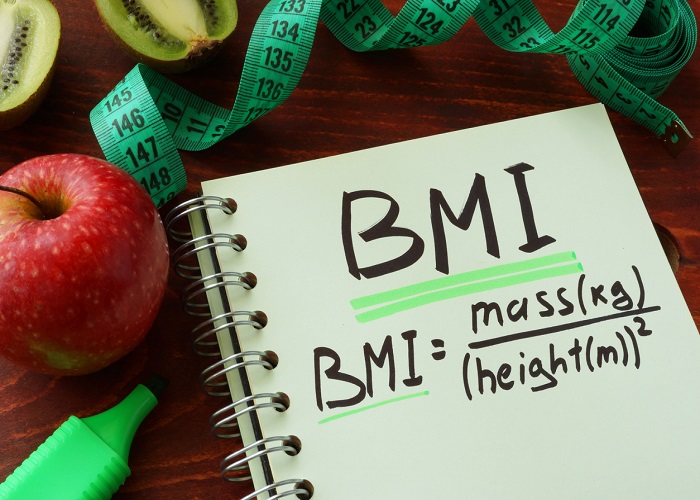
A South Asian man with a body mass index (BMI) of 24 might not raise much concern during a routine check-up with his clinician, but if he carries substantial visceral fat around his waist, however, his cardiometabolic risk may be considerably higher than his BMI suggests, reports JAMA Network.
According to Michael Blaha, MD, MPH, a preventive cardiologist at Johns Hopkins University, this gap between BMI – long used as a population-level assessment to classify weight – and an individual patient’s underlying health risk, has fuelled efforts to move beyond the tool as the primary measure of obesity.
Interest in alternatives to BMI has grown, prompting the use of measures including waist circumference, waist to hip ratio, body roundness index, sagittal abdominal diameter, and even more complex assessments of body composition.
But how best to incorporate such measures into clinical practice remains unsettled.
Although experts agree on BMI’s limitations, no consensus on a broader definition of obesity has been reached. A framework proposed by the Lancet Diabetes & Endocrinology Commission, for instance, calls for a more comprehensive process to distinguish preclinical from clinical obesity, but its complexity has raised questions about how easily clinicians can apply it in practice.
The good news? Research suggests that a simpler, low-cost tool – a tape measure – could offer the most practical path forward.
A multi-cohort study published in the Journal of the American College of Cardiology found that waist circumference, along with waist to hip ratio, provided additional information about cardiovascular risk, including among individuals classified as overweight or even normal weight by conventional BMI criteria.
“There was a considerable amount of reclassification, and there’s clearly metabolic risk hiding in these groups,” said Blaha, senior author of the study and director of clinical research at the Johns Hopkins Ciccarone Centre for the Prevention of Cardiovascular Disease. “The waist circumference really is much more specific to fat, so it’s going to be much more responsive than BMI or weight.”
A study published in JAMA Network Open also found that using BMI and waist circumference together to identify obesity performed at least as well as the more complex Lancet definition when both approaches were compared with body fat measurements from dual-energy x-ray absorptiometry (DEXA) scans.
Still, identifying people who might be at greater risk is not the same as improving their health. Researchers and clinicians are now grappling with two practical questions: will adding waist circumference to regular assessments change treatment and ultimately improve outcomes, and what will it take to make the tape measure as routine as the scale?
Can waist circumference improve outcomes?
For decades, Blaha said, clinicians have been “well aware” of the limitations of BMI.
“We already know this, but we’re not really acting on it, or we’re doing it maybe in the back of our minds,” Blaha said. Even clinical calculations that identify South Asian ancestry as a risk-enhancing factor offer little guidance on how to apply that information to an individual patient.
Waist circumference, he said, could make that risk more visible by identifying patients whose BMI falls below the obesity threshold but are still at elevated cardiometabolic risk and might otherwise be overlooked.
For them, a larger waist circumference may signal excess visceral fat, the metabolically active fat stored deep inside the body’s abdominal cavity and wraps around vital organs. That information could prompt clinicians to take a closer look at a patient’s risk factors or recommend preventive measures before problems, such as high blood pressure or cholesterol, develop.
Aayush Visaria, MD, MPH, an instructor of medicine at Rutgers Robert Wood Johnson Medical School, sees patients at the university’s weight management centre who have BMI values below 30 but elevated visceral fat and metabolic risk.
During visits, he explains those risks and suggests lifestyle interventions to address them.
“Treatment doesn’t always have to be medications,” said Visaria, a clinician-scientist whose research focuses on cardiometabolic disease. Behavioural changes, for example, could be offered to patients whose waist circumference suggests elevated risk, despite a BMI that wouldn’t typically trigger concern.
Following those modifications, Visaria said he has seen substantial reductions in patients’ haemoglobin A1c and cholesterol levels.
Although he believes “controlling all these intermediate metabolic issues” will result in lowered long-term health risks, he cannot confirm if the act of measuring waist circumference itself plays an integral part in reducing those risks. “There is still a big group of clinicians wondering, ‘if we actually do waist circumference, is it really going to change our treatment strategy?’”
That distinction, according to Fatima Cody Stanford, MD, MPH, MPA, an obesity medicine physician scientist who co-authored the Lancet Commission’s article on clinical obesity, is important. Studies show that waist circumference can help identify people at higher risk, but that does not establish that routinely measuring it will change treatment or prevent myocardial infarctions, diabetes, or other health problems.
“We should be precise: better classification does not automatically prove better outcomes,” said Stanford, an associate professor of medicine at Massachusetts General Hospital and Harvard Medical School, who noted that direct, population-level evidence of this is still emerging and should be prioritised before “the wholesale replacement” of BMI.
In her practice, she measures waist circumference in all of her patients along with a clinical evaluation of adiposity-related organ dysfunction, which she says “can better match the urgency and intensity of treatment to the individual patient”.
To her, a more complete assessment could also change what physicians prioritise. Rather than focusing primarily on weight or BMI, they could use waist circumference alongside medical history, laboratory results, and other clinical findings to guide decisions about treatment and evaluate whether it’s working. That could mean, Stanford said, looking for meaningful improvements in metabolic health, mobility, sleep, pain, and daily functioning – not just kilograms lost.
In fact, waist circumference may also help patients recognise progress that the scale does not capture, noted Blaha. He said he sometimes sees patients who are disappointed by modest weight loss, but upon further investigation, he may discover that they’ve “dropped a pants size”. A smaller waist reflects a reduction in visceral fat, he explained, offering another way to track changes that matter for health.
“Waist circumference is a really important indicator of progress,” he said. Because it can respond to changes in fat distribution more quickly than body weight or BMI, he added, it can also be “very motivating” for patients.
The rise of glucagon-like peptide-1 (GLP-1) drugs has also added momentum to the push to move beyond BMI.
“There was less urgency about driving the field forward when we really couldn’t do much about it,” Blaha said of the previous lack of effective therapies targeting obesity. But as GLP-1 medications are more widely used, he said, clinicians need better ways to identify who might benefit, especially as clinical trials increasingly report changes in waist circumference alongside BMI and modifications to treatment eligibility may further encourage its use.
“Now, there’s an incredible amount of interest and obviously a health benefit in targeting obesity this way.”
What’s standing in the way of waist measurement?
For a measurement that requires little more than a tape measure, waist circumference has proven surprisingly difficult to bring into routine clinical practice. One major obstacle is a lack of standardisation.
“There’re actually different ways to measure waist circumference, and because of that, no one way is that reliable,” Visaria said. The American Heart Association (AHA) and the National Heart, Lung, and Blood Institute (NHLBI), part of the National Institutes of Health (NIH), recommend placing the tape measure horizontally at the top of the hip bone, or iliac crest.
Meanwhile, the World Health Organisation (WHO) method measures midway between the lowest rib and the top of the iliac crest. The Mayo Clinic pinpoints measurement to “slightly above the hipbones”, while other clinical protocols run the tape measure directly over the belly button or on the belt line.
Although these approaches may yield only modest differences in readings, in some cases, they can change whether a patient crosses a threshold for elevated risk. Measuring too low on the body can over-estimate it, while measuring too high can under-estimate it.
In a US Centres for Disease Control and Prevention study comparing protocols, researchers found that, among women, one method yielded measurements averaging about 3 cm higher than another. Waist circumference readings can also vary when repeated, making it difficult to distinguish small changes over time from measurement error.
Deepika Laddu, PhD, an associate professor of preventive medicine at the Northwestern University Feinberg School of Medicine, prefers the NHLBI protocol because it’s the one most often used in NIH-funded studies. In her research, she uses a “rule of thumb” – measuring approximately one thumb below the belly button – but she acknowledged it can be challenging in patients with larger abdominal circumferences or excess skin.
Visaria stressed the importance of professional societies agreeing on a method, much as they have for blood pressure measurement:
“We need something similar for obesity where we just pick a waist circumference definition,” he said.
Laddu, who served as chair of the writing group for an AHA scientific statement on the implementation of obesity science into clinical practice, noted that experts also differ on thresholds. In the US, waist circumferences of 102 cm or greater for men and 88 cm or greater for women are commonly used to flag elevated risk. Other organisations, including the WHO, also use certain ethnicity-specific cutoffs.
Which patients should be measured is another unresolved question. Blaha said knowing waist circumference could be useful for everyone, especially as a way to track changes over time. But healthcare professionals in busy practices may also question whether the measurement adds useful information for patients at the extremes.
“If a person comes in and demonstrates already-high metabolic risk,” Laddu said, “a clinician may prioritise laboratory tests and immediate next steps, reasoning that waist circumference may not provide any additional value to what they already know.”
If the hurdles around standardisation can be overcome, Laddu believes incorporating the task into clinical workflows is straightforward – with medical assistants taking waist circumference alongside height and weight.
“We usually think about implementation gaps with imaging, like with DEXA,” she said. “There’s radiation exposure, there’s cost, there’s burden to the healthcare system. But waist circumference is intuitively easy.”
Blaha acknowledged that it is an inexpensive, decidedly quick add-on, but “even a quick task adds up across millions of visits”, competing with other demands on a clinician’s time.
Laddu noted that a specific field would need to be added to electronic health records to log and track the data, and that staff would need training, not just in standardised measurement but in communicating with sensitivity, given the stigma many patients experience around weight.
BMI also remains embedded in diagnostic codes, drug labels, and insurance coverage criteria. Even if clinicians see the value of waist circumference, Blaha said, “it’s all still predicated on BMI.”
For instance, the 2026 multi-society guidelines for cardiovascular-kidney-metabolic syndrome now recommend assessing both BMI and waist circumference at least annually in adults with or at risk for the condition.
But, Visaria noted, translating that recommendation into everyday risk assessment may be more complicated: the PREVENT model estimates cardiovascular risk factors in BMI but “has no measure of visceral fat or body composition, which is a huge gap in actually improving risk prediction”, he said.
Although Laddu maintains that the benefits of waist circumference outweigh any potential risks of not doing it, its integration remains an open question. For now, making the measurement a routine part of care will require more than adding another number to the chart.
According to Stanford, clinicians need consistent measurement protocols, clear guidance on interpreting the results, and evidence that the information can change decisions in ways that benefit patients.
“Success is not simply a change in terminology or an increase in testing,” she said. “It is better health, better function, and more equitable care.”
JAMA article – Waist Circumference Adds to BMI, but Will Clinicians Adopt It? (Open access)
See more from MedicalBrief archives:
Two body measurements flagged for death risk, but neither is BMI – Chinese study
Moving away from BMI as a health risk indicator
Belly fat v BMI for death risk – US study