


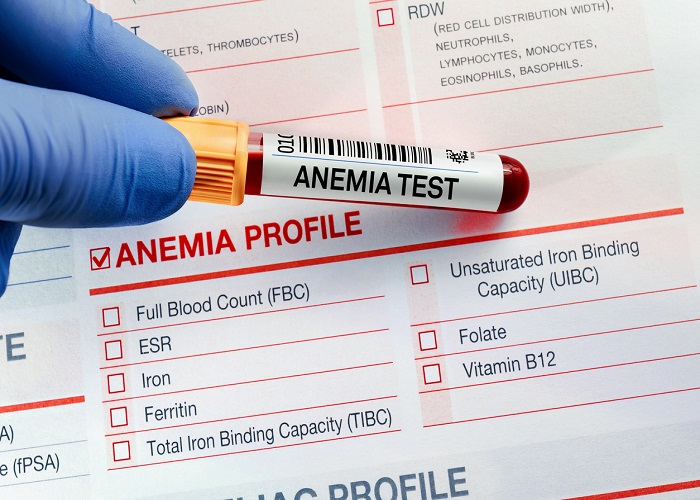
A recent population-based oncology study suggests that anaemia is associated with an increased risk of both cancer and higher mortality, with the scientists saying they hope their findings may help guide clinical follow-up of patients with anaemia in routine care.
Anaemia is defined by haemoglobin levels below the normal range, and for their study, the researchers from Karolinska Institutet, whose study was published in BMJ Oncology, analysed the association between newly detected anaemia and the risk of cancer and mortality, examining whether different types of anaemia, classified by the size of red blood cells, play a role.
The study is based on register data from the Stockholm Early Detection of Cancer Study (STEADY‑CAN) and includes almost the entire adult population of Stockholm County between 2011 and 2021.
In total, just more than 190 000 adults with newly detected anaemia were included, along with an equal number of age- and sex-matched individuals without anaemia. All participants were over 18 and cancer-free at study entry.
The participants were followed for up to 18 months after anaemia was detected. During this period, 6.2% of men and 2.8% of women with anaemia developed cancer. The corresponding figures among individuals without anaemia were 2.4% and 1.1%, respectively. Mortality was also higher in the group with anaemia.
“We found that both the risk of cancer and the risk of death are highest during the first months after anaemia is detected, but that the increased risk persists later during follow-up as well,” said Elinor Nemlander, researcher at the Department of Neurobiology, Care Sciences and Society, Karolinska Institutet, and first author of the study.
Type of anaemia matters
The study also shows that the type of anaemia is important. People with small red blood cells, known as microcytosis, had a particularly high risk of cancer, especially cancers of the gastrointestinal tract and the haematopoietic system. By contrast, those with large red blood cells, macrocytosis, showed a stronger association with increased mortality, but not with cancer to the same extent.
Red blood cell size is measured using the laboratory value MCV, which is included in routine blood tests.
“Our findings suggest that anaemia may be a sign of underlying disease rather than a condition in its own right. Blood tests that are already part of routine care can provide important information about which patients need closer follow-up,” said Nemlander.
The study was conducted in collaboration between researchers at Karolinska Institutet, Karolinska University Hospital and Uppsala University, and primary care in Region Stockholm.
Study details
Incident anaemia as a marker of cancer and all- cause mortality: evidence from 380 114 adults in the population-based Stockholm Early Detection of Cancer Study (STEADY- CAN) cohort
Elinor Nemlander, Eliya Abedi, Jan Hasselström et al.
Published in BMJ Oncology on 6 April 2006.
Abstract
Objective
Anaemia is common in healthcare and may indicate undiagnosed cancer. Despite this, evidence regarding risk estimates informing clinical decision-making remains limited, particularly regarding haemoglobin dynamics and the role of mean corpuscular volume (MCV). We aimed to quantify the 18-month risks of incident cancer (IC) and all-cause mortality (ACM) following incident anaemia (IA), and to examine how MCV modifies these risks.
Methods and analysis
Population-based, age- and sex-matched cohort study. The study used the Stockholm Early Detection of Cancer Study (STEADY-CAN), covering almost all adults residing in Stockholm County, Sweden, during 2011–2021. STEADY-CAN links laboratory tests with national registers, capturing healthcare use, diagnoses, cancer outcomes and prescribed medications.
We included 190 057 adults with IA and 190 057 age- and sex-matched non-anaemic controls from the STEADY-CAN cohort. Eligible individuals were ≥18 years old, cancer-free, had ≥2 Hb measurements during 2011–2020 and a concurrent MCV value at the IA date. IA was defined as the first Hb value from 2012 onwards below 130 g/L in men or 120 g/L in women after prior normal values.
Sex-stratified adjusted piecewise competing-risks multi-state Cox regression models were used, with separate HRs for IA during 0–3, 3–6, 6–12 and 12–18 months of follow-up. The main outcome measures were IC and ACM during the 18-month follow-up.
Results
IC occurred in 6.2% of male and 2.8% of female IA cases, compared with 2.4% and 1.1% of controls. Corresponding ACM rates were 7.4% and 4.0% in IA cases versus 2.5% and 1.7% in controls. IA implied a 9.17-fold higher IC risk and 8.50-fold higher ACM risk among men during 0–3 months of follow-up, with 8.25- and 6.14-fold higher risks among women (all p<0.001). These risks decreased over time but were still significant for both sexes at 6–12 months of follow-up for IC and 12–18 months of follow-up for ACM. Microcytosis was linked to the highest IC risk, particularly for digestive and haematological cancers, whereas macrocytosis was more strongly associated with ACM.
Conclusions
IA is a strong marker of both IC and ACM in routine care. Microcytic anaemia should prompt timely gastrointestinal evaluation, while macrocytic anaemia warrants broader assessments for comorbid conditions and systemic disease. Persistently elevated risks underscore the need for structured safety-netting and continued follow-up after IA, even without a cancer identification. Our findings highlight the value of using anaemia patterns and MCV in early risk stratification.
See more from MedicalBrief archives:
Pre-surgery iron vs blood transfusions for anaemic patients – US study
Young adults missing colorectal cancer symptoms – US review of 25m adults
Call for anaemia screening in hospitalised children – Durban study