


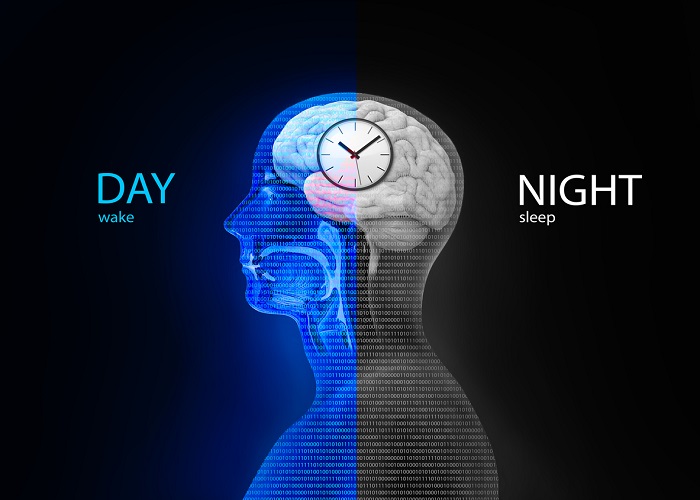
A recently published Australian study has suggested that about one in four people with severe depression could have a proposed subset called “circadian depression”, linked to the body’s internal clock, reports ABC News.
Symptoms include waking up very tired, sleeping more when depressed, and being a night owl, say experts at the University of Sydney’s Brain and Mind Centre, who strongly believe more targeted treatments could help improve outcomes for sufferers of the mood disorder.
In their study, published in The British Journal of Psychiatry, the researchers said this subtype of severe, recurrent or persistent depression, is linked to the body’s internal clock.
Lead researcher Emiliana Tonini from the Brain and Mind Centre said the findings had implications for early intervention and treatment.
“Depression is not a uniform illness and understanding the characteristics of different subtypes means we can give people earlier access to treatments that will be most effective for them,” she said.
What is circadian depression?
About 322m people globally have depression, which causes persistent sadness, emptiness or loss of interest in previously enjoyable activities.
In this study, Tonini and her team looked at clinical and genetic data from 11 380 Australians with severe, recurrent or persistent depression who took part in a long-running national depression study.
They found 2 604 people in this group met the criteria for circadian depression as they self-reported three or more of the following:
• Waking up very tired;
• Being a “night owl”;
• Experiencing a seasonal pattern of illness;
• Sleeping later;
• Sleeping more when depressed; and
• Experiencing “social jet lag” where sleep timings vary greatly between work days and free days.
“Patients with circadian depression also reported more severe mental health symptoms than those with non-circadian depression,” Tonini said.
This included an earlier age of onset, more severe symptoms like mania, suicidality, weight gain during mental health episodes and more complex mental health trajectories.
The research also suggests people with circadian depression may have a different genetic profile from those with non-circadian depression, including a higher genetic risk for attention deficit hyperactivity disorder (ADHD).
Philip Mitchell, scientia professor of psychiatry at the University of New South Wales who did not contribute to the research, said more research was needed before circadian depression could be classified as its own subtype.
“At the moment it’s not reaching the bar where this could enter clinical practice, but I think this is very thought-provoking for the field,” he said.
He said there was overlap between the features of circadian depression and a recognised subtype called atypical depression, which indicated the need for a clearer distinction between the two.
And he added that more international research was needed to support the Australian findings.
How are sleep and depression connected?
The study suggests circadian depression is linked to the body’s 24-hour internal clock, which regulates the sleep-wake cycle.
Brain and Mind Centre co-director and clinical psychiatrist Ian Hickie said: “This internal clock underpins your mood, your metabolism, your concentration, your sleep-wake cycle and many other key factors as well.”
Light exposure, movement and eating patterns were important to help regulate the body’s 24-hour internal clock, or circadian rhythm, he added.
“It isn'’t just sleep, it’s not just about sleeping better.”
Shanthakumar Wilson Rajaratnam, professor of sleep and circadian medicine at Monash University who did not contribute to the study, said a dysregulated circadian system could have an impact on a range of body systems, including cardiovascular function.
Criteria used to define circadian depression, such as being a “night owl” or waking up very tired, might not solely be driven by circadian dysfunction, he noted.
Rajaratnam said symptoms that might explain circadian dysfunction could also be explained by disturbed sleep.
“Symptoms and sleep complaints have a high degree of comorbidity and overlap with depression and mood disturbances,” he pointed out.
What does this mean for treatment?
According to this study, patients with circadian depression may be less responsive to traditional antidepressants. However, Tonini said this finding came from self-reported data, which meant more research was needed to test the efficacy of traditional antidepressants in this proposed subgroup.
She said targeted treatments – like melatonin, melatonin-targeted antidepressants, light therapy and behavioural changes – may improve outcomes for patients with circadian depression.
Personal experience
Sam Hockey’s mental health journey stretches across more than two decades. A diagnosis of post-traumatic stress disorder and insomnia at age eight, after being trapped in a house fire, and then being “horribly bullied” in high school had a significant impact on his mental health.
“I overslept as a way of escapism but then I would also not wake up rested,” he said. “I had intense low energy, and at school, my cognitive function wasn’t great, and then I didn’t have the mental or emotional capacity to really combat the bullying.”
In hindsight, Hockey said these sleep symptoms were the first signs of circadian depression.
More than two decades after his first mental health diagnosis, things have greatly improved for him.
As a youth lived-experience researcher with the Brain and Mind Centre, he was one of the co-authors on this new study, and said that understanding more about his 24-hour internal clock earlier in life would have saved “a lot of grief, a lot of trouble, a lot of money, and hardship”.
But learning about circadian patterns and making behavioural changes, like putting his bedside light on a timer, had helped him regulate his body clock.
Mitchell and Rajaratnam agreed that there was enough evidence in this study to warrant asking patients with depression about their circadian patterns.
But this was in addition to, not instead of, traditional treatment options.
“It’s important to address the sleep and circadian complaints in patients … with psychiatric disorders, including depression, as well as treating the symptoms,” Rajaratnam said.
Study details
Clinical and genetic correlates of a circadian subtype of depression in the Australian Genetics of Depression Study
Emiliana Tonini, Jacob Crouse, Mirim Shin et al.
Published in The British Journal of Psychiatry on 20 October 2026
Abstract
Background
Although commonly accepted depressive subtypes reflect phenotypic differences, there has been minimal progress in identification of discrete pathophysiological pathways, biomarkers or differential therapeutic approaches to effectively guide clinical management.
Aims
To test the biological validity and clinical utility of a circadian subtype of depression on the basis of clinical course, differential medication response (self-reported) and genetic risk profile.
Method
Cross-sectional data were drawn from the nationwide Australian Genetics of Depression Study. Participants were classified as having a ‘circadian’ or ‘non-circadian’ subtype of depression on the basis of meeting criteria for at least three binary circadian-associated features: social jetlag, seasonality, delayed sleep midpoint, evening chronotype, morning tiredness and hypersomnia. Clinical course characteristics were compared. Associations with response to commonly prescribed antidepressants and polygenic risk scores for mental disorders and sleep, circadian, metabolic and inflammatory traits were investigated using logistic regression models.
Results
A total of 2604 participants (23%; 80% female; mean age 37.87 ± 13.62 years) had a circadian subtype. They reported an earlier age at onset (P < 0.001), more severe clinical features including (hypo)manic-like and psychotic-like experiences, suicidality, psychological distress and somatic complaints (all P < 0.001), weight gain during depressive episodes (P < 0.001), poorer response to selective serotonin reuptake inhibitors (odds ratio 0.88 [95% CI 0.82, 0.94]) and serotonin–noradrenaline reuptake inhibitors (odds ratio 0.89 [95% CI 0.83, 0.97]), and more side-effects compared with those with a non-circadian subtype. Having a circadian subtype was associated with higher polygenic risk scores for attention-deficit hyperactivity disorder (odds ratio 1.11 [95% CI 1.06, 1.17]), major depression (odds ratio 1.11 [95% CI 1.06, 1.16]), anxiety (odds ratio 1.10 [95% CI 1.04, 1.15]), bipolar disorder (odds ratio 1.09 [95% CI 1.04, 1.14]), body mass index (odds ratio 1.09 [95% CI 1.05, 1.14]), triglycerides (odds ratio 1.10 [95% CI 1.06, 1.16]), interleukin-6 (odds ratio 1.08 [95% CI 1.03, 1.13]), higher insulin resistance (odds ratio 1.08 [95% CI 1.04, 1.13]), later sleep midpoint (odds ratio 1.15 [95% CI 1.10, 1.21]), insomnia (odds ratio 1.08 [95% CI 1.03, 1.13]) and later chronotype (odds ratio 0.68 [95% CI 0.65, 0.71]).
Conclusions
These findings support the face validity and potential clinical utility of a circadian subtype of depression as a clinical profile. Pending independent replication, investigation of its biology and predictive utility are warranted.
See more from MedicalBrief archives:
Disruption of circadian rhythms associated with mood disorders
Sleep deprivation in a controlled setting reduces depression symptoms
Disrupted circadian rhythm associated with later Parkinson's
Early to bed and early to rise linked to less depression risk