


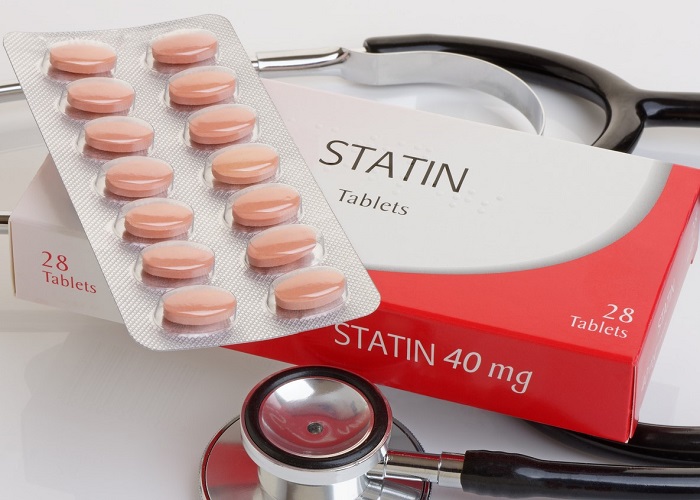
Cholesterol-lowering statins, used by millions, are far safer than previously thought, a major review has found, with the authors suggesting packaging leaflets should be changed to reflect this and avoid dissuading people from using the life-saving pills.
The BBC reports that statins do not cause most of the possible side effects listed, including memory loss, depression, sleep disturbance, weight gain and impotence, according to the team, funded by the British Heart Foundation. Meanwhile, they can slash a person’s risk of heart attacks and strokes.
The results, published in The Lancet, come from trials involving more than 120 000 people comparing statins with placebo.
Statins are highly effective at lowering “bad” LDL cholesterol levels and have been repeatedly proven to reduce the risk of cardiovascular disease – which causes around 10m deaths worldwide and a quarter of all deaths in the UK – say the researchers from Oxford University.
As with any medicine, there can be side effects, but these are few.
Reports of adverse effects were almost identical in the placebo group that was not on the medication, suggesting statins are not the cause.
None of the patients in the trials knew if the pill they were taking was real or a dummy one.
In the review, only four side effects out of 66 listed were found to have any association with taking statins, and only in a very small proportion of patients.
The four were: liver test changes; minor liver abnormalities; urine changes; and tissue swelling/swollen ankles.
There was no increase in liver disease like hepatitis or liver failure, suggesting that the liver blood test changes did not lead to more serious liver problems.
Statin therapy can sometimes cause muscle damage, but this is rare. They can also cause a small increase in blood sugar levels, which might bring on diabetes sooner in people who are susceptible. Again, this is rare.
Lead author Professor Christina Reith said worries about statin safety had deterred many people who could benefit from taking them.
“Ongoing confusion and concern about side effects mean many people are not willing to start them or stop them. This is a major issue.”
That’s not to say people do not experience things while on them, she added. “But we now have really good evidence that statins are not the cause of common problems. Our study provides reassurance that, for most people, the risk of side effects is greatly outweighed by the benefits.”
Her colleague, Professor Sir Rory Collins, who is the review’s senior author, said: “Now that we know that statins do not cause the majority of side effects listed in package leaflets, statin information requires rapid revision to help patients and doctors make better-informed health decisions.”
Professor Bryan Williams, from the British Heart Foundation, suggested many people were missing out on statins due to stories around unproven possible side effects.
“Prescribers have been intoxicated by this negative publicity. We are absolutely delighted to see the outcomes of this study. These findings should provide very powerful reassurance.”
Study details
Assessment of adverse effects attributed to statin therapy in product labels: a meta-analysis of double-blind randomised controlled trials
Cholesterol Treatment Trialists’ (CTT) Collaboration†
Published in The Lancet on 5 February 2026
Summary
Background
Statin product labels (eg, Summaries of Product Characteristics [SmPCs]) list certain adverse outcomes as potential treatment-related effects based mainly on non-randomised and non-blinded studies, which might be subject to bias. We aimed to assess the evidence for such undesirable effects more reliably through a meta-analysis of individual participant data from large double-blind trials of statin therapy.
Methods
In this meta-analysis of individual participant-level data from double-blind randomised controlled trials, we generated a list of all undesirable effect terms listed in statin SmPCs by searching an electronic medicines compendium for five statins (atorvastatin, fluvastatin, pravastatin, rosuvastatin, and simvastatin). Randomised trials were eligible for meta-analysis of these effects if they involved at least 1000 participants, had a scheduled treatment period of at least 2 years, and involved a double-blind comparison of statin versus placebo or of a more intensive versus a less intensive statin regimen. Event rate ratios (RRs) and 95% CIs were calculated with statistical significance assessed after controlling the false discovery rate (FDR) at 5%.
Findings
A total of 19 trials compared statin versus placebo (123 940 participants, median follow-up 4·5 years [IQR 3·1–5·4]). In addition to previously reported effects on muscle outcomes and diabetes, only four of 66 further undesirable outcomes that had been attributed to statins were FDR significant: abnormal liver transaminases (783 participants [0·30% per annum] allocated statin vs 556 [0·22% per annum] allocated placebo, RR 1·41 [95% CI 1·26–1·57]) and other liver function test abnormalities (651 participants [0·25% per annum] allocated statin vs 518 [0·20% per annum] allocated placebo, RR 1·26 [1·12–1·41]; absolute annual excess of 0·13% for combined liver function test abnormality), urinary composition alteration (556 [0·21% per annum] allocated statin vs 472 [0·18% per annum] allocated placebo, RR 1·18 [1·04–1·33]), and oedema (3495 [1·38% per annum] allocated statin vs 3299 [1·31% per annum] allocated placebo, RR 1·07 [1·02–1·12]). Analysis of the four trials of more intensive versus less intensive statin regimens also found significant excesses for abnormal liver transaminases and other liver function test abnormalities (supporting a dose-dependent effect), but no significant excess was found for urinary composition alteration or oedema.
Interpretation
Adverse event data from blinded randomised trials do not support causal relationships between statin therapy and most of the conditions (including cognitive impairment, depression, sleep disturbance, and peripheral neuropathy) listed in product labels as potential undesirable effects. In light of these findings, such labelling and other official sources of health information should be revised so that patients and their doctors can make appropriately informed decisions regarding statin therapy.
BBC artcle – Statin pills much safer than advertised, major review finds (Open access)
See more from MedicalBrief archives:
Why statins are good for over-70s – Oxford study
Benefits of statins may have been overstated – Irish meta-analysis
Alternative to statins ‘dramatically’ cuts cholesterol
Statins cut peripheral artery disease mortality, even when started long after diagnosis